


Listen to the article
Health Misinformation Crisis Continues to Grow in Post-Pandemic Era
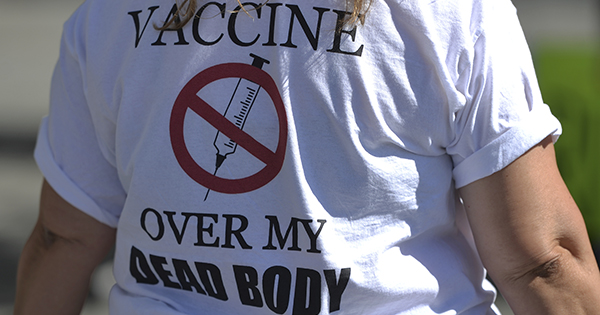
Vaccine skepticism and health misinformation are continuing to spread at alarming rates long after the height of the COVID-19 pandemic, according to recent studies and expert analysis.
A survey of U.S. adults found Americans were less likely to view approved vaccines as safe in October 2023 than they were in April 2021, indicating a troubling decline in vaccine confidence even as misleading health information proliferates across social media platforms.
“We cannot underestimate the dangers of health misinformation and the need to understand why it spreads and what we can do about it,” says Monica Wang, a public health expert specializing in health misinformation at Boston University’s School of Public Health.
Health misinformation—defined as any health-related claim that is false based on current scientific consensus—has had devastating consequences. An estimated 319,000 COVID-19 deaths between January 2021 and April 2022 could have been prevented if those individuals had been vaccinated, according to data from Brown University School of Public Health.
The economic impact has been equally staggering. Misinformation surrounding COVID-19 vaccines alone has cost the U.S. economy between $50 million and $300 million per day in direct costs from hospitalizations, long-term illness, lives lost, and economic losses from missed work.
Vaccines remain the primary target of health misinformation campaigns. Common myths include debunked claims linking vaccines to autism, false assertions about COVID-19 vaccines causing infertility, unfounded safety concerns about vaccine ingredients, and incorrect claims that vaccines are medically unnecessary.
These myths persist despite overwhelming scientific evidence to the contrary. Multiple studies have discredited these claims, and organizations including the World Health Organization, National Academies of Sciences, Engineering and Medicine, American Academy of Pediatrics, and Centers for Disease Control and Prevention have firmly refuted them.
While vaccine misinformation dominates headlines, experts note that false health information also surrounds diets, eating disorders, smoking, substance use, chronic diseases, and medical treatments.
Social media platforms have become primary sources of health information, particularly for adolescents and young adults, creating a challenging environment for distinguishing fact from fiction. A recent analysis by the Washington Post and The Examination found food, beverage, and dietary supplement companies paid numerous registered dietitian influencers to promote products like diet soda, sugar, and supplements to millions of viewers, often without clear disclosure of industry relationships.
Several factors contribute to the spread of health misinformation, including declining trust in science and government institutions. Political polarization and historical medical mistrust in communities that have experienced unequal healthcare treatment further exacerbate these divides.
Social media algorithms compound the problem by creating information silos where users can easily curate their networks to exclude contradictory viewpoints. Research examining Twitter data from 2006 to 2017 found falsehoods were 70 percent more likely to be shared than truth and spread “further, faster, deeper and more broadly” across all information categories.
Media saturation starts early, with the average kindergarten student seeing approximately 70 media messages daily. By high school, teens spend more than a third of their day consuming media content.
To combat misinformation, experts recommend several strategies for consumers. These include checking source credibility, examining author credentials, noting publication dates, cross-referencing information, questioning sensational claims, prioritizing scientific evidence over anecdotes, consulting healthcare professionals about confusing information, and refraining from sharing dubious content.
“The lack of robust and standardized regulation of misinformation content on social media places the difficult task of discerning what is true or false information on individual users,” Wang notes. “All of us can play a part in responsibly consuming and sharing information so that the spread of the truth outpaces the false.”
Without concerted efforts from individuals, scientists, healthcare professionals, and social media companies, health misinformation will likely continue its dangerous spread, threatening public health outcomes and undermining evidence-based medical practices for years to come.
Fact Checker
Verify the accuracy of this article using The Disinformation Commission analysis and real-time sources.

16 Comments
This is deeply concerning. Health misinformation can have such severe consequences, both in lives lost and economic damage. We need to better understand the drivers of its spread and take stronger action to combat it, especially on social media platforms.
Agreed. Restoring public trust in science and medicine is crucial to addressing this crisis. Rigorous fact-checking and educational efforts will be key.
This is a complex issue without easy solutions. While regulation and platform accountability are important, we also need to invest in digital media literacy and empower individuals to be more discerning consumers of online health information.
Absolutely. Educating the public on how to identify credible sources and verify claims is crucial. Building that critical thinking capacity is key.
The decline in vaccine confidence is deeply concerning. We must understand the drivers behind this trend and take proactive steps to counter the spread of misinformation, especially on social media platforms. Investing in digital literacy and empowering the public to think critically about online health claims should be a key part of the solution.
Agreed. Addressing the underlying factors that contribute to the spread of health misinformation, such as the business models and algorithmic amplification on social media, will be crucial.
It’s disturbing to see the continued spread of health misinformation, even as the pandemic has subsided. This underscores the need for a sustained, coordinated effort to combat the problem. Collaboration between public health authorities, tech companies, and civil society will be essential.
The economic impact of health misinformation is astounding. It’s clear we need a multi-pronged approach to address this challenge, involving public health experts, policymakers, and technology companies. Proactive measures are essential to protect public health and safety.
The continued spread of health misinformation is deeply troubling. While the pandemic has subsided, the damage caused by false claims about vaccines and other medical treatments remains. We must redouble our efforts to empower the public with accurate, science-based information.
Absolutely. Restoring trust in public health institutions and scientific consensus should be a top priority. This will require a sustained, multifaceted approach.
The decline in vaccine confidence is very troubling. I wonder what specific factors are contributing to this trend and how we can effectively counter the spread of misinformation. Investing in digital literacy initiatives could be one important part of the solution.
That’s a good point. Empowering people to think critically about online health claims and distinguish credible from unreliable sources will be critical.
The 319,000 preventable COVID-19 deaths due to misinformation is a staggering statistic. We cannot afford to be complacent in the face of these challenges. Redoubling our efforts to promote science-based health information and strengthen digital literacy should be a top priority.
Agreed. The human toll of health misinformation is devastating. We must act urgently to protect vulnerable populations and save lives.
This study underscores the urgent need to address the growing challenge of health misinformation. The economic and human costs are staggering, and we cannot afford to be complacent. Decisive action is required to protect public health and safety.
This study highlights the persistent threat of health misinformation and the need for a comprehensive response. Tackling the root causes, such as the business models and algorithms that amplify false claims, will be crucial alongside public education efforts.