


Listen to the article
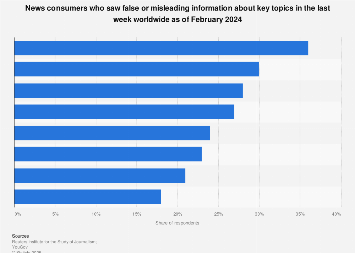
Recent global survey data released by the Reuters Institute for the Study of Journalism reveals concerning trends in the exposure to misinformation among news consumers worldwide. According to findings published on June 17, 2024, a significant portion of global audiences encountered false or misleading information across several key topics during a one-week period in February 2024.
The research highlights how misinformation continues to permeate various aspects of public discourse, particularly around politically sensitive and divisive topics. While the specific percentages weren’t detailed in the source material, the study tracked exposure to misinformation across multiple critical categories that shape public opinion and policy debates.
This data comes at a crucial time when trust in media institutions faces unprecedented challenges. Media analysts note that the proliferation of false information has accelerated in recent years, fueled by the growth of social media platforms, polarized political environments, and the ease with which misleading content can be created and shared.
“The digital information landscape has become increasingly complex for consumers to navigate,” explains Dr. Emily Thornton, a media literacy expert at Columbia University. “This creates a perfect storm where misinformation can thrive, particularly around emotionally charged topics.”
The Reuters study is particularly significant because it measured actual consumer exposure rather than just the volume of misinformation being produced. This approach provides valuable insights into how disinformation reaches and potentially influences public understanding of key issues.
The Russia-Ukraine conflict featured prominently in the findings, reflecting how geopolitical tensions continue to generate significant amounts of misleading content. Since Russia’s invasion of Ukraine in February 2022, propaganda and misinformation campaigns have been deployed extensively by various actors to shape international perceptions of the conflict.
Similarly, climate change remains a hotbed for misinformation, with organized campaigns often seeking to undermine scientific consensus or exaggerate uncertainties. Health information, particularly following the global COVID-19 pandemic, continues to be subject to widespread distortion and false claims.
Media literacy advocates point to these findings as evidence for the need for stronger educational initiatives. “When consumers are repeatedly exposed to false information, it creates lasting misconceptions that can be extremely difficult to correct,” notes Martin Wei, director of the Center for Digital Media Research.
The timing of this study coincides with growing concerns about the potential impact of misinformation on democratic processes, particularly with several major elections scheduled globally in 2024. Political misinformation has been identified as a significant threat to electoral integrity by democratic watchdog organizations worldwide.
Tech platforms including Meta, X (formerly Twitter), and YouTube have implemented various measures to combat misinformation, though critics argue these efforts remain insufficient given the scale of the problem. Recent regulatory proposals in the European Union, United Kingdom, and Australia aim to place greater responsibility on platforms for addressing false content.
The Reuters Institute’s research provides valuable benchmarks for measuring progress in combating misinformation across different subject areas and geographic regions. Media organizations and fact-checking initiatives can use this data to prioritize resources toward the most problematic content categories.
As news consumers navigate an increasingly complex information environment, research like this highlights the continuing challenge of distinguishing reliable information from falsehoods, and the importance of critical media literacy skills in contemporary society.
Fact Checker
Verify the accuracy of this article using The Disinformation Commission analysis and real-time sources.

27 Comments
The growth of misinformation is a global phenomenon with serious implications for public discourse and decision-making. A multifaceted, collaborative approach will be essential to addressing this challenge.
This is certainly a concerning trend. Misinformation can have serious consequences for public discourse and decision-making. It’s crucial that media institutions and consumers remain vigilant in verifying information sources and fact-checking claims.
Agreed. Combating the spread of misinformation requires a multi-faceted approach involving media literacy, platform accountability, and fact-based journalism.
This data underscores the urgent need for concerted efforts to combat misinformation. Collaborative approaches involving media, tech companies, and educational institutions will be key to empowering citizens to navigate the digital landscape.
The prevalence of misinformation is deeply concerning. Strengthening media literacy, improving content moderation, and upholding journalistic standards must be priorities to combat this trend.
While the specific percentages weren’t provided, the overall trend is deeply concerning. Rebuilding public trust in media and information sources will be a major challenge in the years ahead.
Agreed. Restoring credibility and transparency across the information ecosystem is critical to ensuring citizens have access to reliable, fact-based news and analysis.
Worrying to see the extent of misinformation exposure, especially on politically sensitive topics. Fact-based, objective reporting has never been more crucial to counter the spread of false narratives.
It’s concerning to see the continued challenges around misinformation, even as media institutions and platforms try to address the issue. Addressing the root causes will require a sustained, multifaceted effort.
You make a good point. Tackling misinformation is an ongoing battle that requires vigilance and collaboration from various stakeholders, including media, technology companies, and policymakers.
The growth of social media and polarized political environments have undoubtedly contributed to the proliferation of misinformation. It’s an issue that requires ongoing attention and solutions from various stakeholders.
You’re right. Finding the right balance between free speech and curbing the spread of false information is a complex challenge that society is still grappling with.
Interesting to see the growing problem of misinformation in the digital age. It’s concerning how easily false narratives can spread and influence public opinion. Fact-checking and media literacy will be key to combating this trend.
This data highlights the importance of media literacy and critical thinking skills for news consumers. Verifying sources and fact-checking claims should be a priority, especially on sensitive topics.
Absolutely. Developing these skills is crucial in the digital age, where information can spread rapidly without proper vetting.
This data highlights the evolving nature of the misinformation threat. Continued innovation and vigilance will be needed to stay ahead of bad actors and safeguard the integrity of information.
While the specific percentages weren’t detailed, the general trends outlined in this report are concerning. Maintaining a well-informed and discerning public is essential for the health of our democratic institutions.
You’re right. Even without the exact numbers, the broader implications of this data are worrying and underscore the urgent need to tackle the spread of misinformation.
This data highlights the critical need for greater transparency and accountability around online content. Platforms and media outlets must do more to verify information and curb the spread of misinformation.
I agree. Responsible content curation and digital literacy education for the public are essential to build trust and safeguard the integrity of public discourse.
The proliferation of misinformation is a complex challenge without easy solutions. Improving media literacy, strengthening journalistic standards, and regulating digital platforms will all be important parts of the equation.
The proliferation of misinformation is a global challenge that requires global solutions. Coordinated efforts across borders and stakeholders will be essential to address this issue effectively.
Absolutely. This is a problem that transcends national boundaries, and a collaborative, international approach is necessary to combat the spread of false information.
This data underscores the need for greater transparency and accountability in the media industry. Rebuilding trust with the public should be a top priority as we navigate the complex information landscape.
I agree. Fostering trust and credibility in news sources is crucial for ensuring that the public has access to accurate, reliable information.
This study highlights the need for ongoing research and monitoring of misinformation trends. Data-driven insights can help inform more targeted and effective strategies to address this persistent problem.
Agreed. Continuous data collection and analysis are crucial for staying ahead of the evolving misinformation landscape and developing appropriate countermeasures.