


Listen to the article
The Journal Appeals for Reader Support as Independent Media Faces Financial Challenges
The Journal, one of Ireland’s leading independent news outlets, has launched a fundraising appeal to readers, citing financial challenges that threaten its continued operation despite existing advertising revenue streams.
In a direct message to its audience, the publication emphasized its commitment to “independent, unbiased news that tells the truth” while acknowledging that advertising revenue alone has proven insufficient to support its operations this year—a common challenge facing digital news organizations globally.
“You are visiting us because we have something you value,” the appeal states, highlighting the publication’s focus on producing “accurate and meaningful journalism” in an increasingly fragmented media landscape.
This call for reader contributions comes at a challenging time for news media worldwide. Traditional revenue models have been disrupted by significant shifts in advertising spending toward social media platforms and search engines, with tech giants like Google and Meta capturing an estimated 60-70% of digital advertising spending in many markets.
The Journal is not alone in turning to readers for direct support. This strategy mirrors similar approaches adopted by international publications such as The Guardian, which maintains free access while soliciting voluntary contributions, and The New York Times, which has successfully built a substantial subscription base.
Media analysts note that reader-funded journalism has become increasingly important as a sustainable business model. Dr. Jane Murphy, a media economist at Dublin City University, explained in a recent interview: “Publications that can demonstrate their unique value to readers stand the best chance of surviving the ongoing disruption in news economics.”
The Irish media landscape has witnessed significant changes in recent years, with several outlets either closing or significantly reducing operations. Print circulation continues to decline across the board, while digital-first operations face intense competition for audience attention and advertising euros.
The Journal, which began as an online-only publication, has established itself as a significant voice in Irish news media, known for its breaking news coverage and analysis of national affairs. Its business model has traditionally relied heavily on advertising, but like many digital publishers, it faces the challenge of monetizing its content effectively in an era where readers have become accustomed to accessing news for free.
Industry experts suggest that reader-supported models may offer a more sustainable path forward. Media consultant Sarah O’Connor points out: “Publications that can successfully convert casual readers into financial supporters often produce journalism that’s more aligned with public interest rather than purely commercial concerns.”
The Journal’s appeal emphasizes that contributions will help ensure continued access for “everyone who needs it,” suggesting the publication intends to maintain free access rather than implementing a strict paywall—a strategy that balances accessibility with financial sustainability.
This development comes amid broader conversations about the future of news media in Ireland and globally. Recent reports from the Reuters Institute for the Study of Journalism indicate growing concern about news avoidance among audiences overwhelmed by negative coverage, presenting additional challenges for news organizations seeking reader engagement and support.
For publications like The Journal, the shift toward reader revenue represents both a challenge and an opportunity: while convincing users to pay for previously free content is difficult, direct reader support often leads to stronger relationships with the audience and greater editorial independence.
The outcome of The Journal’s appeal may provide valuable insights into the viability of reader-supported journalism in the Irish market, as news organizations throughout the country watch closely to see if this increasingly common funding model can help sustain independent journalism in challenging economic times.
Fact Checker
Verify the accuracy of this article using The Disinformation Commission analysis and real-time sources.

8 Comments
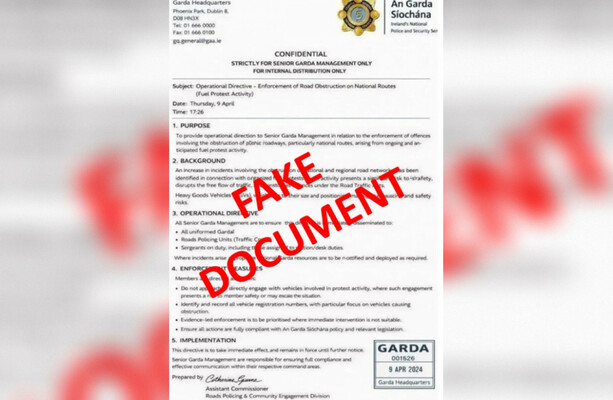
This is a concerning development. It’s crucial that the public remains vigilant against the spread of misinformation, especially when it appears to come from official sources. Fact-checking and verifying information is more important than ever.
I agree, it’s a worrying trend. Fake ‘directives’ can sow confusion and undermine trust in legitimate authorities. Kudos to Gardaí for quickly alerting the public to this issue.
Fake ‘directives’ are a serious issue that can have real-world consequences. I’m glad the Gardaí are on top of this and hope they are able to identify the source of this misinformation campaign.
This is a timely reminder of the importance of maintaining a healthy, vibrant free press. Readers should support independent news outlets like The Journal, which are committed to fact-based reporting.
I agree. Independent journalism plays a vital role in holding authorities accountable and providing the public with accurate, unbiased information. Readers should consider supporting their local news outlets.
Fake information campaigns are a growing threat to democracy. I’m glad Gardaí are taking action to counter this, but it highlights the need for better digital literacy and fact-checking skills among the public.
Absolutely. Educating people on how to spot and avoid misinformation should be a priority. Strong independent journalism is also crucial to counter the spread of fake news.
It’s disheartening to see such blatant attempts to mislead the public. I hope this incident encourages people to be more critical consumers of online content and to verify information from official sources.