


Listen to the article
Gardaí Issue Warning About Fake Document Circulating Amid Fuel Protests
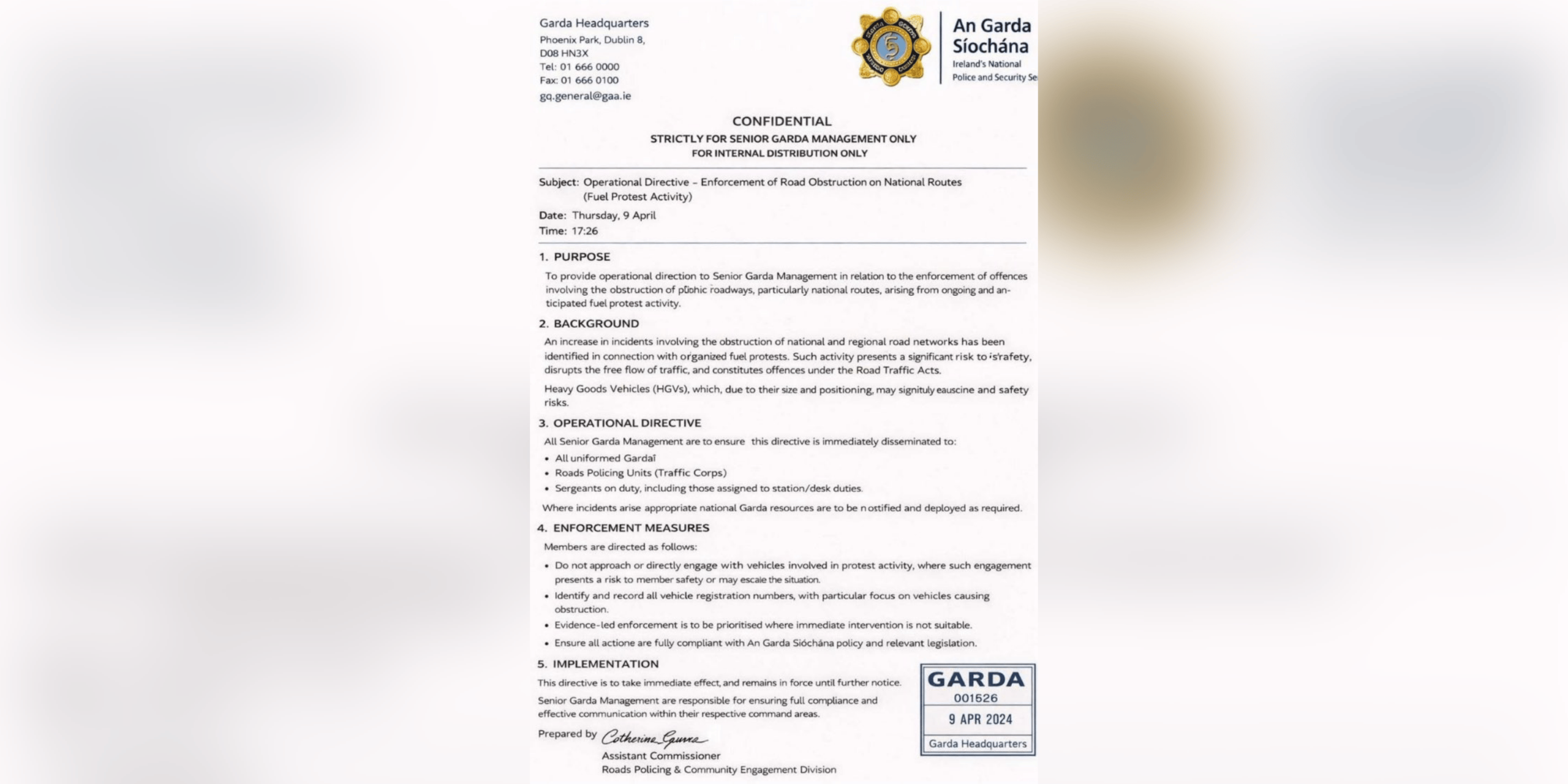
An Garda Síochána has issued an urgent warning to the public regarding a fraudulent document circulating widely on social media platforms and messaging apps in connection with the ongoing fuel protests across Ireland.
The document, designed to appear as an internal Garda operational directive, has been confirmed as completely fabricated by authorities. Officials have strongly urged citizens to refrain from sharing the document further to prevent the spread of misinformation during an already tense situation.
In an official statement, An Garda Síochána highlighted the growing concern about false information being disseminated online: “An Garda Síochána has regularly highlighted the rise in the level of misinformation, disinformation and fake news which is typically amplified by online accounts in order to spread fear and concern amongst our communities.”
The emergence of this fake document comes at a particularly sensitive time as fuel protests continue to cause disruption across the country. The protests, which have gained momentum in recent weeks, reflect growing public concern over rising fuel costs and related economic pressures affecting both consumers and businesses.
Security experts note that periods of social unrest and public demonstrations often coincide with an uptick in misinformation campaigns. Such false information can exacerbate tensions and potentially undermine public safety efforts by creating confusion about official responses to ongoing events.
Authorities are emphasizing the importance of information verification, especially during critical situations. Members of the public are being advised to independently verify any information they encounter on social media or messaging platforms before accepting it as factual or sharing it with others.
Digital literacy specialists point out that distinguishing authentic from fake official documents has become increasingly challenging in the age of sophisticated AI tools. These technologies can create convincing forgeries that appear legitimate at first glance but contain subtle inconsistencies upon closer examination.
For those concerned about document authenticity, experts recommend several verification strategies. Official Garda communications are published exclusively through verified channels, including their official website (garda.ie) and verified social media accounts on platforms like Facebook and X (formerly Twitter).
Internal confidential documents would not normally be publicly distributed, making any appearance of such materials on social media inherently suspicious. Common indicators of falsified documents include subtle spelling errors, grammatical mistakes, inconsistent formatting, unusual phrasing, and incorrect dates—all elements that would typically be absent from professionally prepared official documents.
This incident highlights a broader trend of misinformation surrounding major news events and public demonstrations. Similar cases have been documented during other significant protests and social movements around the world, where false information has been strategically deployed to influence public perception.
The Garda warning comes amid growing concern about the impact of misinformation on public discourse and democratic processes. Recent studies have shown that false information can spread up to six times faster than factual content on social media platforms, making rapid response from authorities increasingly important.
Citizens are encouraged to report suspicious content to platform moderators and, when appropriate, to An Garda Síochána. The most effective defense against misinformation remains critical media literacy—approaching online content with appropriate skepticism and verifying information through multiple reliable sources before accepting or sharing it.
As the fuel protests continue, both authorities and protest organizers have expressed concern about how misinformation could potentially derail legitimate public discourse around the underlying economic issues at stake.
Fact Checker
Verify the accuracy of this article using The Disinformation Commission analysis and real-time sources.

6 Comments
The Gardaí are right to warn the public about this fraudulent document. Amplifying misinformation, even unintentionally, can exacerbate an already tense situation. Citizens should be very cautious about sharing unverified content.
As fuel costs continue to rise, I can understand the public frustration driving these protests. However, spreading fabricated documents will only undermine the legitimate concerns and distract from meaningful solutions.
This is a timely reminder of the importance of media literacy and critical thinking when consuming information, especially on social media. We must all be vigilant in identifying and stopping the spread of disinformation.
Spreading misinformation during sensitive times like these protests is very concerning. Authorities must remain vigilant to combat the rise of fake documents and online disinformation.
It’s good to see the Gardaí taking a strong stance against this fabricated document. Verifying the source of information is crucial, especially on social media where false claims can spread rapidly.
Absolutely. Fact-checking and calling out fake information is essential to maintain public trust and stability during challenging circumstances.