


Listen to the article
Foreign Facebook Pages Pose as Australian News Sites to Spread Political Misinformation
Foreign-run Facebook pages are masquerading as Australian news publications to spread false information about politicians, an investigation has revealed. The operation, oddly linked to a British soap opera, appears designed to generate engagement and monetize web traffic through AI-generated content.
Three Facebook pages—named “The Australian,” “Australia Times,” and “The Australian Bulletin”—have been publishing multiple AI-generated posts daily about prominent Australian political figures including Prime Minister Anthony Albanese, One Nation leader Pauline Hanson, Foreign Affairs Minister Penny Wong, and Western Australian senator Fatima Payman.
The fabricated content primarily focuses on federal parliament proceedings but also includes fictional confrontations between political commentators and MPs during television interviews. Most concerning is that these pages are operated from overseas, primarily by users in Vietnam, and direct readers to external websites filled with advertisements.
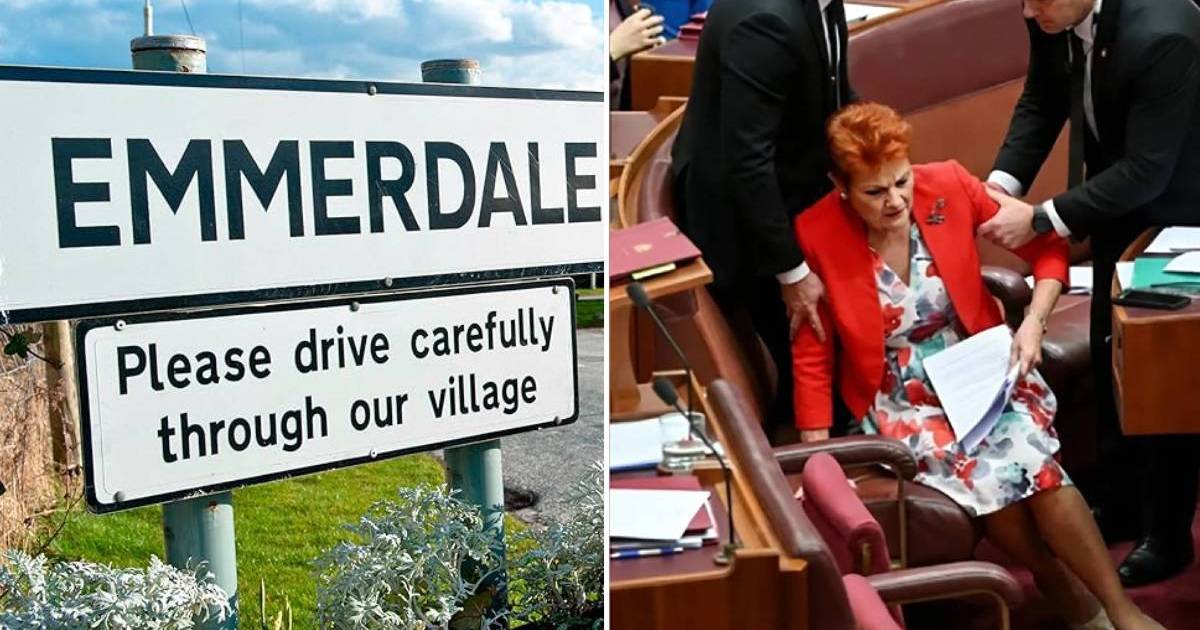
One page, “The Australian,” appears to trade on the credibility of the Murdoch-owned national daily broadsheet of the same name. Facebook’s transparency data reveals it is operated by 12 people from Vietnam. Curiously, in its previous incarnation, it was a fan page for the long-running British television soap “Emmerdale,” which chronicles life in a fictional Yorkshire Dales village.
The other two pages have undergone similar transformations, with many also previously related to the TV series, which first aired in 1972 and at its peak attracted more than 11 million viewers per episode. “The Australian Bulletin” is managed by users in Vietnam and Indonesia, while the management details for “Australia Times” remain unclear.
Adding to the appearance of legitimacy, “The Australian” page falsely claims to be authorized by the Australian Christian Lobby, mimicking political authorization statements typically used on political advertisements. The lobby has confirmed it has no connection to the site.
Since early March, “The Australian” page has posted approximately 11 times daily, almost exclusively spreading Australian political disinformation. One post falsely claimed, “BREAKING: Parliament falls silent as Pauline Hanson unexpectedly collapses during live parliamentary session,” accompanied by an AI-generated image of the Queensland senator.
Such fabrications about Hanson’s health have appeared multiple times across these pages, prompting the politician to address concerned constituents who contacted her office to check on her wellbeing. Other posts feature fictional clashes between politicians, fabricated quotes, and more AI-generated images.
The three sites collectively have amassed more than 36,000 followers. While engagement varies between posts, some have been shared hundreds of times and viewed by thousands of users. Each post directs readers to an external website called soapspoiler.net via links in the comments section—a name that appears to reference the pages’ previous incarnation as “Emmerdale” fan pages.
Further connecting these accounts, each Facebook page lists an email address ending with @fbtarget.com. FbTarget is a Hanoi-based social media management system that allows users to operate multiple pages simultaneously. The company is also listed on the “contact us” page of soapspoiler.net, alongside another Vietnamese company called Bee Up.
Bee Up markets itself as providing “knowledge and solutions” for individuals interested in making money online, based on “accumulated secrets.” When contacted by AAP FactCheck, neither FbTarget nor Bee Up responded to inquiries.
Dali Kaafar, executive director of Macquarie University’s cyber security hub, noted that these connections suggest a coordinated effort consistent with an “industrialized content” model. “In many cases, the primary motivation behind these networks is commercial,” Kaafar explained. “Operators produce large volumes of low-cost content designed to resemble legitimate news and distribute it through social platforms to generate clicks and advertising revenue.”
Political content is particularly effective for this purpose as it drives user engagement and sharing, he added. However, even if financially motivated, the impact of such political disinformation is significant. “Once a network of pages and websites has built and accumulated an audience, it can function as a distribution channel that amplifies misleading or polarizing narratives,” Kaafar said.
Ken Gamble, a cybercrime investigator at Sydney-based IFW Global, agreed that the pages likely represent an engagement-driven advertising model aimed at maximizing profit. However, he cautioned that identifying those ultimately responsible for the disinformation is complex.
“The appearance of a marketing platform or domain linked to the pages doesn’t necessarily mean that company is behind the activity, as these tools can be used by third parties anywhere in the world,” Gamble said. “Without deeper technical investigation, it would be premature to rule out other actors or sinister motivations.”
Fact Checker
Verify the accuracy of this article using The Disinformation Commission analysis and real-time sources.

14 Comments
Interesting to see foreign entities trying to manipulate Australians through fake news pages. We need to be vigilant about verifying sources and fact-checking claims, especially when it comes to political issues.
Absolutely. It’s concerning to see these foreign-run pages trying to pass themselves off as legitimate Australian news sources. Fact-checking is so important these days.
The use of AI-generated content to spread misinformation is a concerning development. We must be wary of the rise of synthetic media and the potential for it to undermine public discourse.
Definitely. The use of AI to automate the production of fake news is a troubling tactic. We need better safeguards and media literacy education to combat this threat.
The connection to a British soap opera is an odd and intriguing detail. I wonder if there are any further insights into the motivations and origins of this disinformation campaign.
Yes, that’s an unusual link that deserves further investigation. Understanding the full scope and tactics of these foreign-backed operations is crucial for developing effective countermeasures.
This underscores the need for robust media regulations and fact-checking mechanisms to protect the integrity of Australia’s information ecosystem. Vigilance is key to safeguarding our democracy.
Well said. Strengthening media literacy and digital citizenship education should also be a priority to empower Australians to navigate the online information landscape.
It’s disheartening to see foreign actors exploiting the trust Australians place in their news sources. Maintaining a well-informed, engaged citizenry is crucial for a healthy democracy.
Absolutely. Australians deserve access to reliable, fact-based information from credible sources, not foreign-run disinformation campaigns masquerading as news.
This is a timely reminder of the importance of critical thinking and fact-checking when consuming online content, especially when it comes to political issues. We must remain vigilant against foreign interference.
Absolutely. Australians should be wary of any news sources that seem suspicious or unfamiliar, and always cross-reference information from a variety of reputable outlets.
This is a worrying trend of foreign interference in domestic politics through the spread of disinformation. Australian citizens deserve access to reliable, factual information from trustworthy sources.
Agreed. It’s crucial that we maintain the integrity of our democratic institutions and processes. Vigilance against these foreign-backed influence operations is essential.