


Listen to the article
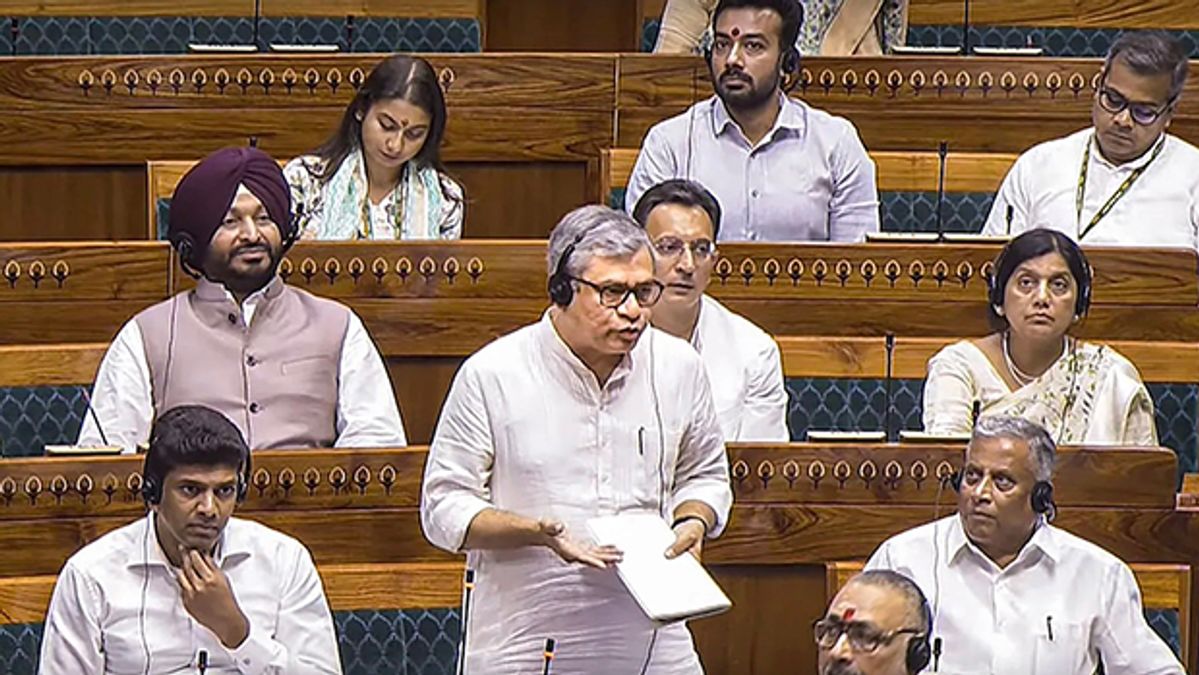
In a strongly worded address to the Lok Sabha on Wednesday, Information and Broadcasting Minister Ashwini Vaishnaw declared fake news a “serious threat” to India’s democratic foundations, signaling the government’s intent to implement more stringent regulations for social media platforms.
The minister’s comments come amid growing concerns about the proliferation of misinformation and AI-generated deepfakes across digital platforms in India, which has over 700 million internet users and is one of the world’s largest digital markets.
“Certain ecosystems using social media platforms have emerged that do not wish to follow our Constitution or comply with laws enacted by Parliament,” Vaishnaw told the House, emphasizing the urgent need for firmer action and more robust regulatory frameworks.
The government has already taken initial steps to address these concerns. Vaishnaw informed MPs about recently notified rules that require platforms to remove specified content within 36 hours of notification. Additionally, the ministry has published a draft rule specifically targeting AI-generated deepfakes, which have become increasingly sophisticated and difficult to identify.
The draft proposal aims to create mechanisms for identifying manipulated content and prescribes appropriate actions against violators. Public and industry consultations on these draft regulations are currently underway, reflecting the government’s attempt to incorporate diverse perspectives before finalizing the framework.
Vaishnaw acknowledged the Parliamentary Committee’s efforts in examining these complex issues and expressed gratitude to BJP MP Nishikant Dubey and other committee members for their comprehensive report. Their recommendations are expected to play a crucial role in strengthening the legal architecture around fake news and digital platform governance.
The minister noted that addressing fake news requires navigating a “delicate balance” between protecting freedom of speech—a fundamental right guaranteed by the Indian Constitution—and safeguarding democratic institutions from manipulation and misinformation campaigns. He assured lawmakers that the government is approaching this challenge with “full sensitivity” to this balance.
India’s approach to digital regulation comes at a time when major democracies worldwide are grappling with similar challenges. The European Union has implemented the Digital Services Act, while the United States continues to debate the extent of regulation needed for tech platforms.
Despite highlighting the challenges, Vaishnaw also pointed to the positive aspects of India’s digital transformation. Under Prime Minister Narendra Modi’s leadership, the Digital India initiative has been instrumental in democratizing technology and delivering substantial benefits to citizens across socioeconomic divides, he said.
Social media platforms have empowered ordinary citizens by giving them a voice in national discourse—a development that has fundamentally altered how public opinion is formed and expressed in the world’s largest democracy.
The minister’s remarks reflect the Modi government’s dual approach to digital governance: embracing technological advancement while attempting to mitigate its potential harms through regulatory oversight.
Industry observers note that any new regulations will likely have significant implications for major social media companies operating in India, including Meta (parent company of Facebook, Instagram, and WhatsApp), X (formerly Twitter), and YouTube, all of which have massive user bases in the country.
The government’s ultimate objective, according to Vaishnaw, remains strengthening institutional frameworks and preserving the trust that forms the foundation of both society and democratic processes in India as it navigates the complex digital landscape of the 21st century.
Fact Checker
Verify the accuracy of this article using The Disinformation Commission analysis and real-time sources.

29 Comments
Silver leverage is strong here; beta cuts both ways though.
Exploration results look promising, but permitting will be the key risk.
The cost guidance is better than expected. If they deliver, the stock could rerate.
Nice to see insider buying—usually a good signal in this space.
Good point. Watching costs and grades closely.
The cost guidance is better than expected. If they deliver, the stock could rerate.
Silver leverage is strong here; beta cuts both ways though.
I like the balance sheet here—less leverage than peers.
Good point. Watching costs and grades closely.
Uranium names keep pushing higher—supply still tight into 2026.
Good point. Watching costs and grades closely.
Exploration results look promising, but permitting will be the key risk.
Good point. Watching costs and grades closely.
Good point. Watching costs and grades closely.
Interesting update on Fake News Threatens Democracy, Warns Information Minister Vaishnaw. Curious how the grades will trend next quarter.
Good point. Watching costs and grades closely.
Good point. Watching costs and grades closely.
I like the balance sheet here—less leverage than peers.
Good point. Watching costs and grades closely.
The cost guidance is better than expected. If they deliver, the stock could rerate.
Good point. Watching costs and grades closely.
Good point. Watching costs and grades closely.
If AISC keeps dropping, this becomes investable for me.
Good point. Watching costs and grades closely.
Good point. Watching costs and grades closely.
Uranium names keep pushing higher—supply still tight into 2026.
Good point. Watching costs and grades closely.
Uranium names keep pushing higher—supply still tight into 2026.
Good point. Watching costs and grades closely.