


Listen to the article
Nigerian Officials Warn Against Digital Disinformation, Call for Responsible Social Media Use
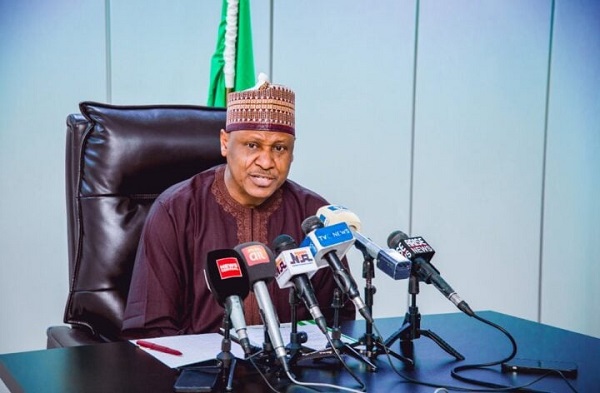
Federal Information and National Orientation Minister Mohammed Idris issued a stark warning Saturday about the dangers of fake news and digital disinformation, describing them as serious threats to Nigeria’s moral foundation and long-term stability.
Speaking at the 20th Joint Ramadan Lecture in Kaduna, organized by three state media organizations—Nigerian Television Authority, Federal Radio Corporation of Nigeria, and Voice of Nigeria—Idris urged citizens, particularly youth, to exercise responsibility in digital spaces.
“We live in an age where a single smartphone can broadcast lies before truth can respond,” Idris told attendees at the event held at Lumana Hall, Zamani College. He noted that algorithms tend to amplify divisive content because “anger spreads faster than reflection.”
The lecture, themed “Digital Technology and the Moral Future: Navigating the Fitna of Our Time with Faith and Purpose,” addressed growing concerns about information disorder in Nigeria’s rapidly digitalizing society.
While acknowledging that technology has created unprecedented opportunities for learning and innovation, the minister emphasized that it has simultaneously “unleashed forces that threaten our moral fabric” with misinformation outpacing factual content across platforms.
Idris described disinformation as an evolved tool of political warfare that erodes public trust in institutions, deepens suspicion among citizens, and undermines national cohesion—particularly concerning in Nigeria’s diverse society where social harmony remains delicate.
Drawing from Islamic principles, the minister referenced Surah Al-Hujurat (49:6) to advocate for a culture of verification. He outlined ethical safeguards including verifying information before sharing, examining intentions, maintaining accountability, acknowledging knowledge limitations, and prioritizing social harmony over sensationalism.
Nigeria’s predominantly young population received special attention in the minister’s address, as he urged them to use digital tools for nation-building rather than division. “A nation that fails its youth has no future,” Idris stated, highlighting President Bola Ahmed Tinubu’s administration’s investments in digital empowerment initiatives, including the ambitious 3 Million Technical Talent (3MTT) program.
The minister also pointed to Nigeria’s recent designation by UNESCO as host of Africa’s first Media and Information Literacy Institute, describing media literacy as “the vaccine against misinformation” in today’s volatile digital landscape.
Former Vice Chancellor of Federal University Kashere, Professor Umar Pate, and Islamic scholar Sheikh Tukur Adam Al-Manar reinforced these concerns in their presentations. Both acknowledged technology’s transformative potential for national development while warning against its misuse.
They specifically highlighted how unregulated social media use among young Nigerians has contributed to moral decline, cyberbullying, and rapid dissemination of false information, calling for measures to restore digital discipline.
Sheikh Al-Manar went further, explicitly urging the federal government to implement regulatory frameworks for social media platforms to address rising immorality and irresponsible content—a position supported by Jigawa State Governor Umar Namadi, who suggested regulation would promote responsible usage and proper moral development.
The calls for regulation reflect growing regional and global debates about balancing freedom of expression with protection against harmful content on digital platforms. Nigeria, Africa’s most populous nation with over 200 million citizens, has experienced significant social media-driven controversies in recent years, including during the 2020 #EndSARS protests and subsequent elections.
All speakers praised the state media organizations for maintaining the annual Ramadan Lecture series for two decades, describing it as a vital connection point between faith, media, and national development “at a time when truth itself is under siege.”
The event underscores mounting official concern about information integrity in Nigeria’s digital space as the country confronts challenges of governance, security, and social cohesion in an increasingly connected society.
Fact Checker
Verify the accuracy of this article using The Disinformation Commission analysis and real-time sources.

6 Comments
Algorithms that amplify divisive content are a major concern. It’s crucial that people learn to think critically about the information they consume online and verify sources before sharing content. Responsible social media use is key to combating the threat of fake news.
Fake news is a global problem, but it can be particularly damaging in developing countries where access to reliable information may be limited. Nigeria’s proactive approach to tackling this challenge is commendable and could serve as a model for other nations facing similar threats.
The minister’s warning highlights the urgent need for robust fact-checking mechanisms and greater transparency around the origins and dissemination of digital content. Establishing clear guidelines and accountability measures for social media platforms could be an important step forward.
I’m curious to learn more about the specific measures the government plans to take to address this issue. Strengthening fact-checking efforts, regulating social media platforms, and promoting digital citizenship education could all be potential solutions. What other strategies are being considered?
This is a serious issue that needs to be addressed. The spread of fake news can have devastating consequences for a country’s stability and democratic processes. The government is right to warn citizens, especially the youth, about the dangers of digital disinformation.
The minister’s warning highlights the importance of digital literacy and media education. Nigerians should be empowered to identify and resist the manipulation of information for political or economic gain. Fostering a culture of truth and accountability is vital for the country’s future.