


Listen to the article
Vietnamese Youth Survey Reveals Social Media Habits and Fake News Impact
A comprehensive cross-sectional survey conducted across three Vietnamese cities has shed light on how young people interact with social networks and respond to misinformation. The research, carried out by the Vietnam Youth Research Institute between September and October 2021, examined social media usage patterns, fake news encounters, and mental health impacts among Vietnamese youth.
The study, which achieved a remarkable 95.9% completion rate with 1,850 respondents, targeted participants in Hanoi, Tuyen Quang, and Can Tho. Researchers employed snowball sampling, initially engaging student union presidents at educational institutions who then helped disseminate the survey through their networks.
“This research provides valuable insights into the digital literacy landscape and how young Vietnamese are navigating an increasingly complex information environment,” said a researcher involved with the project, who highlighted the importance of understanding youth behavior on social platforms.
The survey instrument was meticulously developed through a rigorous process that included comprehensive literature reviews, expert panel consultations, and pilot testing. Translated into Vietnamese using a back-translation approach to ensure accuracy, the questionnaire covered five key areas: socio-demographic characteristics, internet and social media usage, fake news experiences, coping strategies, and mental health indicators.
Digital literacy emerged as a significant factor in how respondents interacted with online content. The survey assessed both basic and advanced digital literacy using 15 items rated on a five-point Likert scale. Higher scores indicated greater digital proficiency, with the tool demonstrating strong internal consistency (Cronbach’s alpha of 0.91 for basic literacy and 0.92 for advanced literacy).
The study also employed the Bergen Social Media Addiction Scale (BSMAS), which has been widely validated in Vietnam, to measure participants’ dependence on social platforms. This six-item scale revealed concerning patterns of social media addiction among some segments of the youth population.
Mental health impacts were assessed using the Patient Health Questionnaire (PHQ-9) for depression and the Generalized Anxiety Disorder Assessment (GAD-7) for anxiety. Both tools have been extensively validated within Vietnamese contexts and showed strong reliability in the study, with Cronbach’s alpha values of 0.92 and 0.94 respectively.
Particularly noteworthy was the assessment of fake news recognition, which examined participants’ ability to identify misinformation through both direct content cues (such as source credibility and professional certification) and indirect contextual indicators (like share counts or user activity). The study revealed varying levels of proficiency in distinguishing reliable information from fabricated content.
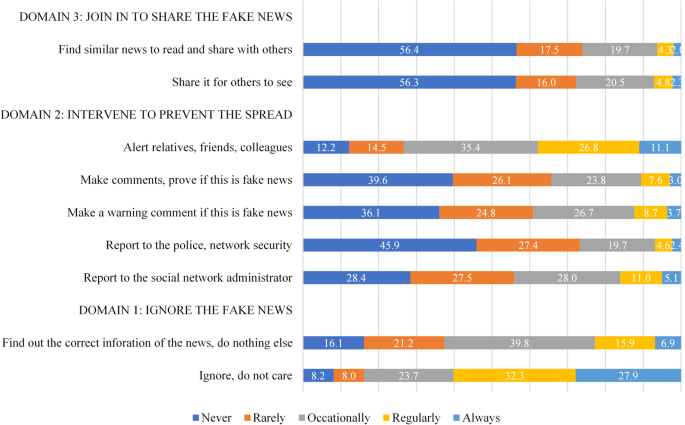
When encountering fake news, participants reported employing different coping strategies, categorized into three domains: ignoring the content, actively intervening to prevent its spread, or participating in sharing the misinformation. These behaviors were measured using nine items with strong internal consistency (Cronbach’s alpha of 0.81).
Data analysis, conducted using STATA version 16, employed a range of statistical methods including Chi-squared tests, Kruskal-Wallis tests, and exploratory factor analysis. For complex relationships, researchers used multivariate ordered logistic regression and multivariate linear regression models.
The findings highlight the complex interplay between social media habits, fake news exposure, and mental wellbeing among Vietnamese youth. As digital platforms continue to dominate information consumption, understanding these dynamics becomes increasingly crucial for educators, health professionals, and policymakers.
This research contributes to a growing body of evidence on how young people navigate digital environments and process information of varying reliability. The insights gained may inform targeted interventions to enhance digital literacy and mitigate the potential mental health impacts of misinformation exposure.
As Vietnam continues its rapid digital transformation, studies like this provide valuable guidance for developing evidence-based approaches to building a more digitally resilient youth population.
Fact Checker
Verify the accuracy of this article using The Disinformation Commission analysis and real-time sources.
