


Listen to the article
The growing challenge of misinformation is eroding the foundation of shared truth in American society, with increasing numbers of citizens retreating into echo chambers that reinforce their existing beliefs. This fragmentation of our information ecosystem has real-world consequences that are becoming increasingly difficult to contain.
When a gunman nearly assassinated former President Donald Trump at a Pennsylvania rally in July, social media platforms immediately erupted with unfounded conspiracies. One user claimed, “I bet you it was the government themselves,” while another post suggesting an “inside job” garnered over seven million views.
“We’re at a point where nobody believes anything. Truth as a concept is really in trouble. It’s suspect,” says journalist and author Steven Brill, whose new book “The Death of Truth” examines this crisis. Brill argues that the fundamental problem is not just disagreement about policies but an inability to agree on basic facts.
“There are facts,” Brill explains, “and it used to be in this world that people could at least agree on the same set of facts and then they could debate what to do about those facts.”
Brill’s company, NewsGuard, employs approximately 40 staffers worldwide who identify and rate the credibility of online news and information sources. However, this effort represents just a small countermeasure against the flood of misinformation circulating online.
A key challenge stems from Section 230 of the Communications Decency Act, passed nearly three decades ago, which shields internet platforms from liability for content posted by users. “They inserted a three-paragraph section called Section 230, which said that these internet publishers would not be responsible for anything that was published in their chat rooms,” Brill notes.
This legal framework has left the internet largely unregulated, allowing social media companies to exercise minimal oversight while lies, fake news, and divisive content flourish unabated.
The problem has international dimensions as well. Just last week, the U.S. government responded forcefully to what it described as Moscow-backed content infiltrating American media channels. An indictment unsealed by the Department of Justice alleged that Russian nationals funneled millions of dollars to an American media company that paid right-wing influencers to promote narratives favorable to the Kremlin.
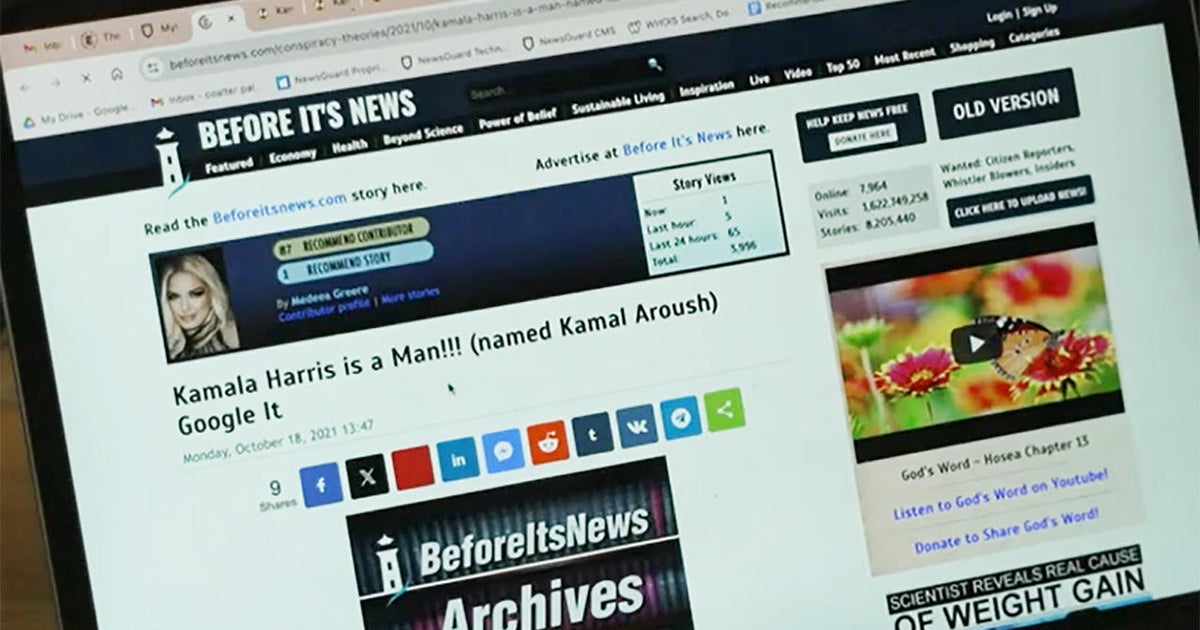
However, much of the misinformation plaguing the American information landscape is domestically produced. Particularly concerning is the proliferation of fake local news sites. “There are more fake news sites posing as legitimate local news in the United States than there are news sites of legitimate local newspapers,” Brill warns.
These deceptive operations come from across the political spectrum. “There is no monopoly on virtue from either side here,” Brill points out. “The most effective fake local news sites are financed by liberal political action committees. And they’re sort of especially self-righteous about it… they basically said, ‘Well, the other guys do it, so we’ll do it.’ But it’s undermining democracy.”
The emergence of artificial intelligence represents yet another threat to our shared reality. AI-generated images, including fake photos of political figures like Donald Trump and Vice President Kamala Harris, are increasingly sophisticated and difficult to distinguish from authentic content.
“It disorients everything, because you don’t know if something is a hoax, or is political propaganda, or is a deep fake. You just don’t know what to believe,” says Brill.
Looking ahead to November’s presidential election, Brill expresses deep concern about the potential aftermath. When asked whether a clean, fair, and universally acceptable election is possible in the current environment, he responded pessimistically.
“Your last condition is the one that is, I think, impossible – universally acceptable. Forget universally, even modestly acceptable,” Brill said. “I have a real fear that one way or another, regardless of the outcome, that the chaos and the disbelief and anger that’s going to prevail on November 6, the day after the election, is really going to put our country to the test.”
As the nation approaches this critical juncture, the deterioration of shared truth presents a fundamental challenge to American democracy that extends far beyond partisan politics, threatening the very mechanisms by which a diverse society reaches consensus and governs itself.
Fact Checker
Verify the accuracy of this article using The Disinformation Commission analysis and real-time sources.

7 Comments
This is a concerning issue. The spread of misinformation and erosion of shared truth has real consequences. We need to find ways to restore trust in reliable information sources and fact-based discourse.
Fascinating insights on the fragmentation of our information ecosystem and the real-world consequences. We must find ways to combat the spread of conspiracy theories and reinforce the importance of facts and evidence-based reporting.
Interesting perspective on the challenges of establishing common ground on facts in today’s fractured information landscape. It’s crucial that we find ways to combat the spread of conspiracy theories and unfounded claims.
I agree. Fact-checking and media literacy education will be key to helping people navigate this complex information environment.
This is a critical issue that goes to the heart of a functioning democracy. Misinformation and the erosion of truth pose grave risks that we cannot afford to ignore.
Absolutely. Restoring a shared sense of objective reality is essential. Solutions will require cooperation across media, tech, and civic institutions.
The impact of fake news and social media echo chambers on public discourse is deeply troubling. We must find ways to restore trust in reliable, evidence-based reporting.