


Listen to the article
Public welfare authorities issued a stark warning this week about fraudulent social media pages masquerading as official government channels to potentially deceive vulnerable citizens seeking financial assistance.
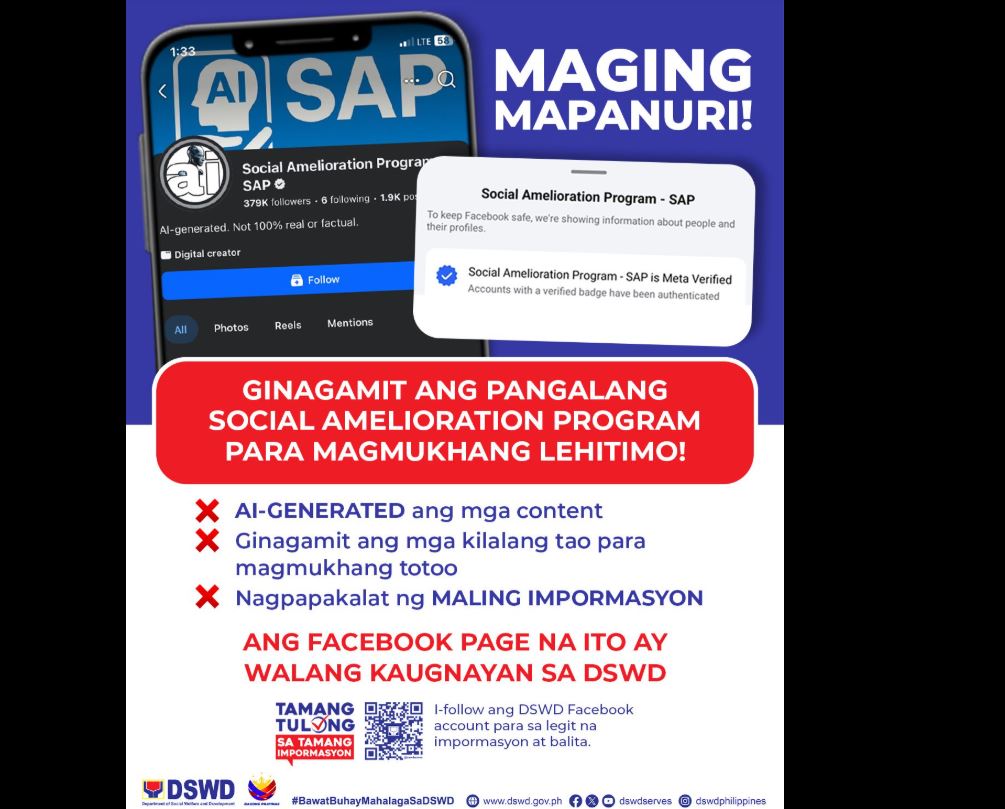
The Department of Social Welfare and Development (DSWD) has identified several unofficial social media accounts falsely representing themselves as the agency’s official pages, specifically targeting followers by mentioning the Social Amelioration Program—a government initiative designed to provide financial support to low-income families.
Officials expressed concern over one particular page that has amassed thousands of followers through its professional-looking layout and convincing design elements that mimic official government communications. The sophisticated presentation of these fraudulent pages makes them particularly dangerous to unsuspecting citizens who may be seeking legitimate government assistance.
“Upon closer examination of the content, you’ll notice the unclear source of information and the use of recognizable personalities to attract attention,” the DSWD stated in its official warning. “Always remember that this is not one of DSWD’s official pages and this account has no connection to or permission for spreading misleading messages.”
Social media scams targeting government aid recipients have become increasingly common in recent years, with fraudsters developing more sophisticated methods to appear legitimate. Digital security experts note that such pages often capitalize on public need during economic hardship, when citizens are most vulnerable to promises of financial assistance.
The Social Amelioration Program, which gained prominence during the pandemic years as a critical lifeline for millions of families, continues to be a recognizable name that scammers exploit to lend credibility to their fraudulent operations. The program’s widespread recognition makes it an attractive vehicle for those attempting to deceive the public.
Government watchdogs have noted a troubling trend in which these unofficial pages often request personal information or “registration fees” from followers, promising inclusion in non-existent aid distribution programs. Such tactics can lead to identity theft, financial fraud, and other forms of exploitation targeting those already in precarious financial situations.
Digital rights advocates emphasize that government agencies rarely, if ever, request payments or sensitive personal information through social media platforms. Any page requesting such information should immediately raise red flags for users.
The DSWD has urged citizens to exercise vigilance when encountering social media content purporting to come from government sources. Officials recommend verifying information through multiple official channels before taking any action based on social media announcements, especially those involving financial assistance programs.
To help citizens avoid falling victim to such scams, the DSWD directed the public to follow only their verified social media accounts for accurate information regarding assistance programs and official announcements. The department maintains official accounts across major social media platforms, all of which display verification badges and consistent branding.
Cybersecurity specialists recommend that social media users check for verification badges, examine page creation dates, and review the consistency of posting patterns before trusting government-related pages. They also suggest reviewing the “About” section of suspicious pages, as legitimate government accounts typically provide comprehensive contact information and links to official websites.
As digital scams continue to evolve in sophistication, government agencies across the region have increased collaborative efforts with social media platforms to quickly identify and remove fraudulent accounts that impersonate official entities. These initiatives aim to protect vulnerable citizens from exploitation while maintaining public trust in legitimate government communications channels.
Fact Checker
Verify the accuracy of this article using The Disinformation Commission analysis and real-time sources.

11 Comments
This is a really concerning issue. Fraudsters taking advantage of vulnerable people seeking government aid is despicable. I’m glad the authorities issued a strong warning to raise awareness and protect citizens from these deceptive scams.
Absolutely, these fake pages are designed to look official but are just traps to steal personal information or money. Vigilance is key when seeking any kind of government assistance online.
This is a timely and important warning from the DSWD. With so many people struggling, it’s unconscionable that scammers would try to exploit that vulnerability. Vigilance is key to avoid falling victim to these predatory schemes.
Absolutely. The government should do everything in its power to crack down on these fraudsters and protect vulnerable citizens from being taken advantage of.
Fraudulent social media pages offering cash aid are a growing problem that preys on those in need. I hope the authorities are able to quickly shut down these scams and hold the perpetrators accountable.
Me too. Stealing from vulnerable people is a terrible crime. The government needs to stay vigilant and do everything they can to protect citizens from these types of predatory schemes.
It’s alarming to see how sophisticated these fraudulent social media pages have become. The public really needs to be on high alert and verify the source before responding to any offers of government aid or assistance online.
This is a good warning from the DSWD. I’m glad they are being proactive in alerting the public about these fraudulent social media pages. Verifying the source is crucial when seeking any kind of government aid or assistance.
It’s alarming how sophisticated these fraudulent social media pages have become, mimicking legitimate government communications. The public needs to be very cautious and verify the source before responding to any offers of cash aid online.
Criminals taking advantage of people in need is always despicable. I hope the authorities are able to quickly shut down these fake pages and prevent any more victims from falling for these scams.
Agreed. The government needs to come down hard on these fraudsters to send a strong message that this kind of predatory behavior will not be tolerated.