


Listen to the article
Deepfakes Proliferate Across Africa, Posing Growing Threat to Information Integrity
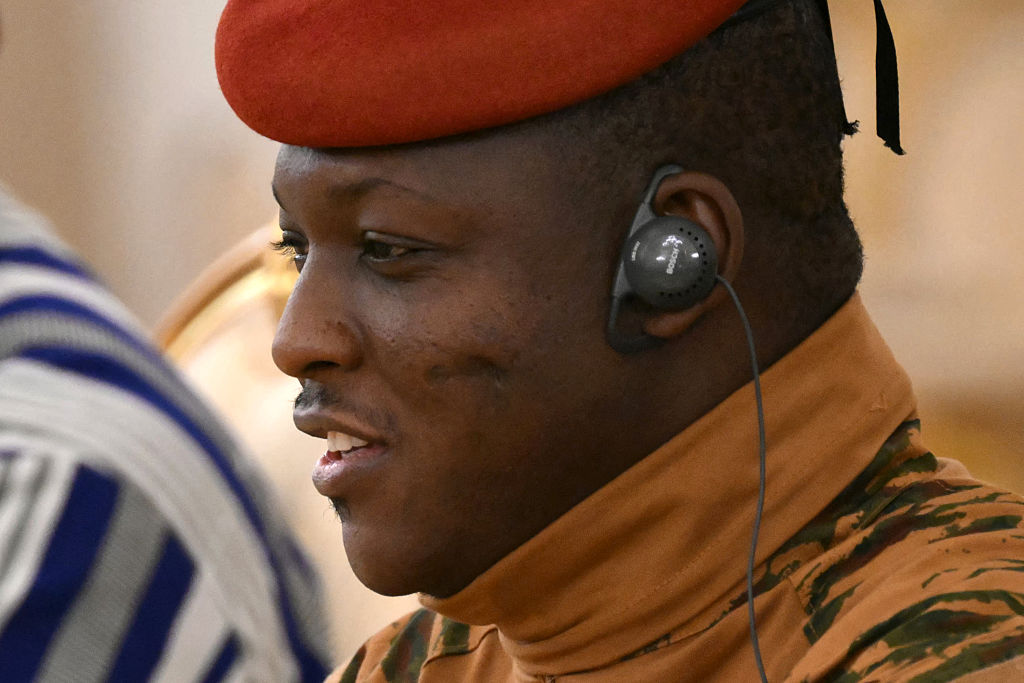
Shortly after Captain Ibrahim Traoré seized power in Burkina Faso’s second coup in a year in September 2023, a flood of deepfake videos began circulating across social media platforms. These sophisticated fabrications urged Burkinabe citizens to support the military takeover, marking the beginning of a troubling trend.
Since then, Traoré has unwittingly become the star of numerous manufactured videos portraying him in scenarios ranging from diplomatic meetings with world leaders to confrontations with the International Monetary Fund, and even addressing “Pope Leo XIV” in fluent English—despite none of these events ever occurring.
These carefully crafted videos are designed specifically to provoke emotional responses among viewers. As Yaw Kissi, a prominent pan-African writer, explained to HumAngle: “When people hear voices, even artificial ones, boldly articulating what they’ve always felt but rarely heard echoed, it sparks something powerful.”
Deepfakes—AI-generated video or audio content simulating real people to spread misinformation—are rapidly proliferating across the African continent, where most countries lack robust systems to identify and counter such technology. The phenomenon represents a growing crisis for information integrity in regions already grappling with political instability.
In the Sahel region, particularly Burkina Faso, Mali, and Niger, evidence suggests Russia’s military presence—formerly under the Wagner Group and now rebranded as Africa Corps—is likely behind some deepfakes promoting pro-Russian and pro-junta narratives.
Investigations have revealed that many of Traoré’s fabricated speeches were created by two France-based groups, Black Rebellion and Univers Inspirant, which have devoted over 90% of their content to the Burkinabe junta leader. While these videos generally praise Traoré, experts believe the primary motivation is financial—capitalizing on content that generates millions of views and shares.
“Today, we have an inspiring message from Ibrahim Traoré,” warned London-based IT consultant Adrian Moore in a recent HumAngle interview. “Tomorrow, we could have Ibrahim Traoré promoting prejudice or justifying crimes, and it would be accepted, even acted upon.”
The problem extends far beyond Burkina Faso. Throughout the continent, deepfakes have been deployed in multiple contexts: targeting political rivals during elections, creating synthetic newscasters broadcasting propaganda with faces stolen from unsuspecting models, and fueling conflict narratives. In Sudan’s ongoing civil war, both sides have utilized deepfakes to demonize each other online.
Legitimate media organizations have repeatedly fallen victim to sophisticated deception campaigns. Qatar-based Al Jazeera recently uncovered a network of “ghost reporters”—using identities of deceased individuals—spreading pro-Russian propaganda across West and Central Africa.
Similarly, the African Digital Democracy Observatory discovered a completely fabricated Ghanaian journalist with established social media profiles and a website. This virtual reporter’s apparent credibility enabled the injection of false information about Ghanaian leaders and international organizations into mainstream African news outlets.
Beyond high-tech deepfakes, simpler “cheapfakes” also pose significant threats. These can be as basic as replacing an existing video’s audio track with AI-generated speech mimicking the subject’s voice—a technique requiring minimal technical expertise.
“Thanks to breakthroughs in generative AI, anyone can now be made to say or do virtually anything on screen, with staggering realism,” noted analysts from Ecofin Agency in a recent report.
Raphael Nkolwoudou Afane, a Cameroon-based legal expert specializing in digital law, explains the psychological vulnerability being exploited: “For centuries, visuals equated to proof of authenticity. But today, technology can fabricate incredibly convincing realities. The human brain, untrained to tell the difference between digital trickery and genuine content, is an easy target for these sophisticated illusions.”
Without clear social media regulation across African nations, the threat from deepfakes continues to grow. Meanwhile, major social platforms have scaled back their content moderation efforts even as they become primary information sources for millions.
Some countries are taking action. Between 2018 and 2023, six nations—Algeria, Benin, Egypt, Mauritius, Rwanda and Senegal—developed comprehensive national AI strategies. Several others, including Nigeria, Kenya, South Africa, and Ethiopia, are making progress on AI policies aimed at addressing these challenges.
Uganda updated its Computer Misuse Act in 2022 to specifically criminalize the intentional spreading of false information, including deepfakes.
However, experts emphasize that more comprehensive continental action is urgently needed. As Ecofin Agency analysts concluded: “Africa cannot afford to remain passive. The fight for digital truth is deeply tied to issues of sovereignty, democratic stability, and public trust. It is not about rejecting AI progress, but ensuring its responsible use, and putting safeguards in place to prevent its abuse.”
Fact Checker
Verify the accuracy of this article using The Disinformation Commission analysis and real-time sources.

20 Comments
The proliferation of deepfakes is a global challenge that requires a coordinated, multi-stakeholder response. We need to find ways to empower citizens to navigate the digital landscape with discernment.
Absolutely. Strengthening international cooperation and sharing best practices will be crucial to staying ahead of this rapidly evolving threat.
This is a worrying trend that could have serious consequences for democracy and stability across Africa. Tackling the root causes of misinformation will be a complex challenge.
Absolutely. Deepfakes erode trust in institutions and undermine informed decision-making. Collaborative solutions are needed at a regional level.
Deepfakes have the potential to undermine democracy and stability in vulnerable regions. We must act swiftly to protect the integrity of information and public discourse.
Absolutely. Building public awareness and resilience against misinformation should be a top priority for policymakers and civil society.
Deepfakes are a worrying development that undermine the integrity of information and public discourse. We need to find ways to empower citizens to navigate the digital landscape with discernment and skepticism.
I agree. Developing robust regulations and industry standards for AI-generated media should be a priority to address this challenge.
This is a concerning trend that highlights the need for greater investment in digital forensics and media literacy education across Africa. Combating misinformation will require a multi-faceted approach.
Absolutely. Strengthening collaboration between governments, civil society, and technology companies will be key to developing effective solutions.
Deepfakes are a pernicious form of misinformation that can have far-reaching consequences for political stability and social cohesion. We must act swiftly to address this issue.
I agree. Developing robust legal and technical frameworks to regulate the use of deepfakes should be a top priority for policymakers.
The proliferation of deepfakes is a global issue that requires a coordinated international response. Strengthening digital forensics capabilities will be key.
Yes, and we need to invest in early warning systems and rapid debunking mechanisms to stay ahead of these rapidly evolving threats.
This is a worrying development that highlights the need for greater investment in digital forensics and media literacy initiatives across Africa.
Yes, and we must also explore ways to hold platforms and creators of deepfakes accountable for the harm they cause.
While the technology behind deepfakes is impressive, the malicious use of it to manipulate public opinion is deeply concerning. We must find ways to mitigate this risk.
I agree. Developing robust regulations and industry standards for AI-generated media will be crucial to address this challenge.
Deepfakes are a serious threat to information integrity. We need robust media literacy programs to help citizens spot and resist these sophisticated manipulations.
Agreed. Empowering people to think critically about online content is crucial to combating the spread of misinformation.