


Listen to the article
Meta’s Decision to End Fact-Checking Raises Concerns About Climate Misinformation
Meta’s recent announcement that it will terminate its fact-checking program and reduce content moderation efforts has sparked significant concern among experts who worry about the potential proliferation of climate misinformation on platforms like Facebook and Instagram.
The tech giant plans to end its agreements with U.S.-based third-party fact-checking organizations in March 2025, a decision that caught many of these partners by surprise. The changes will only affect content viewed by U.S. users, as Meta faces stricter regulations on misinformation in other regions, particularly the European Union.
Since 2020, Meta has employed a Climate Science Information Center on Facebook to combat climate misinformation. Under the current system, third-party fact-checkers flag false and misleading posts, after which Meta decides whether to attach warning labels and reduce algorithmic promotion of such content. The company’s policies have prioritized addressing “viral false information,” hoaxes, and “provably false claims that are timely, trending and consequential,” while excluding opinion content without false claims.
“This decision creates a significant vacuum in content verification, especially during climate disasters when accurate information is most crucial,” said Dr. Emma Richardson, a digital media researcher at Columbia University. “We’ve seen how quickly misinformation can spread during crises.”
Research shows that fact-checking effectively combats climate misinformation, though its success varies depending on individuals’ beliefs, ideology, and prior knowledge. Studies indicate that messages aligned with audience values, delivered by trusted messengers, can help counter false claims. This approach becomes particularly important as extreme weather events—intensified by climate change—create prime conditions for misinformation.
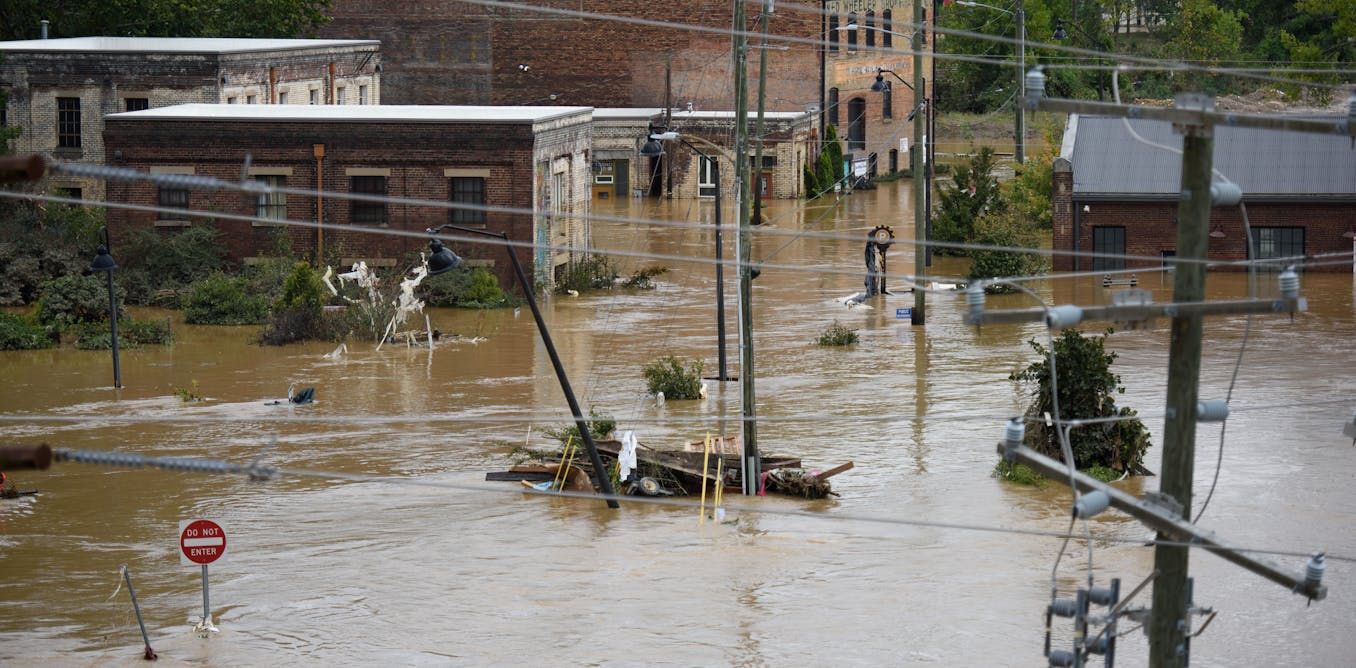
During disasters like hurricanes, wildfires, and floods, social media attention to climate issues typically spikes before quickly diminishing. These periods often see a surge in misinformation, recently complicated by low-quality AI-generated images. For example, after Hurricanes Helene and Milton in fall 2024, fake AI-generated images showing a shivering girl holding a puppy in a boat went viral on X (formerly Twitter), hampering FEMA’s disaster response efforts.
The landscape has become increasingly complex with the rise of coordinated disinformation campaigns. Following the 2023 Hawaii wildfires, researchers from organizations including Microsoft and the University of Maryland documented an organized propaganda campaign by Chinese operatives targeting U.S. social media users.
Meta CEO Mark Zuckerberg has cited X’s crowd-sourced Community Notes feature as inspiration for the company’s planned changes. However, research indicates that such user-generated fact-checking systems respond too slowly to prevent viral misinformation during its critical early spread.
Climate misinformation presents a particular challenge because false claims can be especially “sticky” and difficult to correct once they gain traction. Studies show that simply sharing more facts is insufficient to combat climate misinformation. Instead, “inoculation” approaches that prepare people by explaining scientific consensus before they encounter misinformation prove more effective.
“Timing is everything when it comes to combating misinformation,” said Dr. James Morton, an environmental communication specialist at Stanford University. “Once false narratives take hold, especially during crisis situations, they become extraordinarily difficult to dislodge.”
The implications extend beyond simple misunderstandings. During climate-fueled disasters, accurate information can be literally life-saving. This was evident in January 2025 when Los Angeles County mistakenly sent an evacuation alert to 10 million people during wildfires, creating confusion that misinformation could easily exploit.
Public sentiment appears to favor stronger moderation, with polls showing most Americans support restrictions on false information online. Despite this, major tech companies seem to be shifting responsibility for fact-checking onto their users.
As Meta moves forward with these changes, experts warn that crowd-sourced debunking will likely prove inadequate against organized disinformation campaigns, especially during information vacuums that emerge during environmental crises. Without robust fact-checking systems, conditions for the unchecked spread of misleading or false climate content may significantly worsen on these influential platforms.
Fact Checker
Verify the accuracy of this article using The Disinformation Commission analysis and real-time sources.

14 Comments
I’m curious to see how this decision by Meta will impact the spread of climate misinformation. Fact-checking plays a crucial role in curbing the reach of false claims, so this change is concerning.
Good point. Without that safeguard, it could become much easier for climate deniers and bad actors to amplify their narratives online, which could have serious real-world consequences.
This is a worrying development that could have far-reaching consequences. Reliable fact-checking is crucial to combating the spread of climate misinformation, which can erode public trust and hinder necessary action.
Absolutely. Platforms like Meta need to prioritize the dissemination of accurate, science-based information on climate change, not kowtow to those pushing false and misleading narratives.
Concerning news about the spread of climate misinformation on social media. Reliable fact-checking is crucial to combat the proliferation of false claims, especially on high-impact platforms like Facebook and Instagram.
I agree, it’s worrying to see major tech companies scaling back content moderation efforts around climate issues. Fact-based information should be a priority to ensure people have access to the truth.
I’m concerned about the potential for this decision to exacerbate the spread of climate misinformation. Fact-checking and content moderation play a vital role in maintaining the integrity of online discourse on this critical issue.
Agreed. Without those safeguards, it could become much easier for bad actors to amplify their false narratives and undermine public understanding of the scientific consensus on climate change.
This news raises serious concerns about the future impact of climate misinformation. Fact-checking is essential to counter the spread of false claims that can mislead the public and obstruct meaningful progress.
Definitely. Platforms should be doubling down on efforts to combat misinformation, not scaling them back. The stakes are too high when it comes to climate change.
This is a troubling development. Dismantling fact-checking programs could open the floodgates for more misinformation to spread unchecked, undermining efforts to address the very real and urgent issue of climate change.
Absolutely. Tech companies need to take greater responsibility for the content on their platforms and prioritize science-based information over profitability.
Reducing content moderation and fact-checking efforts around climate change is a worrying step. This could undermine public understanding of the scientific consensus and hinder urgent action to address the crisis.
Agreed. Platforms have a responsibility to ensure users have access to credible, evidence-based information on critical issues like climate change.