


Listen to the article
Police in Varanasi have registered eight separate cases against individuals accused of spreading AI-generated images and false information about the redevelopment of Manikarnika Ghat, one of Hinduism’s most sacred cremation sites.
Deputy Commissioner of Police Gaurav Bansal confirmed that the cases were filed under sections of the Bharatiya Nyaya Sanhita against eight people and several X (formerly Twitter) accounts. The charges stem from what authorities describe as a deliberate campaign to spread misinformation about the ongoing beautification project at the historic ghat.
According to police reports, the accused shared fabricated, AI-generated images on social media that misrepresented the actual renovation work taking place at the site. These images allegedly depicted Hindu religious symbols in a manner designed to provoke outrage and hurt religious sentiments.
“These posts presented completely distorted facts about the redevelopment project,” Bansal stated. “The intent appears to have been not only to hurt religious sentiments but also to create an anti-government mindset and disturb social harmony.”
The complaint that triggered the investigation was filed at Chowk police station by Mano, a resident of Tamil Nadu whose company has been handling the ghat’s renovation since November 15, 2023. According to the complaint, users on X began sharing the manipulated images on January 16, which quickly gained traction through reposts and inflammatory comments.
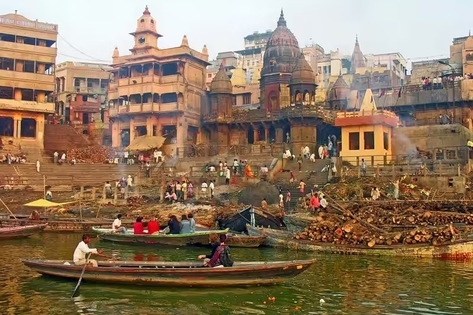
The controversy occurs amid broader tensions surrounding the redevelopment project at Manikarnika Ghat, which has been underway for several months. The sacred site, located on the banks of the Ganges River in Varanasi, holds immense religious significance for Hindus who believe cremation there leads to moksha, or liberation from the cycle of rebirth.
Local residents and religious groups have staged protests against aspects of the renovation, expressing concerns about potential damage to heritage structures and religious artifacts. Some have claimed that temple structures near the ghat have been harmed during the construction work.
District Magistrate Satyendra Kumar has attempted to quell these concerns, stating unequivocally that “no harm has been caused to any temple” during the redevelopment process. Officials maintain that the project aims to enhance facilities for bereaved families and improve the overall experience for pilgrims and tourists while preserving the site’s religious and cultural significance.
The Manikarnika Ghat redevelopment is part of a larger urban renewal initiative in Varanasi, which has seen significant infrastructure investments since 2014. The city, which is Prime Minister Narendra Modi’s parliamentary constituency, has undergone extensive renovations, most notably the Kashi Vishwanath Corridor project that was completed in 2021.
Authorities have warned that their crackdown will extend beyond the original posters to include those who reposted and commented on the misleading content. “Strict action will continue against anyone spreading rumors and misinformation about this sacred site,” Bansal emphasized.
The case highlights the growing challenge of combating AI-generated misinformation in India, particularly when it intersects with sensitive religious and cultural issues. As artificial intelligence tools become more sophisticated and accessible, law enforcement agencies across the country are increasingly confronting instances where deepfakes and manipulated media are used to inflame communal tensions.
Police officials have indicated that forensic analysis of the images is underway to determine their origin and the methods used to create them. The investigation remains ongoing, with authorities promising further actions against those responsible for creating and disseminating the misleading content.
Fact Checker
Verify the accuracy of this article using The Disinformation Commission analysis and real-time sources.

16 Comments
While the redevelopment of Manikarnika Ghat is a complex issue, the authorities must address any attempts to distort the facts through AI-generated imagery and false social media claims.
Absolutely. Maintaining public trust and social harmony should be the top priority in handling sensitive religious matters.
The use of AI to create fake images and spread misinformation is quite concerning, especially when it involves religious sites and symbols. Proper regulation and oversight are needed to prevent such abuses.
Absolutely. With the rapid progress of AI, we must be vigilant about potential misuse and proactively develop safeguards.
This case highlights the urgent need for better regulation and oversight of AI-powered content creation. The potential for abuse is clearly demonstrated, and stronger safeguards must be put in place.
Agreed. The rapid advancement of AI requires a proactive approach to mitigate the risks of malicious actors exploiting these technologies.
The use of AI to generate false images and spread misinformation about a religious site is deeply concerning. I hope the authorities are able to identify and prosecute the perpetrators to the fullest extent of the law.
Absolutely. Maintaining public trust and respect for religious sites should be a top priority in addressing this issue.
This is a prime example of how AI can be exploited to sow discord and disrupt social harmony. I hope the authorities are able to hold the perpetrators fully accountable.
Agreed. Responsible development and deployment of AI technologies will be crucial to mitigate these kinds of malicious activities.
Interesting case of AI-generated misinformation causing tensions around a sensitive religious site. It’s important to maintain factual reporting and not inflame religious sentiments, even with advanced AI tools.
Agreed. The authorities seem to be taking the right approach in investigating and addressing this issue quickly.
The use of AI to create false narratives around sensitive religious sites is deeply troubling. I hope the investigation uncovers the full extent of this coordinated disinformation campaign.
Agreed. Robust fact-checking and transparency will be key to countering the spread of such manipulative content.
Fabricating AI-generated images to misrepresent a religious redevelopment project is highly concerning. I’m glad the police are taking swift action to address this issue and restore public trust.
Yes, it’s important that the authorities send a clear message that this kind of misinformation will not be tolerated.