


Listen to the article
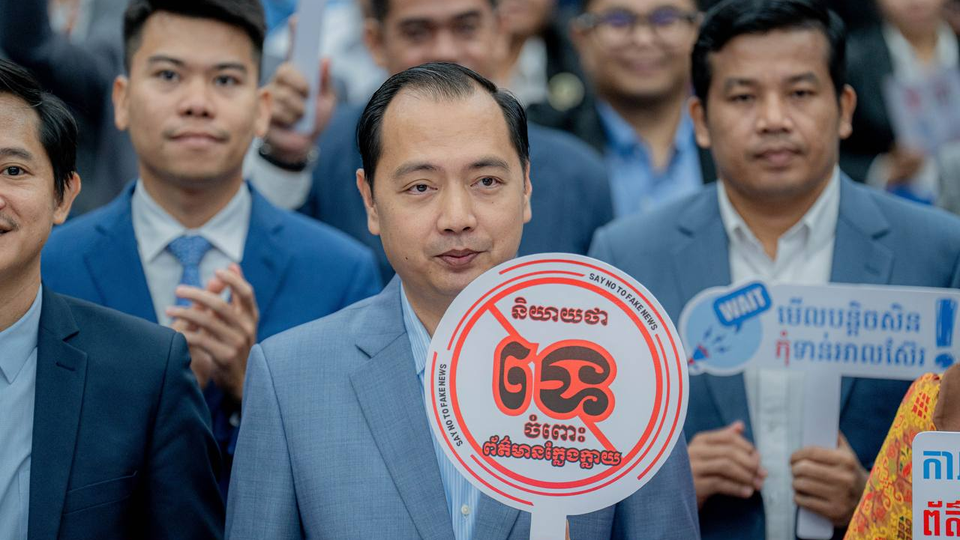
Six months into its nationwide campaign, Cambodia’s “Say No to Fake News” initiative is reporting significant progress in combating misinformation and raising digital literacy across the country.
The Ministry of Information, which launched the program earlier this year, revealed that public engagement has exceeded initial expectations, with participation numbers climbing steadily since the campaign’s inception. According to ministry officials, the initiative has reached all 25 provinces through a combination of community workshops, educational materials, and social media outreach.
“We’re seeing a real shift in how people approach and consume information,” said Ministry spokesperson Phos Sovann during a press conference in Phnom Penh. “Citizens are becoming more discerning about their news sources and more willing to verify information before sharing it online.”
The campaign has placed particular emphasis on rural communities, where digital literacy rates have historically lagged behind urban areas. Mobile education teams have conducted over 200 village-level workshops, providing practical guidance on identifying suspicious content and understanding the dangers of spreading unverified information.
In urban centers, the initiative has partnered with universities and professional organizations to develop more specialized training programs. Journalism students at the Royal University of Phnom Penh have participated in fact-checking workshops, while business associations have received briefings on protecting corporate reputations from false information.
Digital platforms have played a crucial role in extending the campaign’s reach. A dedicated website offers resources in Khmer and English, while social media channels provide regular updates and interactive challenges designed to test users’ ability to spot misinformation. The campaign’s Facebook page has garnered over 100,000 followers, becoming a hub for discussion about media literacy.
Cambodia’s struggle with online misinformation reflects a broader regional challenge. Across Southeast Asia, governments and civil society organizations are grappling with the rapid spread of false information through messaging apps and social networks. The COVID-19 pandemic intensified these concerns, as health-related misinformation created additional public health risks.
“The digital landscape in Cambodia has transformed dramatically in recent years,” explained Dr. Moeun Chhean Nariddh, director of the Cambodia Institute for Media Studies. “Smartphone penetration has increased exponentially, but digital literacy hasn’t always kept pace. This campaign addresses a genuine need.”
According to the Ministry’s mid-term assessment, nearly 60 percent of surveyed participants reported changing how they consume and share news after engaging with the campaign. Additionally, a noticeable decrease in the circulation of certain categories of misinformation has been observed on monitored platforms.
The initiative has not been without challenges. Some critics have expressed concerns about potential government overreach in defining “fake news,” pointing to the fine line between combating misinformation and restricting legitimate speech. Civil society organizations have called for transparent criteria in classifying misinformation and safeguards against politically motivated enforcement.
Ministry officials have responded by emphasizing the campaign’s educational focus rather than punitive approach. “This is about empowerment, not restriction,” said Sovann. “We want citizens to have the tools to make informed decisions about the information they consume.”
The campaign has also attracted international attention, with neighboring countries expressing interest in Cambodia’s approach. Representatives from regional media development organizations have observed the program, considering elements that might be adaptable to their own national contexts.
Looking ahead, the Ministry plans to expand the initiative’s scope for its second phase, incorporating lessons from the first six months. Plans include developing curriculum materials for schools, creating more localized content for ethnic minority communities, and strengthening partnerships with technology companies to address platform-specific challenges.
“Digital literacy is not a one-time achievement but an ongoing process,” concluded Sovann. “As technologies evolve, so must our approaches to ensuring information integrity.”
The campaign is scheduled to continue through the end of the year, with a comprehensive evaluation planned for early 2024.
Fact Checker
Verify the accuracy of this article using The Disinformation Commission analysis and real-time sources.

8 Comments
The emphasis on reaching rural communities is smart. Those areas often lag behind in digital skills, making them more vulnerable to fake news. Bringing the workshops directly to villages is a wise strategy.
Absolutely. Targeting underserved populations is crucial. Building nationwide digital literacy from the ground up will be key to the long-term success of this initiative.
Encouraging to see a proactive approach to combating fake news in Cambodia. Improving digital literacy is crucial in today’s information landscape. Hope this initiative serves as a model for other countries grappling with misinformation issues.
Agreed. Empowering citizens to critically evaluate online content is key. With the right education and tools, people can become more discerning news consumers.
I’m curious to see if the program has had a measurable impact on reducing the spread of misinformation in Cambodia. Quantifiable metrics would help assess its effectiveness over the long run.
It’s great that the campaign is using a multi-pronged approach – workshops, educational materials, and social media outreach. A diverse toolkit is needed to combat the spread of misinformation on various platforms.
This is a positive step, but the battle against fake news is an ongoing challenge. Consistent, long-term efforts will be needed to truly shift public attitudes and behaviors around information sharing.
That’s a fair point. Changing deeply ingrained habits takes time and sustained commitment. Hopefully this campaign is just the start of a broader, nationwide push for media literacy.