


Listen to the article
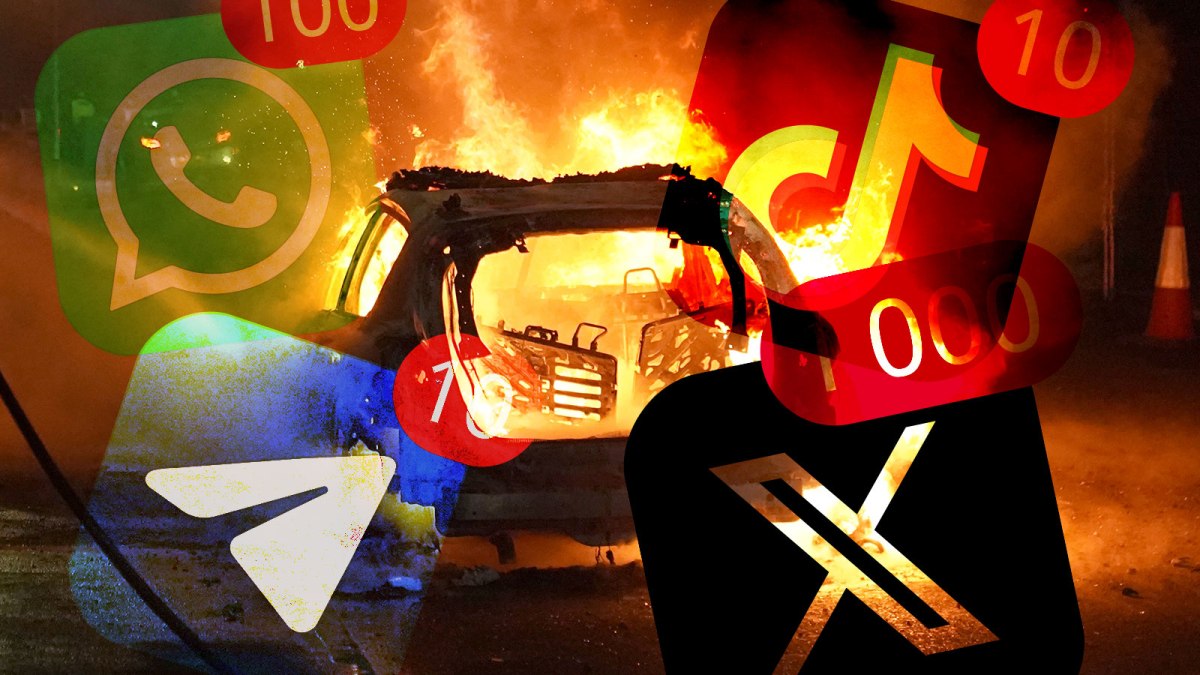
In the aftermath of the Southport tragedy, an orchestrated campaign of misinformation has swept across social media platforms, stoking tensions and contributing to days of violent unrest across England. Security officials now believe they have identified the primary sources of this digital deception, pointing to a coordinated network of fake accounts operated from Russia and Iran.
Investigations have revealed that these foreign actors systematically amplified false claims about the identity of the teenage suspect charged with the murder of three young girls at a Taylor Swift-themed dance class. Despite police confirming these claims were untrue, the fabrications spread rapidly through social media channels, fueling anti-immigrant sentiment and contributing to riots in multiple cities.
“We’re seeing a calculated effort to exploit this tragedy,” said one senior intelligence official who requested anonymity due to the sensitive nature of the investigation. “These are not random posts but part of a sophisticated campaign designed to sow division and destabilize communities.”
The digital trail has led investigators to identify approximately 35 accounts with suspected links to Russian or Iranian state influence operations. These accounts systematically pushed misleading narratives in the hours following the stabbings, reaching hundreds of thousands of British users. Technical analysis revealed telltale signs of coordination, including suspicious timing patterns and the strategic amplification of particular messages.
Social media companies have faced criticism for their response to the crisis. While platforms including X (formerly Twitter) and Facebook have removed numerous accounts identified by security services, critics argue their actions came too late to prevent the offline impact. By the time removals began, screenshots and reposts had already circulated widely among legitimate domestic users.
Home Secretary Yvette Cooper acknowledged the challenge in a statement to Parliament yesterday: “While we respect freedom of expression, we cannot allow hostile states to weaponize our social spaces to incite violence on British streets. We are working closely with platform operators to improve detection and removal processes.”
The disinformation campaign has highlighted vulnerabilities in Britain’s digital infrastructure. Researchers at the Institute for Strategic Dialogue noted that the operation exploited existing social tensions, particularly around immigration, using sophisticated tactics to make foreign interference appear as domestic concern.
“What makes these operations particularly effective is how they blend into authentic conversations,” explained Dr. Melanie Rogers, a disinformation specialist. “They don’t create tensions from nothing—they amplify existing grievances and direct them toward specific targets.”
The Southport case represents an escalation of tactics previously observed during electoral periods. Security experts believe the speed and scale of the operation indicates a well-established infrastructure ready to exploit crisis moments. Similar patterns have been identified in other European countries following high-profile incidents.
Legal experts point to challenges in holding perpetrators accountable. While Britain’s Online Safety Act provides a framework for addressing harmful content, prosecuting foreign actors remains difficult due to jurisdictional limitations and attribution challenges.
Meanwhile, community leaders in affected areas are working to counter the divisive narratives. In Southport, local interfaith groups have organized vigils emphasizing unity, while digital literacy campaigns have been launched to help citizens identify suspicious content.
“The real damage is already done,” said community organizer Aisha Mohammed in Southport. “These falsehoods have created rifts that will take months, if not years, to heal. The violence we’ve seen is exactly what these foreign actors wanted.”
Government officials have promised a comprehensive review of the response, including potential new measures to improve resilience against similar future attacks. Intelligence agencies have reportedly increased monitoring of known influence networks ahead of the upcoming general election.
As cleanup continues in riot-affected areas, the Southport case serves as a stark reminder of how quickly online manipulation can translate into real-world harm—and the complex challenge of defending against digital threats in an interconnected world.
Fact Checker
Verify the accuracy of this article using The Disinformation Commission analysis and real-time sources.

20 Comments
It’s disturbing to see how foreign actors are weaponizing social media to sow discord and instability. Rigorous investigative work to trace the digital trail is commendable.
Agreed. Exposing and disrupting these malign influence operations is crucial to build societal resilience against future attempts to undermine our communities.
Tragic that a local incident could be exploited in this way for geopolitical aims. Authorities will need to be vigilant in identifying and shutting down these fake social media accounts to restore trust.
Absolutely. Transparency and open communication from officials will be crucial to counter the damaging impact of these fabrications and restore community harmony.
While tragic, it’s important that the public remains vigilant and discerning when consuming information, especially during times of crisis. Fact-checking and critical thinking are essential to combat the spread of misinformation.
Well said. Increased media literacy education and strengthening content moderation on social platforms are crucial to building societal resilience against such malicious interference.
This is a sobering reminder of the dark underbelly of social media and the real-world consequences of coordinated disinformation campaigns. Kudos to the investigators for tracing the origins.
Agreed. Shutting down these foreign influence operations and holding the perpetrators accountable should be a top priority to prevent further harm to vulnerable communities.
Interesting to hear the sources of this misinformation have been traced back to foreign actors. Careful monitoring and fact-checking is crucial to contain the spread of such divisive propaganda online.
Agreed. Tackling the root causes and networks behind this coordinated disinformation campaign is key to preventing similar incidents in the future.
This incident highlights the urgent need for robust regulations and oversight to hold social media platforms accountable for the spread of harmful misinformation on their networks. Public trust must be restored through transparency and decisive action.
Well said. Striking the right balance between free speech and content moderation is a complex challenge, but one that must be addressed to protect vulnerable communities from the devastating impacts of coordinated digital deception.
This highlights the vulnerability of social media platforms to malicious interference, especially during sensitive times. Stronger content moderation and security protocols are urgently needed to protect against such manipulation.
Indeed. Platforms must invest more in proactive detection and swift action against coordinated disinformation campaigns, no matter the origin.
This incident underscores the need for improved media literacy and critical thinking skills among the public. Empowering citizens to spot and resist manipulation is key to combating the scourge of disinformation.
Well said. Investing in educational programs that equip people to navigate the online information landscape safely and responsibly should be a priority.
Tragic that innocent lives were lost, and now the tragedy is being exploited for geopolitical gain. Authorities must remain vigilant and act swiftly to contain the spread of these fabrications.
Absolutely. Restoring public trust and social cohesion in the face of such divisive tactics will be an immense challenge, but one that must be met head-on.
The use of social media to deliberately sow division and discord is a concerning trend that must be addressed. Authorities need to work closely with tech companies to identify and disrupt these coordinated disinformation campaigns.
Agreed. Proactive collaboration between government, law enforcement, and the private sector is essential to counter the threat of foreign actors exploiting social media for malign purposes.