


Listen to the article
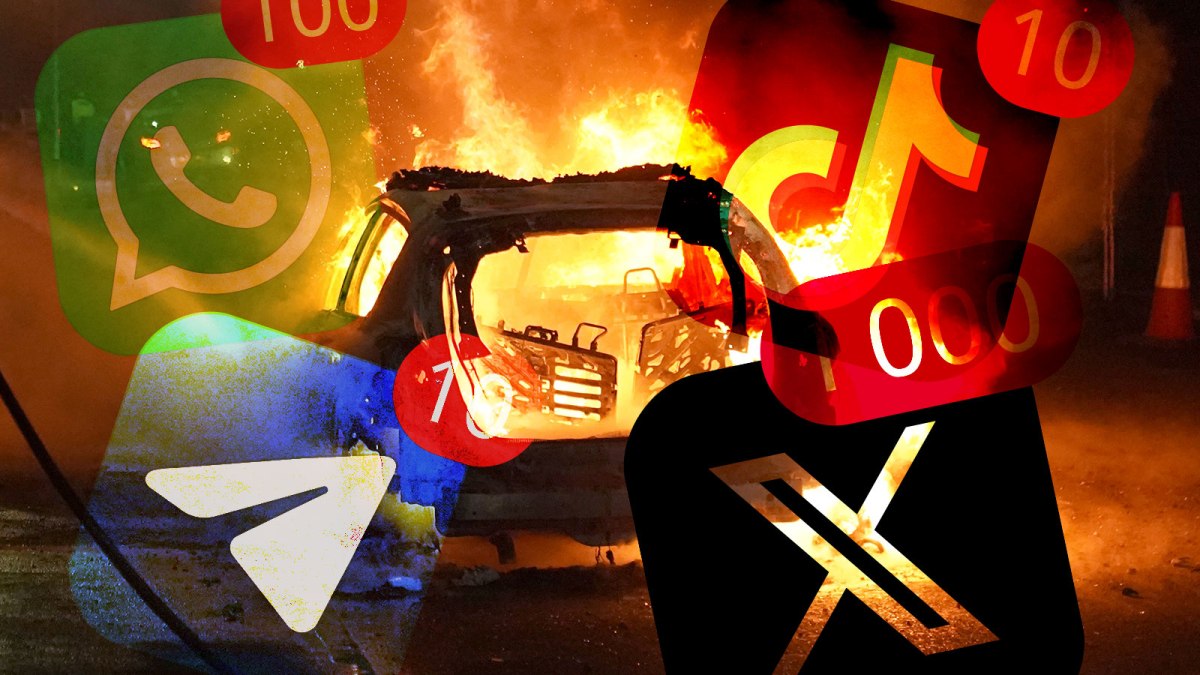
In the wake of the violent riots that engulfed Southport following the tragic knife attack that claimed the lives of three young girls, a disturbing pattern has emerged online. Social media platforms have become battlegrounds where misinformation about the suspect’s identity and background spread like wildfire, fueling tensions and contributing to the outbreak of violence.
Investigators have identified a network of influential social media accounts responsible for amplifying false claims about the suspect being an Islamic extremist who had recently arrived in the UK. These accounts, many with substantial followings, pushed this narrative despite official police statements contradicting these assertions.
One account that played a pivotal role in spreading the misinformation has over 300,000 followers and is operated by an individual with a history of sharing controversial political content. The account published multiple posts claiming to have “inside information” about the attacker, which were subsequently shared thousands of times before any official details were released.
Security experts note that the speed and coordination of the messaging suggest potential collaboration among these influential accounts. “We’re seeing evidence of both organic spread and coordinated amplification,” said Dr. Eleanor Wright, a specialist in online extremism at King’s College London. “What’s particularly concerning is how quickly these falsehoods reached mainstream audiences.”
The social media storm coincided with the mobilization of far-right groups who organized the riots that later erupted in Southport. Messages calling for people to “defend our country” and “take action” proliferated across platforms including X (formerly Twitter), Facebook, and Telegram.
Police authorities are now investigating whether the accounts responsible for spreading misinformation could face legal consequences. Under UK law, individuals who knowingly spread false information that leads to public disorder can be prosecuted for inciting violence.
“The challenge is establishing intent,” explains Mark Reynolds, a former counter-terrorism official. “Did these accounts knowingly spread false information with the purpose of stirring up hatred, or were they simply repeating claims they believed to be true? That distinction matters legally.”
Social media companies have faced renewed criticism for their handling of the situation. Despite policies against misinformation that could lead to real-world harm, many of the most inflammatory posts remained online for hours or days before being removed. By then, screenshots had been widely circulated elsewhere.
A spokesperson for Meta, which owns Facebook and Instagram, stated the company had “removed hundreds of posts and accounts” violating their policies against hate speech and misinformation. Similar statements came from X and TikTok, though critics argue their response was too slow and reactive.
The Southport case highlights the evolving challenge of combating online misinformation during crisis events. The UK government has been developing the Online Safety Bill, legislation aimed at placing greater responsibility on tech platforms to prevent harmful content, but implementation remains in progress.
“This is a wake-up call about how quickly online rhetoric can translate into offline violence,” said Home Secretary Yvette Cooper. “We need both better platform regulation and improved capabilities to identify and counter dangerous misinformation rapidly.”
Digital literacy experts emphasize that addressing this problem requires a multi-faceted approach. “Technical solutions alone won’t solve this,” notes Professor Julian Barnes of the Oxford Internet Institute. “We need to combine platform accountability with better public education about verifying information during crisis events.”
As investigations continue, authorities face the delicate balance of holding perpetrators accountable without creating martyrs for extremist causes. Meanwhile, residents of Southport are left to rebuild community trust damaged not only by physical violence but by the digital wildfire that helped ignite it.
The case serves as a stark reminder of social media’s power to shape real-world events and the urgent need for more effective strategies to combat the weaponization of misinformation in an increasingly polarized society.
Fact Checker
Verify the accuracy of this article using The Disinformation Commission analysis and real-time sources.

10 Comments
While social media has many benefits, the potential for malicious actors to weaponize it is deeply concerning. Comprehensive solutions are needed to combat the proliferation of fake news during sensitive events like this.
Fact-checking and media literacy efforts will be key. Empowering users to critically evaluate online content is crucial.
This is a troubling situation. The spread of misinformation and false narratives on social media can have devastating real-world consequences. Identifying the key sources and addressing the problem at the root will be critical to preventing further escalation.
Agreed. Authorities need to work closely with platforms to quickly detect and remove coordinated disinformation campaigns before they gain traction.
It’s alarming to see how quickly misinformation can spread and escalate tensions in a crisis situation. Identifying the ringleaders behind these campaigns is a vital first step in restoring public trust and preventing future incidents.
Agreed. Increased transparency and accountability for influential social media accounts will be important deterrents.
This highlights the need for better safeguards and content moderation on social media platforms. Proactive detection and removal of coordinated disinformation efforts should be a top priority.
Absolutely. Stronger collaboration between tech companies, law enforcement, and civil society is essential to combat this growing threat.
The speed and scale at which false narratives can spread online is truly alarming. Policymakers and tech leaders must work together to find effective solutions to this complex challenge.
Agreed. Innovative approaches combining human and AI-powered moderation will be critical to staying ahead of bad actors exploiting social media.