


Listen to the article
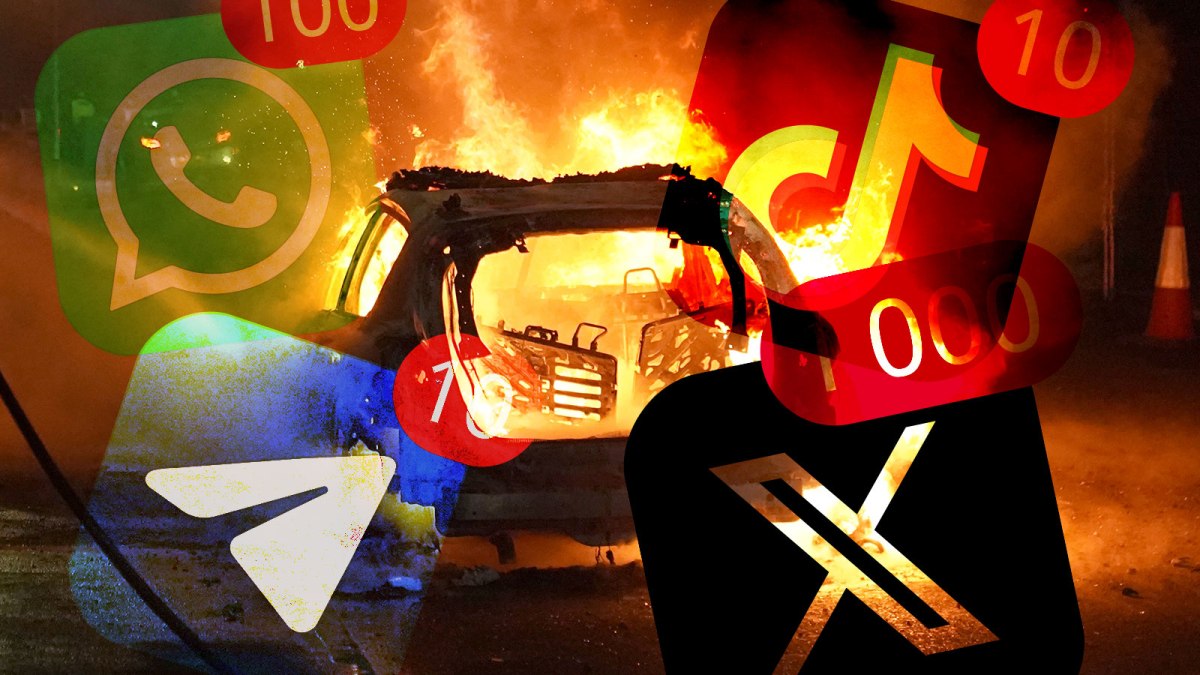
In the aftermath of the Southport tragedy, a coordinated campaign of misinformation has swept across social media platforms, stoking tensions and contributing to violent protests across the UK. Digital investigators and terrorism experts now believe they can identify the sources behind this dangerous online storm.
Analysis of social media content suggests that the initial wave of false claims about the suspect in the Southport stabbings came from a relatively small network of accounts with connections to far-right extremist groups. These accounts rapidly disseminated unverified information about the attacker’s identity and background, which was then amplified by larger networks of anonymous users.
“What we’re seeing is a sophisticated operation that understands how to exploit social media algorithms,” said Dr. Emma Wilson, a digital forensics specialist who has been tracking the spread of misinformation since the incident. “The initial false claims were strategically planted and then amplified through coordinated sharing patterns.”
The misinformation campaign appears to have been bolstered by foreign actors, according to intelligence sources who spoke on condition of anonymity. These entities have reportedly used automated bot networks to amplify divisive content, creating the impression of widespread public outrage.
Home Secretary Yvette Cooper has condemned the “deliberate spread of misinformation designed to stir up community tensions,” while Prime Minister Keir Starmer has pledged to hold social media companies accountable for their role in allowing such content to proliferate.
Social media platforms have struggled to contain the spread of false information. Despite increased content moderation efforts, misleading posts continue to reach large audiences before they can be removed. Critics argue that platforms like X (formerly Twitter), Facebook, and TikTok have been too slow to respond to reports of harmful content.
“The algorithms that power these platforms are designed to prioritize engagement, and unfortunately, inflammatory content tends to generate the most engagement,” explained Professor Jonathan Hayes of the Oxford Internet Institute. “This creates a perverse incentive structure that benefits those seeking to spread division.”
Law enforcement agencies are now investigating whether the organized nature of the misinformation campaign could constitute incitement to violence under UK terrorism laws. Several arrests have already been made in connection with online posts that explicitly called for violence against minority communities.
The real-world consequences of this digital manipulation have been severe, with riots and protests erupting in cities including Liverpool, Manchester, and London. Dozens of police officers have been injured, and numerous arrests have been made as authorities attempt to restore order.
Community leaders in affected areas have called for calm, emphasizing that the violence does not represent the views of most residents. Interfaith initiatives have organized peace rallies and community clean-up efforts in areas affected by the unrest.
Digital literacy experts suggest that the public needs better tools to identify misinformation. “We’re seeing how vulnerable our information ecosystem is to manipulation,” said media literacy advocate Sarah Thompson. “Education about how to verify information before sharing it is critical.”
Government officials are now considering stronger regulatory measures against platforms that fail to promptly remove harmful content. The Online Safety Bill, which came into force earlier this year, gives regulators new powers to hold tech companies accountable, but critics argue that implementation has been too slow.
As investigations continue, cybersecurity experts warn that this pattern of exploitation is likely to recur during future tragic events. “What we’re witnessing is unfortunately becoming a playbook,” said former counter-terrorism official Mark Davidson. “Bad actors know exactly how to hijack public tragedies to further their agendas.”
The battle against misinformation remains challenging, with technology often outpacing regulatory responses. As authorities work to identify and prosecute those responsible for inciting violence, the broader question of how to protect public discourse from manipulation remains largely unanswered.
Fact Checker
Verify the accuracy of this article using The Disinformation Commission analysis and real-time sources.

12 Comments
The involvement of foreign actors is particularly concerning. This suggests a coordinated effort to sow discord and destabilize the situation. I hope the authorities can uncover the full extent of this interference.
Absolutely. Combating foreign disinformation campaigns should be a top priority for governments and social media platforms alike. Transparency and international cooperation will be key.
The use of social media algorithms to amplify false claims is a troubling tactic. I hope the digital forensics specialists can shed more light on the tactics and networks behind this misinformation campaign.
Absolutely. Uncovering the connections to extremist groups and foreign actors will be key to understanding the full scope of this issue.
This is a concerning situation. Spreading misinformation and stoking tensions online can have serious real-world consequences. I’m glad the authorities are investigating the sources and coordination behind this social media storm.
Agreed. Identifying and addressing the root causes is crucial to prevent such malicious campaigns from recurring in the future.
I’m curious to learn more about the specific tactics and networks used in this misinformation campaign. Understanding the methods behind the spread of false claims is crucial for developing effective countermeasures.
Indeed, a detailed analysis of the social media activity and coordination patterns could provide valuable insights for policymakers and tech companies to improve their response strategies.
This is a prime example of how online misinformation can quickly spiral out of control and have real-world impacts. Proper regulation and moderation of social media platforms is clearly needed to address such challenges.
You raise a good point. Social media companies need to take more responsibility for the content on their platforms and work closely with authorities to combat the spread of dangerous misinformation.
This is a sobering reminder of the power of social media to amplify false narratives and incite real-world violence. I commend the digital forensics experts for their work in tracking the sources and patterns of this misinformation campaign.
Agreed. Their efforts to uncover the underlying networks and tactics will be crucial for developing more effective strategies to counter the spread of harmful online content.