


Listen to the article
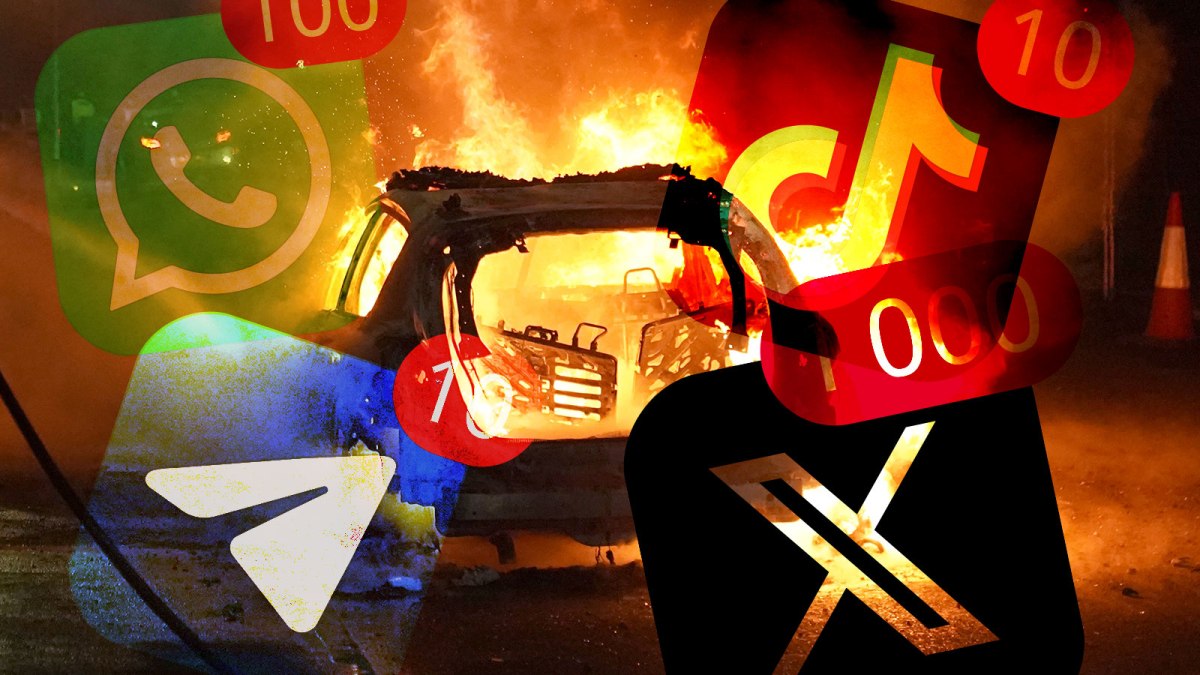
In the wake of the Southport tragedy, a disturbing wave of online disinformation has swept across social media platforms, contributing to violent riots across England. What began as false claims about the identity of a knife attack suspect has evolved into a coordinated campaign of misinformation that continues to fuel unrest.
Social media analysts have identified a network of anonymous accounts deliberately spreading fabrications about the suspect’s background. Within hours of the attack that left three young girls dead, these accounts began circulating unfounded claims that the suspect was an asylum seeker who had recently arrived in the UK by boat.
Despite police quickly confirming these assertions were false, the misinformation had already gained significant traction. By the time authorities could respond, the false narrative had been viewed millions of times across platforms including X (formerly Twitter), Facebook, and TikTok.
Marc Owen Jones, an associate professor at Hamad bin Khalifa University who specializes in disinformation, tracked the spread of these false claims. “What we’re seeing is a sophisticated operation that understands how to exploit platform algorithms to maximize reach,” Jones explained. “The speed at which this misinformation spread suggests some level of coordination.”
The crisis has highlighted the challenge of combating digital misinformation in real-time. While major platforms have policies against spreading false information, enforcement mechanisms often lag behind the viral spread of content, particularly during fast-moving events.
Evidence suggests much of the disinformation originated from accounts with little previous activity or that were created shortly before the attack. This pattern is consistent with what researchers call “inauthentic behavior” – the deliberate creation of accounts to manipulate public discourse around specific events.
The consequences have been tangible and severe. In towns across England including Southport, Liverpool, Manchester, and several areas of London, violent demonstrations have erupted, resulting in injuries to both police officers and members of the public. Community centers and businesses have been vandalized, with some rioters explicitly citing the false information as motivation for their actions.
Tech companies have faced mounting criticism for their response. While platforms eventually removed some of the most prominent false posts, critics argue that action came too late to prevent real-world harm. The UK’s Online Safety Act, which grants regulators greater powers to hold platforms accountable for harmful content, has yet to come fully into force.
Home Secretary Yvette Cooper has called the situation “a stark reminder of the real-world consequences when misinformation is allowed to proliferate unchecked.” She has promised a thorough investigation into both the riots and the online ecosystem that helped incite them.
The crisis has also reignited debate about the balance between free speech and platform responsibility. Civil liberties organizations have cautioned against overly broad censorship, while also acknowledging the need for more effective responses to coordinated disinformation campaigns.
Researchers point to similar patterns of disinformation seen during other periods of social tension, suggesting these techniques have become a standard tool for those seeking to exploit social divisions for political or ideological purposes.
“What’s particularly concerning about this case is how quickly online falsehoods translated into street violence,” said Imran Ahmed, CEO of the Center for Countering Digital Hate. “The individuals behind these accounts understand exactly how to exploit algorithmic amplification to reach millions before fact-checkers can even begin their work.”
As authorities work to restore calm, the incident serves as a sobering reminder of social media’s power to shape real-world events. It also highlights the urgent need for more effective strategies to combat disinformation during critical incidents – whether through improved platform policies, faster fact-checking mechanisms, or greater digital literacy among users.
For now, police continue to investigate both the original attack and the subsequent unrest, while social media platforms face renewed pressure to demonstrate they can effectively counter coordinated campaigns of falsehoods before they trigger real-world harm.
Fact Checker
Verify the accuracy of this article using The Disinformation Commission analysis and real-time sources.

20 Comments
This case illustrates the need for a holistic, multi-stakeholder approach to combating online disinformation. Collaboration between authorities, social media platforms, civil society, and the public will be crucial to building effective long-term solutions.
Absolutely. Bringing together diverse perspectives and expertise will be key to developing comprehensive, sustainable strategies to address this complex, evolving threat.
The scale and speed of this misinformation campaign is alarming. It’s a sobering reminder of the power of social media to amplify falsehoods and the urgent need for more robust safeguards to protect the public from the harms of online manipulation.
Well said. Developing effective countermeasures to this challenge will require sustained, coordinated efforts from all stakeholders involved.
While it’s alarming to see the impact of this misinformation campaign, I’m hopeful that lessons can be learned to improve preparedness and response for future events. Proactive communication strategies may be key to getting ahead of false narratives.
That’s a good point. Investing in real-time monitoring and rapid-response capabilities could help authorities more effectively counter disinformation in crisis situations.
This incident highlights the critical role that social media platforms play in the spread of misinformation. While they have made some progress, more can be done to proactively identify and contain the impact of coordinated disinformation campaigns.
Agreed. Platforms need to continue innovating their content moderation and algorithmic curation approaches to stay ahead of bad actors exploiting their systems.
This is a concerning development. Spreading misinformation during a crisis can have dangerous real-world consequences. It’s critical that authorities and social media platforms work together to quickly identify and remove such coordinated disinformation campaigns.
Agreed. Rapid response and transparency from officials will be key to countering the spread of these false narratives.
It’s troubling to see how quickly false claims can gain traction online, even when authorities quickly refute them. Educating the public on media literacy and verification techniques could help build resilience against such manipulation tactics.
That’s a great point. Empowering users to think critically about online information is an important part of the solution.
These coordinated disinformation campaigns highlight the need for greater international cooperation in addressing the cross-border challenge of online misinformation. Shared policies and enforcement mechanisms could help curb the spread of fabricated content.
Agreed. Global coordination and consistent standards are essential to tackling this complex, evolving problem.
The exploitation of platform algorithms to amplify misinformation is a growing challenge. Platforms need more robust systems to detect and limit the spread of fabricated content, especially around sensitive events.
Absolutely. Improving AI-powered moderation and increasing human review will be crucial to staying ahead of bad actors spreading disinformation.
The use of anonymous accounts to deliberately spread fabrications is particularly concerning. Platforms should explore ways to increase transparency and accountability around account identities, while respecting user privacy.
That’s a good point. Finding the right balance between user privacy and platform integrity will be an ongoing challenge that requires careful consideration.
The speed at which these false claims spread is staggering. It underscores the need for a multi-pronged approach – from platform policies to public education – to build societal resilience against online manipulation.
Absolutely. A comprehensive strategy involving various stakeholders will be essential to addressing the complex challenge of disinformation.