


Listen to the article
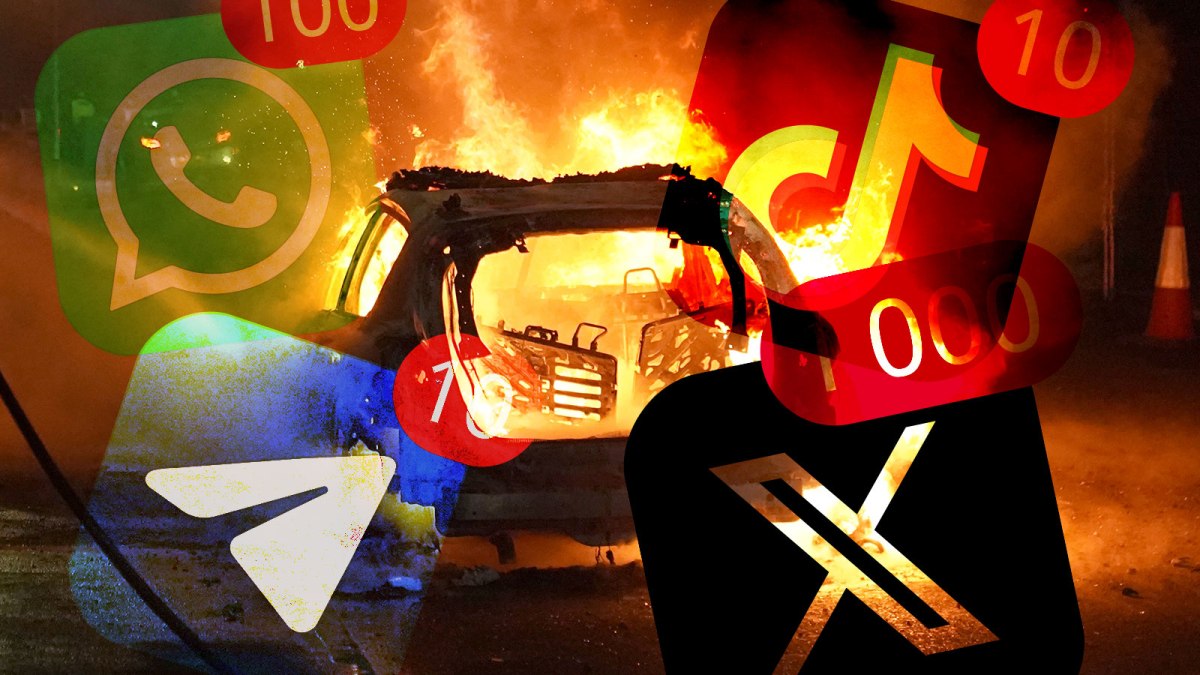
In the aftermath of the Southport tragedy, a disturbing wave of disinformation has swept across social media, creating a dangerous environment that eventually erupted into violent riots across several British cities.
Investigations have revealed a network of far-right influencers deliberately spreading false claims about the suspect’s identity following the fatal stabbing of three young girls. Within hours of the attack, fabricated stories circulated widely, falsely identifying the attacker as an asylum seeker named “Ali Al-Shakati” who had arrived by boat – a complete fiction.
Security officials have expressed grave concern about the speed and coordination of this disinformation campaign. “The velocity at which these falsehoods spread suggests an orchestrated effort,” said one intelligence source who requested anonymity. “We’re witnessing a sophisticated operation designed to inflame tensions.”
Analysis of social media patterns shows the misinformation originated from accounts with histories of promoting far-right narratives. Many used similar language and timing, suggesting coordination rather than coincidental posting. Several accounts showed signs of being automated “bots” programmed to amplify certain messages.
The campaigns leveraged existing community tensions and anti-immigration sentiment. By the time police formally identified the suspect as 17-year-old Axel Rudakubana, who was born in Britain, the damage had been done. Thousands of posts containing false information had already reached millions of users.
Tech platforms have struggled to contain the spread. While companies like Meta and X (formerly Twitter) have policies against harmful misinformation, their enforcement has been inconsistent. Critics point to reduced content moderation teams following recent layoffs at major platforms.
“The social media companies have essentially abandoned their responsibility,” said Dr. Eleanor Bennett, an expert in online extremism at King’s College London. “Their algorithms continue to promote emotionally charged content because it drives engagement, regardless of truthfulness.”
Law enforcement faces significant challenges in addressing online disinformation. The UK’s Counter Terrorism Internet Referral Unit can flag content for removal but lacks enforcement powers. The recently enacted Online Safety Act provides some new regulatory framework, but its practical implementation remains unclear.
Home Secretary Yvette Cooper has promised action against “digital arsonists” spreading hate, but legal experts note the difficulty in prosecuting individuals for sharing false information unless it explicitly incites violence.
The consequences have been severe. Riots in Liverpool, Manchester, and several other cities have resulted in injuries to police officers, damage to community properties, and further social division. Mosques and immigration support centers have reported threats, despite having no connection to the tragedy.
Community leaders in Southport have condemned both the violence and the misinformation fueling it. “These fabrications dishonor the memories of the children we lost,” said local councilor Maria Jameson. “Our community needs healing, not hatred based on lies.”
Digital literacy experts emphasize the importance of critical media consumption. “Before sharing emotional content about breaking news events, people should verify information through multiple reliable sources,” advised Professor Gareth Williams of the Digital Policy Institute. “A moment’s pause before sharing can prevent hours of harmful consequences.”
Security analysts warn this pattern may repeat with future incidents. “What we’re seeing is effectively a playbook,” explained former counter-terrorism official Richard Morgan. “Tragic events are immediately weaponized through disinformation to advance ideological goals and deepen societal divisions.”
As investigations continue, authorities face the delicate balance of addressing dangerous falsehoods while preserving free speech principles. Meanwhile, communities across Britain are left to heal from both the original tragedy and the manufactured chaos that followed.
The Southport case demonstrates how rapidly misinformation can transform from online conspiracy theories into real-world violence, raising urgent questions about digital regulation, platform responsibility, and society’s resilience against orchestrated deception campaigns.
Fact Checker
Verify the accuracy of this article using The Disinformation Commission analysis and real-time sources.

20 Comments
This is a concerning situation. The rapid spread of disinformation and the potential for it to incite violence are serious issues that need to be addressed. It’s crucial to identify the sources and coordinate a response to prevent further escalation.
I agree. The use of automated bots and coordinated messaging to spread false narratives is particularly worrying. Fact-checking and media literacy efforts will be important to counter this threat.
Disinformation can have devastating real-world consequences, as we’ve seen here. Rigorous investigation into the origins and networks behind this campaign is essential to understand the scale and nature of the threat.
Absolutely. Transparency and accountability for those responsible will be crucial to restore trust and prevent similar incidents in the future.
This is a disturbing example of how disinformation can be weaponized to inflame tensions and incite violence. The fact that automated bots and coordinated narratives were used to spread these falsehoods is particularly concerning.
Absolutely. Identifying the sources and dismantling these networks should be a top priority to counter the growing threat of online manipulation and its real-world consequences.
The speed and coordination of this disinformation campaign is truly alarming. It’s a stark reminder of the potential for online manipulation to have real-world consequences. Addressing the root causes and vulnerabilities is crucial.
Agreed. Tackling the issue at the source, whether it’s automated bots, coordinated networks, or other tactics, will be key to preventing similar incidents in the future.
This is a stark example of how malicious actors can exploit social media to sow division and incite violence. The speed and coordination of this disinformation campaign are truly alarming and require a comprehensive, multi-stakeholder response.
Absolutely. Identifying the sources, dismantling the networks, and implementing effective interventions to prevent the spread of such harmful narratives should be a top priority for authorities and platform providers.
This highlights the need for stronger regulations and enforcement against the malicious use of social media to spread misinformation. Platforms must be held accountable and work closely with authorities to identify and remove coordinated disinformation efforts.
I agree. Finding the right balance between free speech and preventing harm from disinformation is an ongoing challenge, but one that needs to be addressed to protect public safety.
The Southport incident is a chilling reminder of the real-world consequences that can result from the spread of disinformation. The fact that this campaign appears to have been orchestrated by far-right influencers is particularly concerning and underscores the need for vigilance.
I agree. Addressing the root causes and vulnerabilities that allow such coordinated efforts to thrive is essential to protect the public and maintain social cohesion. Increased transparency and accountability will be key to this endeavor.
The Southport tragedy is a sobering reminder of the dangers posed by the rapid spread of disinformation. The coordination and sophistication of this campaign are deeply troubling and underscore the need for robust measures to address this threat.
I agree. Strengthening platform policies, improving public awareness and media literacy, and holding those responsible accountable will be crucial in mitigating the impact of such coordinated disinformation efforts.
This is a sobering example of the dangers of social media-fueled disinformation. The potential for false narratives to incite violence and unrest is deeply concerning. Identifying and disrupting the networks behind these campaigns should be a top priority.
Absolutely. Restoring trust and countering the spread of harmful misinformation will require a multifaceted approach, including improving media literacy, strengthening platform policies, and ensuring accountability for those responsible.
The Southport incident highlights the urgent need to address the growing threat of coordinated disinformation campaigns. The speed and scale of this effort are truly alarming and underscore the importance of early detection and rapid response.
I agree. Effective interventions and collaboration between platforms, authorities, and civil society will be crucial to disrupt these networks and prevent similar incidents from occurring in the future.