


Listen to the article
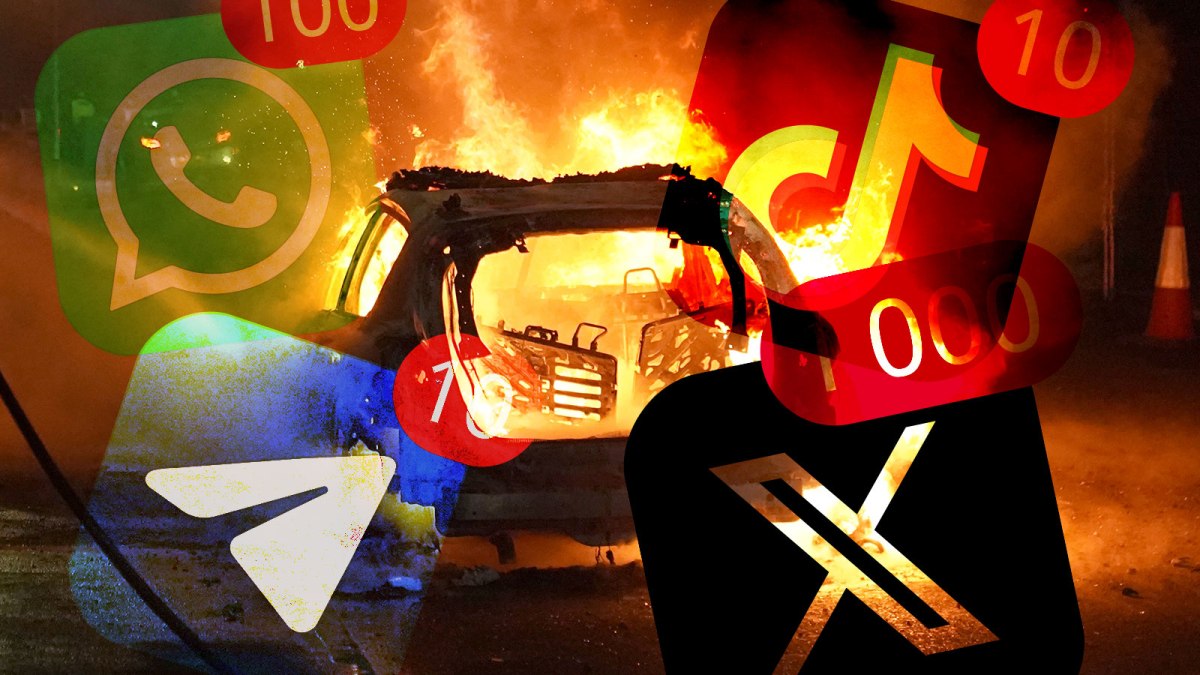
In the aftermath of the Southport tragedy that left three young girls dead, a coordinated campaign of misinformation has swept through social media, inflaming tensions and sparking violent protests across several British cities. What began as unverified claims about the suspect’s background quickly morphed into a full-blown digital wildfire, raising urgent questions about who orchestrates such campaigns and how they can be contained.
Security officials have identified an alarming pattern behind the unrest. Far-right agitators and suspected Russian-linked accounts have systematically amplified false narratives about the suspect’s identity, creating a toxic environment that has led to physical violence on British streets.
“We’re seeing a sophisticated operation that combines domestic extremists with foreign interference,” said a senior security analyst who requested anonymity due to the sensitivity of ongoing investigations. “The speed and coordination suggest these aren’t merely spontaneous reactions but calculated attempts to sow division.”
Within hours of the Southport stabbings, social media accounts began circulating unfounded claims about the suspect being an asylum seeker who had recently arrived in the UK by boat. Despite police quickly clarifying these assertions were false, the narrative had already gained traction across platforms including X (formerly Twitter), Facebook, and Telegram.
Digital forensics experts have traced many of the most inflammatory posts to accounts with hallmarks of Russian disinformation campaigns. These accounts typically display patterns of sporadic activity, suddenly becoming hyperactive during crisis events with divisive content designed to inflame existing social tensions.
“This follows a playbook we’ve seen before,” explained Dr. Emma Williams, a researcher specializing in digital disinformation at King’s College London. “Foreign actors exploit legitimate tragedies, amplify misinformation, and then step back as domestic groups carry the message forward.”
The technique creates plausible deniability while maximizing societal disruption. Once the false narratives enter mainstream discourse, they become increasingly difficult to counter, as genuine users unknowingly share and reinforce the misinformation.
British security services have been monitoring approximately 300 accounts they believe are part of coordinated influence operations. These accounts frequently change usernames and profile pictures while maintaining consistent messaging themes targeting immigration, Islam, and what they characterize as “establishment cover-ups.”
The government has faced criticism for its response, with opposition MPs arguing that social media companies must be held more accountable for allowing their platforms to be weaponized. Current regulatory frameworks under the Online Safety Act provide mechanisms to address harmful content, but enforcement remains challenging.
“The platforms have the technical ability to identify coordinated inauthentic behavior,” said Julian Knight, chair of the Digital, Culture, Media and Sport Committee. “What’s lacking is the will to act decisively when these patterns emerge.”
Social media companies have defended their moderation efforts, pointing to thousands of accounts suspended and posts removed since the Southport attacks. However, critics argue these measures often come too late, after false narratives have already been widely circulated.
Law enforcement agencies have arrested several individuals for spreading misinformation online, including a 37-year-old man from Newcastle charged with inciting racial hatred through posts falsely identifying the suspect.
The UK is not alone in facing this challenge. Similar patterns of coordinated disinformation have been observed following tragic events in France, Germany, and Sweden, suggesting a broader strategic campaign to exacerbate tensions across Europe.
Security experts warn that traditional approaches to countering misinformation may be insufficient against these evolving threats. They advocate for increased digital literacy programs, faster official communication during crisis events, and stronger international cooperation to identify and counteract foreign influence operations.
As Britain grapples with the aftermath of both the tragic loss of young lives and the subsequent unrest, the incident has highlighted the increasingly blurred line between online manipulation and real-world consequences in an era of hybrid warfare.
Fact Checker
Verify the accuracy of this article using The Disinformation Commission analysis and real-time sources.

16 Comments
Exploration results look promising, but permitting will be the key risk.
Good point. Watching costs and grades closely.
Uranium names keep pushing higher—supply still tight into 2026.
Good point. Watching costs and grades closely.
If AISC keeps dropping, this becomes investable for me.
Interesting update on Behind the Southport Social Media Storm: Identifying Sources and Potential Interventions. Curious how the grades will trend next quarter.
Good point. Watching costs and grades closely.
Uranium names keep pushing higher—supply still tight into 2026.
Good point. Watching costs and grades closely.
The cost guidance is better than expected. If they deliver, the stock could rerate.
Good point. Watching costs and grades closely.
I like the balance sheet here—less leverage than peers.
Interesting update on Behind the Southport Social Media Storm: Identifying Sources and Potential Interventions. Curious how the grades will trend next quarter.
Uranium names keep pushing higher—supply still tight into 2026.
Good point. Watching costs and grades closely.
Production mix shifting toward Fake Information might help margins if metals stay firm.