


Listen to the article
In the wake of the tragic Southport knife attack that claimed the lives of three young children, a dangerous undercurrent of misinformation has swept through social media, triggering violent riots across several English cities.
What began as peaceful vigils quickly morphed into chaotic scenes of destruction, as demonstrators targeted properties they believed belonged to the suspect’s family or housed asylum seekers. These riots represent the worst street violence Britain has witnessed in more than a decade.
Digital investigation specialists have identified that much of the initial inflammatory content originated from a relatively small network of influential accounts. One key figure in the spread of false information was Tommy Robinson, the pseudonym of Stephen Yaxley-Lennon, founder of the far-right English Defence League. Despite being banned from mainstream platforms like Facebook and Twitter, Robinson has maintained his influence through alternative channels.
“These individuals use a sophisticated understanding of how social media algorithms work,” explained Dr. Marc Owen Jones, a disinformation researcher at Hamad Bin Khalifa University. “They know exactly which buttons to push to make content go viral.”
The initial spark came from false claims about the suspect’s identity. Within hours of the Southport attack, social media was awash with assertions that the perpetrator was an asylum seeker who had recently arrived on a small boat. This narrative gained tremendous traction despite being categorically refuted by police, who confirmed the suspect was born in the UK.
Research company Reset Australia identified several techniques used by these accounts to amplify their messages. They deliberately repost inflammatory content multiple times, create hashtags designed to trend, and employ networks of supportive accounts to boost visibility. This coordinated approach helps push fringe narratives into mainstream discourse.
“It’s the digital equivalent of shouting fire in a crowded theater,” said Imran Ahmed, chief executive of the Center for Countering Digital Hate. “These individuals understand that fear and outrage are the most powerful drivers of engagement online.”
The riots have caused millions of pounds in property damage and required significant police resources to contain. In Liverpool, a hotel housing asylum seekers was attacked after false rumors circulated online. Similar scenes played out in Rotherham, Blackpool, and several other cities across England.
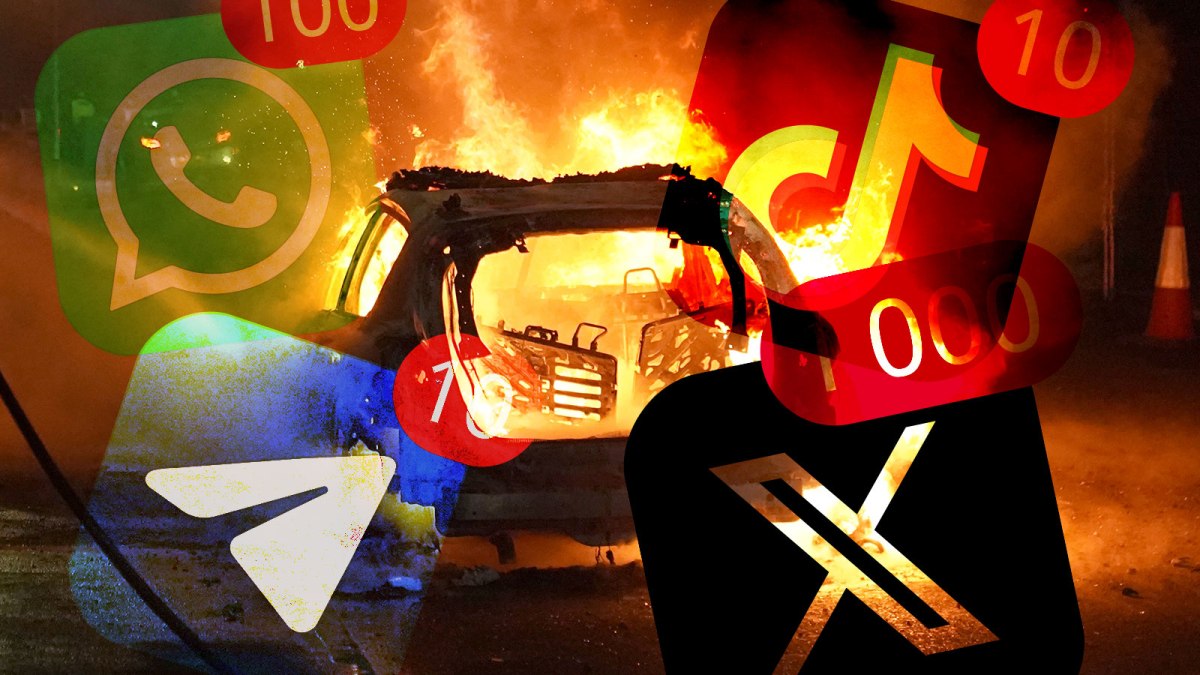
Social media platforms have faced mounting criticism for their handling of the situation. TikTok and X (formerly Twitter) have been singled out for failing to remove inflammatory content promptly, with many posts remaining visible for days despite clearly violating platform policies on hate speech and incitement to violence.
A spokesperson for X stated they were “taking action against posts that violate our policies,” but critics argue their response has been inadequate. TikTok similarly claimed to be “working diligently” to remove harmful content, though researchers continued to find inflammatory videos easily accessible on the platform.
The UK government is now considering strengthening the Online Safety Act, which came into effect earlier this year. Prime Minister Keir Starmer has promised that social media companies will face “serious consequences” if they fail to address the spread of harmful content more effectively.
Digital rights organizations have cautioned against knee-jerk regulatory responses, emphasizing the need to balance public safety with free expression. “We need thoughtful solutions that address the real harms without undermining legitimate online discourse,” said Jim Killock of the Open Rights Group.
For communities affected by the violence, the focus remains on healing. Community leaders in areas targeted by rioters have organized clean-up operations and solidarity events. In Southport, residents gathered to lay flowers for the victims of the original attack, emphasizing that the subsequent violence does not represent their community’s values.
As investigations continue into both the original attack and the ensuing riots, authorities face the challenging task of holding accountable those who deliberately spread misinformation while working to rebuild trust in communities torn apart by violence fueled by social media falsehoods.
Fact Checker
Verify the accuracy of this article using The Disinformation Commission analysis and real-time sources.

14 Comments
This underscores the need for robust content moderation and fact-checking on social media platforms. Giving fringe voices a megaphone can have devastating real-world consequences.
You’re right. Platforms must be more vigilant about banning repeat offenders who exploit their systems, even if they’ve been blocked from mainstream sites.
While the situation is undoubtedly concerning, I’m hopeful that the research and insights shared in this article can help inform more effective interventions to address the root causes of this problem.
Agreed. By understanding the mechanics behind these crises, we can work towards developing holistic solutions that address the underlying issues and prevent similar incidents in the future.
This situation highlights the fragility of social cohesion and the ease with which it can be undermined by malicious actors. Rebuilding trust in institutions and media will be crucial.
I agree. Restoring faith in reliable information sources and promoting civic engagement are key to preventing such crises from spiraling out of control.
The role of influential figures like Tommy Robinson in spreading misinformation is disturbing. Their ability to bypass bans and reach vulnerable audiences is a major challenge.
Absolutely. Tackling this problem requires a multipronged approach – from improving platform policies to empowering local communities to counter harmful narratives.
This is a concerning situation. It’s critical to combat the spread of misinformation, especially when it incites violence. Identifying the sources and understanding their tactics is an important first step.
Agreed. Social media algorithms can amplify harmful narratives if left unchecked. Proactive interventions and media literacy education will be crucial to preventing future crises like this.
While the details are concerning, I’m glad to see researchers and experts analyzing the dynamics at play. Understanding the tactics used to sow discord is the first step to developing effective countermeasures.
Exactly. By shining a light on how these networks operate, we can develop more robust strategies to identify and shut down the spread of harmful misinformation.
This incident underscores the urgent need for digital literacy education and critical thinking skills, especially among young people who may be vulnerable to manipulation on social media.
You make a good point. Empowering citizens to navigate the online world with discernment is crucial to building resilience against the divisive tactics of bad actors.