


Listen to the article
In the aftermath of the deadly stabbing incident at a Taylor Swift-themed dance class in Southport, a disturbing wave of misinformation has spread across social media platforms, fueling tensions and potentially endangering innocent communities.
What began as a tragic event—where three young girls lost their lives and eight others were injured—quickly transformed into a battleground of false narratives and deliberate manipulation online. Law enforcement officials have confirmed that the 17-year-old suspect, Axel Rudakubana, was born in Cardiff to Rwandan parents, contrary to widely circulated claims about his immigration status.
Despite official statements from Merseyside Police debunking these falsehoods, social media platforms have been flooded with inflammatory posts suggesting the attacker was an asylum seeker who had recently arrived in the UK. This misinformation gained significant traction, with some posts receiving millions of views within hours.
Security sources have expressed concern about the orchestrated nature of the campaign, noting patterns that suggest coordinated activity from both domestic far-right networks and foreign actors. “There appears to be a sophisticated attempt to exploit this tragedy for political purposes,” said one intelligence analyst who requested anonymity due to the sensitive nature of ongoing investigations.
Analysis of traffic patterns reveals that much of the initial wave of false information originated from accounts with minimal prior activity, some created just days before the attack. Many posts shared identical language and imagery, suggesting the use of pre-planned content designed to maximize social division.
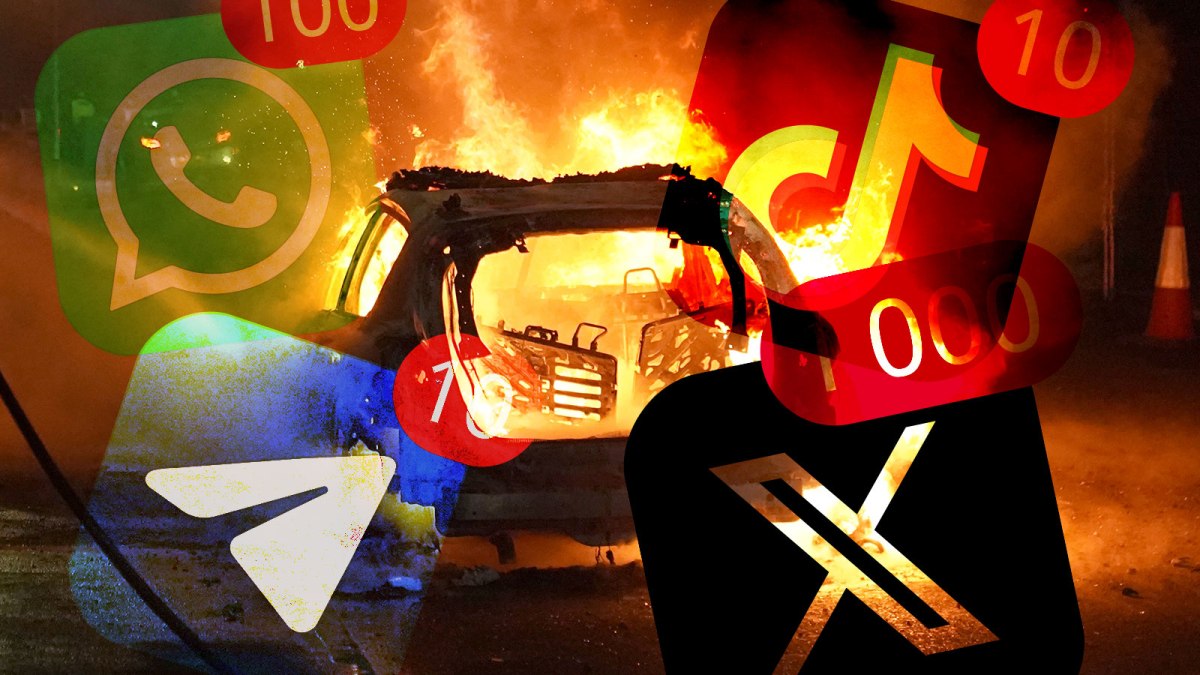
The spread of misinformation has had real-world consequences. Riots erupted in Southport and subsequently spread to other locations including Liverpool, Manchester, and parts of London. Police officers have faced violence while attempting to maintain order, with dozens injured during confrontations with protesters.
Social media companies have come under intense scrutiny for their handling of the situation. Despite policies against hate speech and misinformation, platforms including X (formerly Twitter), Facebook, and TikTok have struggled to contain the spread of false narratives. Critics argue that algorithmic amplification of inflammatory content has exacerbated the problem.
“These platforms are designed to prioritize engagement, regardless of whether that engagement comes from harmful content,” explained Dr. Hannah Mitchell, a researcher specializing in digital extremism at King’s College London. “When misinformation triggers strong emotional responses, it spreads faster than the truth.”
The UK government has responded by convening an emergency COBRA meeting to address the unrest. Prime Minister Keir Starmer has condemned both the original attack and the subsequent violence, stating: “Those exploiting tragedy to sow division do not represent Britain. We will not tolerate violence on our streets.”
Home Secretary Yvette Cooper has called on social media companies to take more decisive action, threatening regulatory consequences if platforms fail to address the problem. “These companies have a responsibility to prevent their services from being weaponized to spread hate and division,” Cooper stated in a press conference on Wednesday.
Counter-terrorism experts have noted parallels to previous incidents where domestic tragedies were exploited by extremist networks and foreign influence operations. “We’ve seen this playbook before,” said Former Metropolitan Police counter-terrorism officer Neil Williams. “A tragic event occurs, and within hours, a narrative emerges that’s designed to maximize social friction along existing fault lines.”
As communities work to heal from both the initial tragedy and subsequent unrest, authorities face the challenging task of addressing not just physical violence but also its digital catalysts. The Southport case highlights the growing intersection between online misinformation and real-world harm, raising difficult questions about platform responsibility, free speech, and the vulnerability of democratic societies to manipulation.
Police investigations continue into both the original attack and the organized spread of misinformation that followed, with several arrests already made in connection with the riots. Meanwhile, community leaders in affected areas are calling for calm and unity in the face of attempts to divide the public.
Fact Checker
Verify the accuracy of this article using The Disinformation Commission analysis and real-time sources.

10 Comments
This tragic incident is heartbreaking, and my condolences go out to the victims and their families. The spread of misinformation is disturbing and can have real-world consequences. I hope the authorities can quickly identify the sources and take steps to limit the damage from these false narratives.
Well said. In times of crisis, it’s crucial that the public has access to reliable, fact-based information. Efforts to deliberately mislead and sow discord online are unacceptable and must be met with a strong response from both platforms and law enforcement.
The details around the suspect’s background are crucial in understanding this incident. I’m glad the police have provided clarity, but it’s alarming to see misinformation spread so rapidly on social media. Fact-checking and transparency are key to countering these harmful falsehoods.
Agreed. Coordinated disinformation campaigns, whether domestic or foreign, pose a serious threat to public discourse and can have real-world consequences. Social media platforms and authorities need to work together to quickly identify and address the sources of these false narratives.
This is a disturbing situation. While the facts are still emerging, the spread of misinformation on social media is deeply concerning and can inflame tensions. I hope law enforcement can identify the sources and take appropriate action to limit the damage from these false narratives.
Agreed. Social media platforms need to be more proactive in detecting and removing coordinated disinformation campaigns, especially around sensitive events like this. Fact-checking and transparency are crucial to counter the spread of harmful lies.
This is a tragic and complex situation, and I hope the authorities can get to the bottom of what happened. The spread of misinformation is deeply concerning and can only serve to exacerbate tensions. It’s crucial that the public has access to accurate, fact-based information from reliable sources.
Well said. In times of crisis, it’s essential that we rely on official sources and verified information, rather than unsubstantiated claims or coordinated disinformation efforts. Responsible reporting and transparency are key to preventing further harm and restoring public trust.
The details around the suspect’s background and immigration status are critical in understanding what happened. I’m glad the police have provided clarity on the facts, but it’s troubling to see these falsehoods gain so much traction online. Vigilance is needed to prevent such misinformation from causing further damage.
Absolutely. Responsible reporting and fact-checking are essential to ensure the public has accurate information, rather than inflammatory speculation. Coordinated disinformation efforts, whether domestic or foreign, pose a serious threat that must be addressed.