


Listen to the article
The rapid spread of false information across social media following the tragic Southport knife attack has sparked serious concerns about online disinformation and its real-world consequences.
In the wake of the attack that claimed the lives of three young girls, unsubstantiated claims about the suspect’s identity spread like wildfire across social media platforms. False allegations claiming the attacker was an asylum seeker who had recently arrived in the UK by boat went viral, despite being completely untrue.
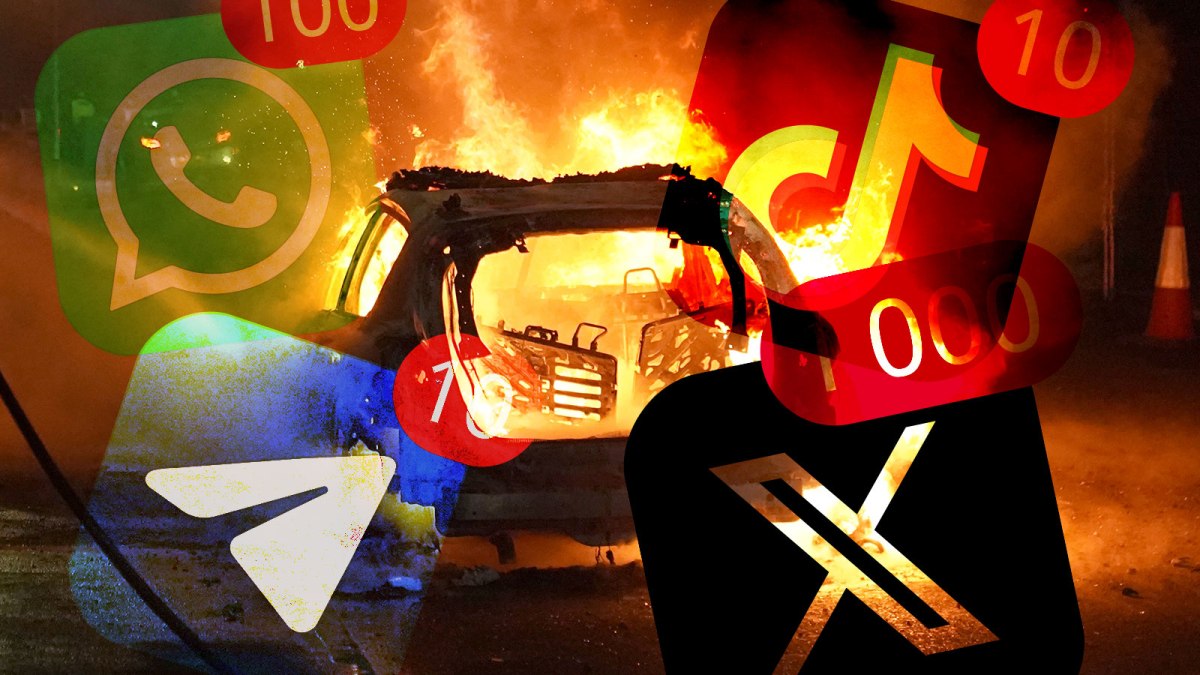
The misinformation gained significant traction when prominent figures, including Elon Musk, owner of X (formerly Twitter), amplified these unfounded rumors to his 193 million followers. This digital wildfire quickly translated into physical violence as riots erupted in Southport and subsequently spread to other UK cities.
Security officials and disinformation experts have expressed alarm at how quickly the false narrative took hold. “What we’re seeing is a perfect storm of factors contributing to this crisis,” explained Dr. James Wilson, a digital media researcher. “Platform algorithms that prioritize engagement, weakened content moderation teams, and influential accounts sharing unverified claims created ideal conditions for misinformation to thrive.”
The UK’s counter-terrorism police have launched investigations into what they describe as “coordinated far-right activity” following the unrest. Authorities believe that while some of the online activity stemmed from genuine users sharing unverified information, there is evidence suggesting organized efforts to deliberately spread falsehoods.
The investigation has identified suspicious patterns typical of disinformation campaigns, including networks of recently created accounts posting identical content and the strategic timing of posts to maximize visibility. Several accounts that played key roles in spreading the false claims have since been suspended by social media platforms.
“We’re examining multiple angles, including potential foreign interference,” said a senior police official who requested anonymity due to the ongoing investigation. “What’s particularly concerning is how these online narratives translated so quickly into street violence.”
The incident has renewed calls for stronger regulation of social media platforms and highlighted longstanding concerns about tech companies’ ability—or willingness—to effectively moderate content during crisis situations. Critics argue that despite public commitments to combat misinformation, platforms continue to struggle with timely interventions.
“The damage was already done by the time fact-checks started appearing,” noted media analyst Sarah Jenkins. “We’re witnessing the real-world consequences of a digital ecosystem that often prioritizes engagement over accuracy.”
Social media companies have defended their response, with representatives citing the volume of content they process daily and the challenges of making moderation decisions in rapidly evolving situations. However, critics point to reduced content moderation teams following industry layoffs as a significant factor in the delayed response.
The government has pledged to address the issue through its Online Safety Bill, which aims to place greater responsibility on platforms to prevent harmful content from spreading. However, implementation details and effectiveness remain subjects of debate among industry experts.
Community leaders have expressed concerns about the lasting impact of such misinformation campaigns on social cohesion. “These false narratives exploit existing tensions and create new divisions that take significant time and effort to heal,” said community organizer Rahim Ahmed.
As investigations continue, authorities face the challenge of addressing both the immediate consequences of the riots and the broader question of how to prevent similar situations in the future. Experts suggest that solutions will require cooperation between government, technology companies, and civil society organizations.
The Southport case serves as a sobering reminder of how rapidly online misinformation can translate into real-world harm, raising urgent questions about digital literacy, platform responsibility, and the balance between free expression and public safety in an increasingly fragmented information landscape.
Fact Checker
Verify the accuracy of this article using The Disinformation Commission analysis and real-time sources.

18 Comments
This is a sobering reminder of how vulnerable our information landscape is to manipulation. Rigorous fact-checking and responsible reporting have never been more important.
Agreed. Building public media literacy is key to inoculating against the spread of disinformation. Platforms and policymakers must work together to find solutions.
The Southport tragedy highlights the real-world dangers of unchecked online misinformation. Addressing this challenge requires a multi-pronged approach targeting both the supply and demand sides.
Absolutely. Stronger content moderation, transparency around algorithms, and media literacy education are all necessary components to combat the scourge of disinformation.
Deeply concerning to see how quickly false narratives can spread online and lead to real-world violence. Platforms need to take more responsibility for content moderation and curbing the amplification of disinformation.
Absolutely. The speed at which misinformation travels is alarming. Stronger safeguards and transparency around platform algorithms are crucial to mitigate these kinds of crises.
The rapid spread of misinformation in the wake of this tragedy is deeply concerning. Platforms need to take more responsibility for content moderation and curbing the amplification of false narratives.
Absolutely. Stronger safeguards and transparency around platform algorithms are crucial to mitigating these kinds of crises. The stakes are simply too high to ignore this challenge.
This is a sobering reminder of how vulnerable our information landscape is to manipulation. Rigorous fact-checking and responsible reporting have never been more important.
Agreed. Building public media literacy is key to inoculating against the spread of disinformation. Platforms and policymakers must work together to find solutions.
This incident is a stark reminder of the urgent need to address online disinformation and its real-world consequences. Building public media literacy and improving platform accountability should be top priorities.
Well said. Tackling the root causes of this problem requires a multifaceted approach from all stakeholders. Proactive, collaborative efforts are essential to building a more resilient information ecosystem.
The Southport incident highlights the urgent need to address the proliferation of online disinformation. Platforms, policymakers, and the public all have a role to play in finding solutions.
Agreed. This crisis underscores the importance of proactive, collaborative efforts to build a more resilient information ecosystem. Mitigating the real-world harms of misinformation should be a top priority.
This is a stark reminder of how online disinformation can have real-world consequences. Addressing the root causes of this problem requires a multifaceted approach from all stakeholders.
Well said. Enhancing media literacy, improving content moderation, and fostering greater platform accountability are all essential to combating the spread of false information.
Deeply concerning to see how quickly false narratives can spread online and lead to real-world violence. Platforms need to take more responsibility for content moderation and curbing the amplification of disinformation.
Absolutely. The speed at which misinformation travels is alarming. Stronger safeguards and transparency around platform algorithms are crucial to mitigate these kinds of crises.