


Listen to the article
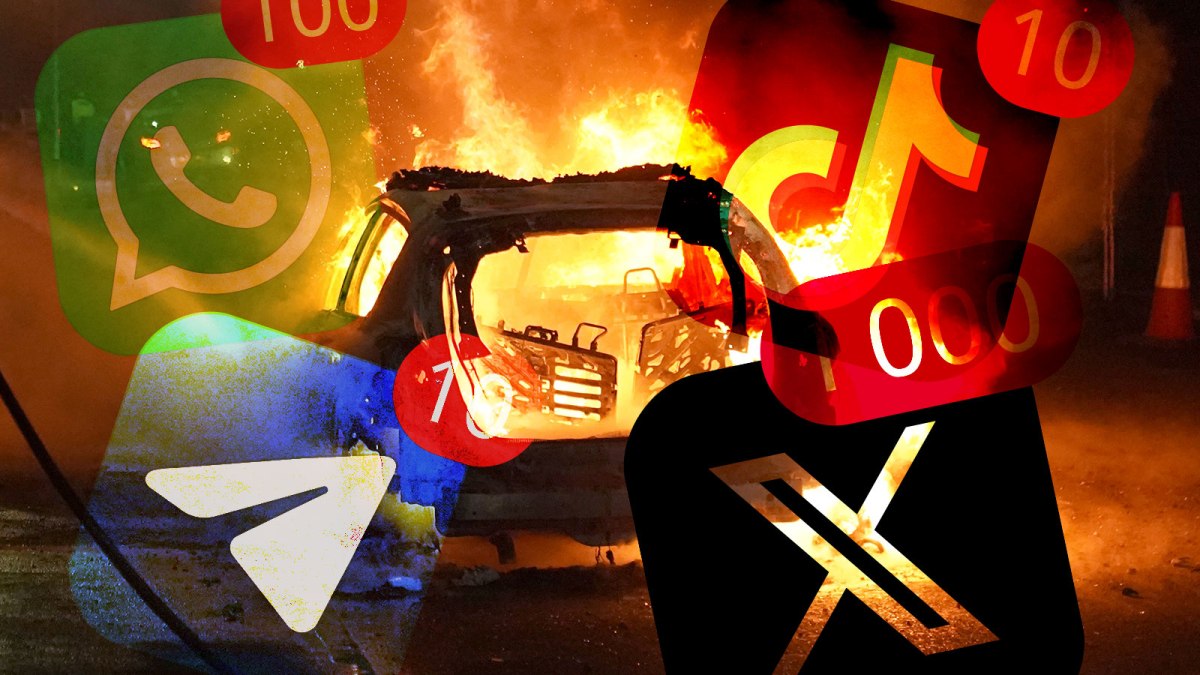
In the wake of violent riots in Southport, a digital investigation has revealed how social media networks became conduits for misinformation that fueled unrest across England. The disturbances, which began after the tragic stabbing of three children at a Taylor Swift-themed dance class, were amplified by a coordinated network of online provocateurs spreading false information about the suspect’s identity.
Digital researchers have identified approximately 100 accounts that systematically pushed misleading narratives in the critical hours following the stabbing. These accounts, many with suspicious patterns of activity, worked in tandem to spread unfounded claims that the suspect was an asylum seeker who had recently arrived in the UK by boat.
The Center for Countering Digital Hate (CCDH), which analyzed the online activity, found that these accounts pushed xenophobic content despite police statements confirming the suspect was born in the UK. The CCDH’s analysis revealed that many accounts showed telltale signs of coordination, with some created very recently and others displaying minimal personal information or posting history.
“What we witnessed was a perfect storm of algorithmic amplification and coordinated messaging,” explained Callum Hood, the CCDH’s head of research. “These accounts worked systematically to flood platforms with false information during a moment of intense public anxiety.”
The online disinformation campaign gained significant traction in the 24 hours after the attack, with the false claims receiving over 25 million views on X (formerly Twitter) alone. The pattern mirrors tactics previously observed in influence operations designed to inflame tensions and exploit tragic events.
Law enforcement officials have acknowledged the challenge of combating such digital manipulation. Detective Superintendent Paul Kearney of Merseyside Police noted that the speed at which falsehoods spread online outpaced their ability to correct the record. “By the time we could issue clarifications, the damage was already done,” Kearney said.
Social media platforms have faced renewed criticism for their handling of the situation. Meta, which owns Facebook and Instagram, and X have been accused of failing to enforce their own policies on harmful content. The platforms claim they removed thousands of posts violating their terms, but critics argue their response was too little, too late.
The UK government has pledged to strengthen legislation targeting both those who spread misinformation and the platforms that host it. Home Secretary Yvette Cooper announced plans to fast-track portions of the Online Safety Bill specifically addressing coordinated disinformation campaigns.
“These platforms have become breeding grounds for hatred,” Cooper stated during an emergency session of Parliament. “We cannot allow digital spaces to become weapons used against our communities.”
Digital rights experts caution that addressing the problem requires a nuanced approach. Dr. Emma Briant, a disinformation specialist at Bard College, emphasized that any solution must balance content moderation with free speech considerations.
“We’re witnessing the weaponization of information in real-time,” Briant noted. “But the solution isn’t simply more censorship—it’s building more resilient information ecosystems and improving digital literacy.”
The Southport case highlights growing concerns about the vulnerability of social media users to manipulation during crises. Research suggests that emotional content spreads faster online, making tragic events particularly susceptible to exploitation by those with political agendas.
Community leaders in affected areas have launched grassroots initiatives to counter the online narratives. In Southport, local interfaith groups organized a digital awareness campaign reaching thousands of residents with verified information from official sources.
As investigations continue, security analysts warn that the tactics observed represent a growing threat to social cohesion. “What happened in Southport wasn’t spontaneous,” said Brian Fishman, former head of counterterrorism policy at Facebook. “It was the product of information manipulation techniques that have become increasingly sophisticated.”
The events in Southport may prove to be a watershed moment in how the UK addresses the intersection of social media, misinformation, and public safety—underscoring the urgent need for solutions that can keep pace with rapidly evolving digital threats.
Fact Checker
Verify the accuracy of this article using The Disinformation Commission analysis and real-time sources.

11 Comments
This is a complex issue without easy solutions, but it’s clear that a multi-pronged approach is needed – from identifying the sources of disinformation to improving platform policies and user education. Tackling this challenge requires sustained, coordinated efforts.
Well said. A comprehensive strategy involving various stakeholders is essential to address the root causes and mitigate the harms of online misinformation.
This highlights the need for robust fact-checking and digital literacy efforts to help the public navigate the online information landscape. Proactive steps to identify and counter coordinated disinformation campaigns are crucial.
I agree, education and media literacy are key to building resilience against such manipulation.
Interesting to see the analysis by the CCDH on the suspicious patterns and coordination behind these accounts. Tackling the spread of xenophobic content is vital to prevent further escalation of these types of incidents.
I hope the authorities can work closely with digital researchers and civil society groups to develop effective countermeasures against these coordinated disinformation campaigns. Safeguarding public discourse and trust is crucial during times of crisis.
The findings from the CCDH analysis provide valuable insights into the tactics used to spread misinformation online. Continued research and collaboration between different stakeholders will be key to developing more robust solutions.
This is a troubling case of how misinformation and coordinated online activity can inflame tensions and lead to real-world violence. It’s critical that we work to identify the sources of these campaigns and find ways to counter the spread of false narratives.
The use of social media to amplify misleading claims about the suspect’s identity is deeply concerning. I hope the authorities can take effective action to disrupt these coordinated disinformation efforts and restore public trust.
This underscores the importance of maintaining a free and open internet while also finding ways to combat the malicious use of digital tools. Balancing these priorities will be an ongoing challenge, but one that must be addressed.
The idea of ‘a perfect storm of algorithmic amplification’ is concerning. Social media platforms must do more to address how their systems can be exploited to rapidly spread misinformation and inflame tensions.