


Listen to the article
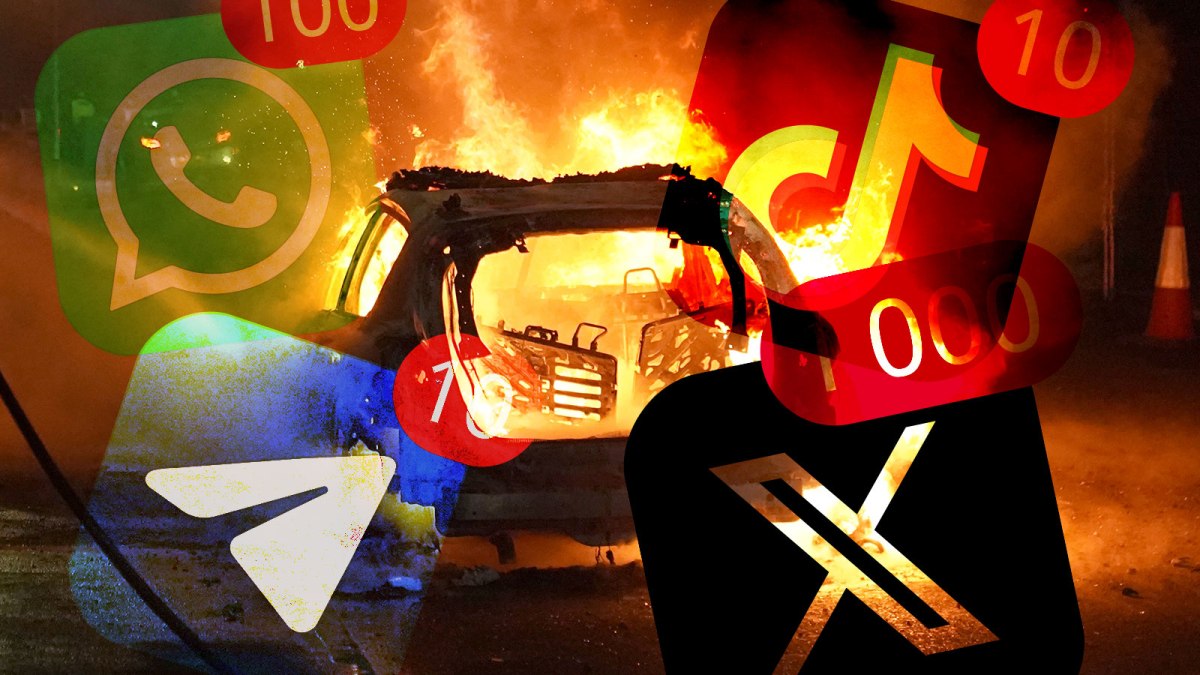
As social media platforms descended into a toxic maelstrom of hate speech and misinformation following the tragic events in Southport, investigators have been working diligently to identify those responsible for orchestrating what appears to be a coordinated disinformation campaign.
The violent riots that erupted across the UK were fueled by false claims circulating online that the suspect in the Southport knife attack was a Muslim asylum seeker. In reality, the 17-year-old charged with the murders of three young girls is a British-born teenager of Rwandan heritage.
Security sources have indicated to The Times that they are examining potential links between the online disinformation surge and Russian intelligence operations. While no definitive evidence has yet emerged to confirm the Kremlin’s involvement, the pattern of information dissemination bears hallmarks of tactics previously associated with Russian influence operations.
The spread of false narratives was significantly amplified by accounts suspected of being bots—automated profiles programmed to spread content rapidly across social media platforms. Analysis of these accounts revealed a sudden spike in activity immediately following the attack, with many accounts simultaneously sharing identical misinformation about the suspect’s identity and immigration status.
“What we witnessed was a classic example of how a tragic event can be weaponized to sow division within a society,” said Dr. Eleanor Hammond, a cybersecurity expert specializing in disinformation campaigns at King’s College London. “The speed and coordination of the messaging strongly suggests an organized effort rather than organic misinformation spread.”
The attack on social cohesion comes at a particularly vulnerable moment for Britain, with immigration already a contentious political issue following the recent change in government. Security analysts note that this timing amplifies the potential impact of such disinformation campaigns.
X (formerly Twitter) has faced particular criticism for its handling of the situation. Under Elon Musk’s ownership, the platform has significantly reduced its content moderation teams, creating what many experts describe as a perfect environment for disinformation to flourish unchecked.
“The platform’s algorithm actually rewards content that generates high engagement, regardless of accuracy,” explained Marcus Wilton, a former content moderator at a major social media company. “Inflammatory and divisive posts tend to generate more interactions, meaning the system itself amplifies exactly the kind of content that’s most harmful during a crisis.”
Meta, the parent company of Facebook and Instagram, claims to have removed thousands of posts containing falsehoods about the Southport attack, but critics argue their response was too slow and inadequate to prevent the offline violence that followed.
The UK government has now announced plans to accelerate the implementation of the Online Safety Bill, which would place greater responsibility on platforms to quickly identify and remove harmful content. However, technical experts question whether legislation alone can address the complex challenge of combating sophisticated disinformation operations.
“This is an arms race,” said Professor Julian Bartlett of Oxford University’s Internet Institute. “As detection methods improve, those seeking to spread disinformation develop more sophisticated techniques to evade detection.”
Intelligence services continue to investigate potential foreign interference in the unrest, but proving state involvement in such operations presents significant challenges. Attribution is notoriously difficult in the digital realm, where actors can easily disguise their origins and operate through layers of proxies.
Meanwhile, communities across the UK are working to repair the damage caused by the violence. In several cities, local residents have organized clean-up operations and community dialogues aimed at healing divisions inflamed by the online misinformation campaign.
The Southport case illustrates the growing threat that coordinated disinformation poses to social stability in democratic societies. As intelligence agencies continue their investigations, the incident serves as a sobering reminder of how vulnerable modern information ecosystems remain to manipulation—and how easily online falsehoods can translate into real-world violence.
Fact Checker
Verify the accuracy of this article using The Disinformation Commission analysis and real-time sources.

7 Comments
This situation really highlights the need for improved media literacy and critical thinking when it comes to information shared on social media. I hope the investigators can identify effective countermeasures to combat these types of coordinated disinformation campaigns.
This is a sobering reminder of the power of social media to rapidly spread misinformation, especially during times of crisis. I hope the investigators are able to uncover the full scope of this coordinated disinformation campaign.
This is a concerning situation. We need to be vigilant about the spread of misinformation, especially when it appears to be coordinated. I hope the investigators can get to the bottom of this and identify the sources.
It’s alarming to see how quickly false narratives can spread on social media, especially when amplified by suspected bots. I’m curious to see if there is any evidence of Russian involvement, as the tactics seem similar to past influence operations.
You’re right, the pattern of information dissemination is quite concerning. Identifying the sources and potential countermeasures will be critical to addressing this issue.
It’s disheartening to see how false narratives can fuel such violent reactions. I’m glad the investigators are looking into potential links to Russian intelligence operations, as that would be a very serious development.
Agreed, the potential involvement of foreign actors in spreading disinformation is deeply troubling. Uncovering the full extent of this issue will be crucial for preventing similar incidents in the future.