


Listen to the article
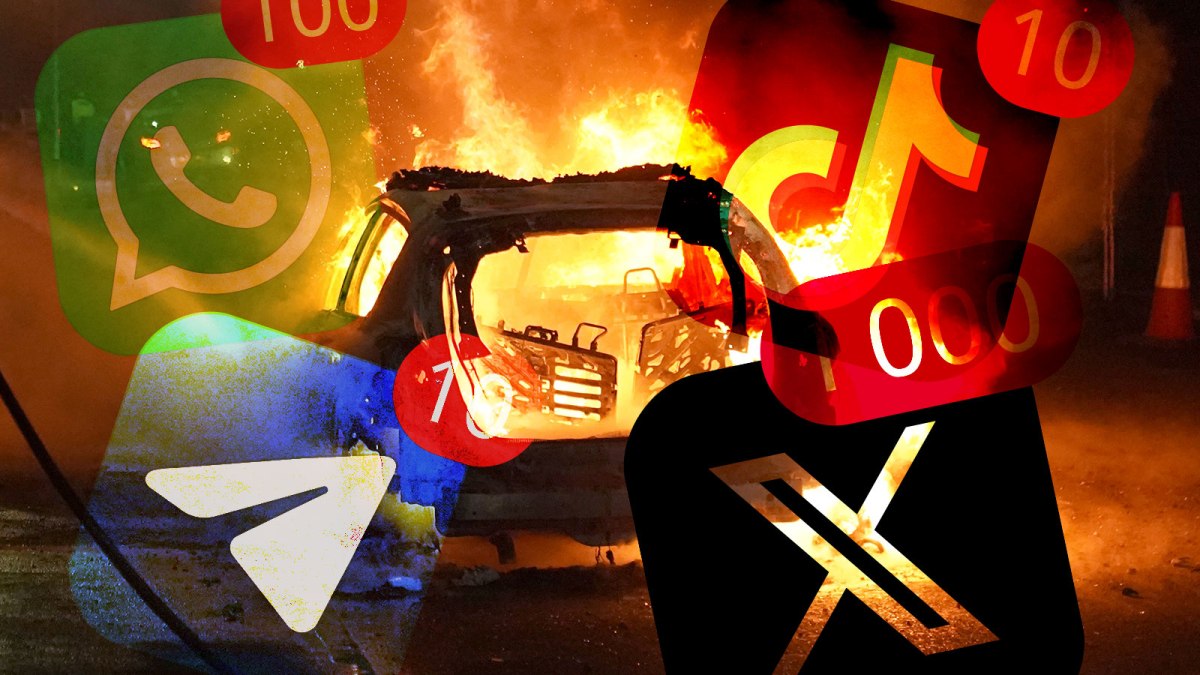
In the wake of the violent riots that erupted in Southport following the tragic knife attack that claimed the lives of three young girls, a disturbing pattern has emerged across social media platforms. False information spread rapidly online, with numerous accounts falsely claiming the suspect was an asylum seeker who had recently arrived in the UK by boat.
Security and disinformation experts have identified a coordinated network of anonymous accounts deliberately spreading this misinformation to inflame tensions. These accounts—many with few followers but substantial reach—played a significant role in transforming grief into violent disorder that spread across multiple UK cities.
“What we’re seeing is a playbook in action,” explains Dr. Sasha Havlicek, founding CEO of the Institute for Strategic Dialogue (ISD), a think tank specializing in extremism and disinformation. “These are not organic reactions but calculated efforts to exploit tragedy.”
Analysis shows that within hours of the Southport attack, a network of accounts began circulating false claims about the perpetrator’s identity, despite police statements to the contrary. Many of these accounts displayed similar characteristics: recently created profiles with generic names, stock photo avatars, and activity patterns suggesting automation.
The Centre for Countering Digital Hate (CCDH) found that just 40 accounts were responsible for nearly 70 percent of the most widely shared false claims about the Southport incident. Several of these accounts had previously spread misinformation about other contentious issues, suggesting they form part of a persistent network designed to sow division.
“The speed and coordination we witnessed points to sophisticated actors who understand how to game social media algorithms,” says Dr. Imran Ahmed, CEO of the CCDH. “They know exactly which buttons to push to maximize outrage and minimize critical thinking.”
Experts point to a combination of domestic far-right networks and potential foreign influence operations. The Russian Internet Research Agency, previously implicated in interference in Western elections, has been identified as potentially involved, though definitive attribution remains challenging.
The social media platforms themselves have faced criticism for their slow response. Despite their community guidelines prohibiting hate speech and misinformation, enforcement appeared inconsistent during the critical early hours when false narratives were taking hold.
“We’re dealing with platforms whose business models reward engagement above all else,” explains Professor Saffron Huang of the Oxford Internet Institute. “Content that provokes strong emotional responses—especially anger—receives algorithmic preference, regardless of its veracity.”
Legal experts highlight the difficulties in addressing this problem through existing legislation. The UK’s Online Safety Act, while providing a framework for tackling harmful content, faces implementation challenges and questions about its effectiveness against sophisticated disinformation networks.
“These accounts operate in a gray zone,” says digital rights lawyer Emma Thompson. “They carefully craft messages that incite without explicitly calling for violence, making enforcement difficult.”
Security services have expressed growing concern about the national security implications of these coordinated disinformation campaigns. MI5 Director General Ken McCallum recently described social media manipulation as “a significant and growing threat to social cohesion” in the UK.
Tech companies have pledged to improve their response systems. Meta, Twitter (now X), and TikTok have all announced enhanced measures to detect coordinated inauthentic behavior and limit the spread of false information during crisis events.
Meanwhile, media literacy experts emphasize the importance of public education as a long-term solution. “Teaching people to recognize manipulation tactics and verify information before sharing is crucial,” says Dr. Claire Wardle, co-founder of the Information Futures Lab.
As investigations continue, the Southport case highlights a troubling reality: in an interconnected digital landscape, local tragedies can be weaponized within hours by anonymous actors seeking to divide communities. The challenge for authorities, platforms, and citizens alike is to recognize these patterns and develop more effective countermeasures before the next crisis erupts.
Fact Checker
Verify the accuracy of this article using The Disinformation Commission analysis and real-time sources.

14 Comments
The article highlights a concerning pattern of anonymous accounts rapidly spreading misinformation to exploit tragedies. I’m curious to learn more about the technological and policy solutions that could help address this growing problem.
Agreed, this is a complex challenge that will likely require a multi-pronged approach. Greater transparency, improved content moderation, and strengthening digital literacy could all be part of the solution.
It’s disheartening to see how quickly false narratives can take hold and incite real-world violence. I appreciate the experts calling attention to the calculated nature of these campaigns – hopefully that can inform more effective countermeasures.
You make a good point. Understanding the playbook used by bad actors is the first step towards developing more robust solutions to protect public discourse and safety.
It’s alarming to see how quickly false narratives can spread online, especially around sensitive events like the Southport attack. I appreciate the experts calling attention to the calculated, coordinated nature of these disinformation campaigns.
You’re right, the speed and scale of these misinformation efforts is very concerning. Developing more effective ways to identify and disrupt them will be crucial going forward.
The article raises some important points about the role of anonymous social media accounts in fueling unrest through the spread of false information. I’m curious to learn more about the specific solutions that could help combat this growing problem.
Agreed, this is a complex challenge that will likely require a multi-faceted approach. Increased platform accountability, improved content moderation, and strengthening digital literacy could all be part of the solution.
Fascinating to see how quickly misinformation can spread online, especially around sensitive topics like violent crimes. Coordinating false narratives to inflame tensions is truly troubling. Curious what solutions experts propose to combat this issue more effectively.
You’re right, the speed and scale at which disinformation can spread is very concerning. Tackling the root causes and holding bad actors accountable will be crucial.
The article raises some alarming points about the role of anonymous social media accounts in fueling unrest. I’m curious to learn more about the specific measures that can be taken to disrupt these coordinated disinformation campaigns.
Definitely an important issue to address. Stricter platform policies, improved user authentication, and ramping up content moderation efforts could all help mitigate the spread of malicious misinformation.
Sadly, we’ve seen this playbook used time and again – exploiting tragedy to sow discord and division. I appreciate the experts highlighting the calculated, coordinated efforts behind these campaigns. Shining a light on the tactics is an important first step.
Agreed, transparency around the methods used to spread misinformation is crucial. Empowering people to identify and resist these manipulative tactics will be key to combating the problem.