


Listen to the article
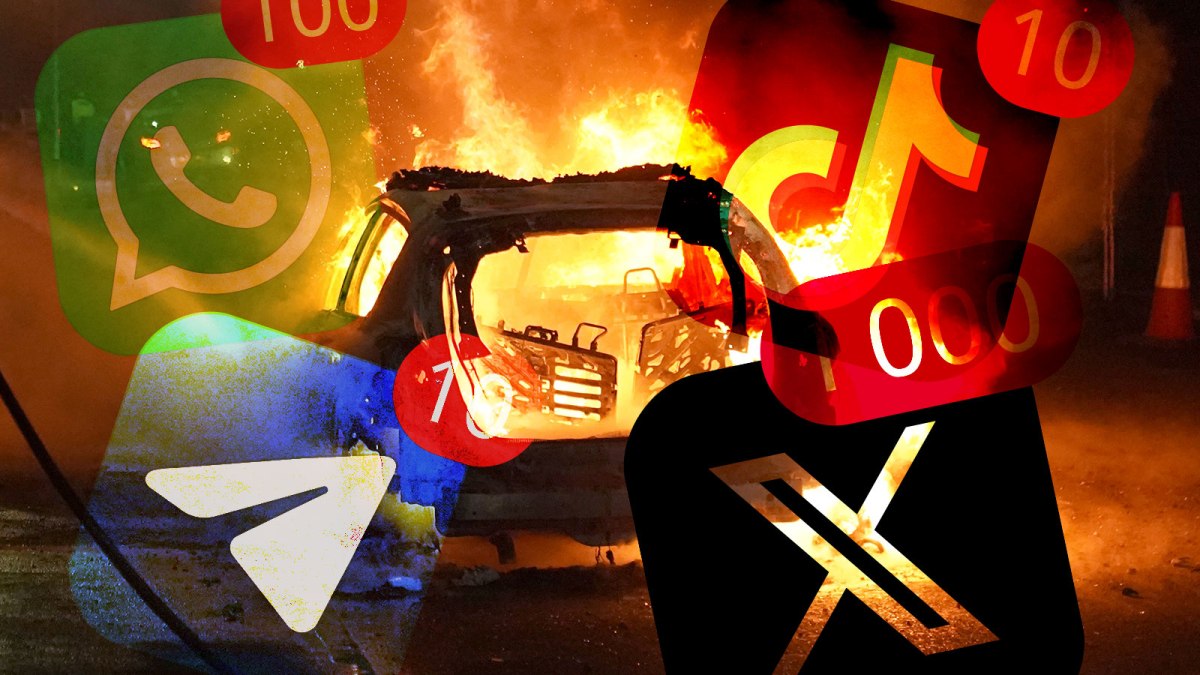
In the aftermath of the Southport tragedy, a disturbing pattern has emerged as social media platforms become battlegrounds for disinformation and inflammatory rhetoric. Security officials and social media researchers have identified a coordinated campaign of false information that fueled riots across the UK, raising urgent questions about who orchestrates these digital manipulation efforts and how they can be contained.
Intelligence sources report that foreign state actors, particularly Russia, have amplified false narratives following the stabbing of three children in Southport. While these foreign entities didn’t create the initial falsehoods, they strategically amplified existing tensions, exploiting a tragedy to sow division within British society.
“What we’re seeing is opportunistic exploitation of existing fissures,” explained one security official who requested anonymity due to the sensitivity of ongoing investigations. “Foreign actors monitor social media for divisive local incidents they can amplify to create maximum disruption.”
The misinformation campaign began almost immediately after the tragic incident. False claims about the attacker’s identity spread rapidly, despite police statements to the contrary. Within hours, these fabrications had reached millions of users across multiple platforms, creating a volatile atmosphere that ultimately sparked violence in the streets.
Researchers have identified telltale signs of coordinated inauthentic behavior, including newly created accounts spreading identical messages and suspicious patterns of amplification through networks of bots. These tactics mirror those seen in previous disinformation campaigns attributed to foreign interference operations.
Centre for Information Resilience, a UK-based organization that monitors disinformation, documented numerous instances where false narratives were deliberately pushed by accounts displaying characteristics consistent with coordinated manipulation. Their analysis showed how unverified claims gained traction through a combination of automated amplification and genuine user engagement.
“The concerning part is how quickly falsehoods gained credibility through repetition,” said Ross Burley, co-founder of the Centre. “When people see the same claim from multiple sources, they’re more likely to believe it, regardless of whether those sources are legitimate.”
The UK government has struggled to formulate an effective response to this new form of asymmetric warfare. While Prime Minister Keir Starmer condemned the violence and misinformation, practical measures to counter digital manipulation remain elusive. Social media companies have also faced criticism for their delayed response in removing content that violated their policies against hate speech and incitement.
Tech platforms point to the challenges of moderating content at scale, especially during rapidly evolving crises. However, critics argue that these companies have long prioritized engagement over safety, creating ecosystems where sensational and divisive content flourishes.
The Southport case highlights a troubling reality: the infrastructure for mass manipulation of public opinion exists and operates with minimal oversight. The barriers to launching influence operations have fallen dramatically, making digital manipulation accessible not only to state actors but also to domestic extremist groups and even individuals with basic technical knowledge.
Security experts warn that without robust countermeasures, similar patterns will repeat with increasing frequency. Potential solutions include greater transparency from social media platforms about coordinated campaigns, improved media literacy education, and more sophisticated detection tools to identify manipulation efforts before they gain momentum.
“This is the new normal,” said a former intelligence official with expertise in information operations. “The weaponization of information isn’t going away—societies need to develop resilience against these tactics.”
For communities targeted by such campaigns, the consequences extend far beyond digital spaces. In cities where riots occurred, residents now face the dual challenge of physical recovery and healing community relations damaged by artificially inflamed tensions.
As investigations continue, security services face the difficult task of attributing responsibility while developing strategies to counter future influence operations. The Southport case serves as a sobering reminder that in an interconnected world, local tragedies can quickly become ammunition in a global information war—with very real consequences on the streets of Britain.
Fact Checker
Verify the accuracy of this article using The Disinformation Commission analysis and real-time sources.

10 Comments
It’s disturbing to see how quickly misinformation can spread on social media, fueling unrest and division. Responsible platforms and officials need to find ways to quickly identify and limit the reach of coordinated disinformation campaigns, while still preserving free speech.
I wonder what specific steps authorities are taking to trace the sources of this disinformation and disrupt the foreign influence operations. Exposing the actors behind these campaigns could be an important deterrent.
Good question. Identifying the origins and networks behind coordinated disinformation is notoriously challenging, but crucial to disrupting these tactics. Robust international cooperation and information-sharing will likely be key.
It’s disturbing to see how quickly false narratives can take hold and lead to real-world consequences. We need to find ways to inoculate the public against manipulation, while also addressing the underlying social and economic drivers of division.
This highlights the critical importance of media literacy and teaching people to think critically about information they encounter online. We all have a role to play in combating the spread of harmful falsehoods.
This is a concerning trend that we’ve seen play out in many countries. Foreign actors are clearly trying to exploit and amplify local tensions for their own geopolitical gain. It’s important that the public remains vigilant and relies on authoritative and verified sources of information.
This is a timely reminder that social media platforms need to be held accountable for the spread of harmful misinformation on their networks. What new policies or oversight mechanisms could help mitigate these threats?
The ability of foreign actors to exploit local tragedies for their own gain is truly concerning. This underscores the need for greater international cooperation and coordination to combat these sorts of malicious influence operations.
This serves as a sobering reminder that the battle against disinformation is far from over. While social media platforms have taken some steps, it’s clear that much more needs to be done to protect the integrity of public discourse.
As someone who follows geopolitical issues closely, I’m not surprised to see Russia’s fingerprints on this. They have a long history of using information warfare to destabilize adversaries. Countering this requires a multi-faceted approach.