


Listen to the article
Fact-Checkers Combat Rising Tide of Misinformation in Ethiopia Amid Platform Changes
WASHINGTON — As social media continues to fuel the spread of misinformation during political tensions across the Horn of Africa, fact-checking organizations in Ethiopia are working to stem the tide despite diminishing digital resources.
Last year, when relations between Somalia and Ethiopia deteriorated, a video claiming to show Egyptian troops training in Somalia garnered over 34,000 views on X (formerly Twitter). Fact-checkers quickly determined the footage was old and unrelated to current events, but not before thousands had viewed and potentially been influenced by the deceptive content.
This case exemplifies a troubling pattern playing out globally, where hostile groups leverage disinformation to inflame tensions, create confusion, and erode trust in institutions. In response, Ethiopian organizations like HaqCheck have stepped up efforts to combat false information.
“Fake information is causing great damage to organizations and the country,” said Netsanet Tesfaye, a communications specialist who recently sought training from HaqCheck. “The methods people use have also gone from spreading simple rumors to using advanced technology such as deep fake or AI. So it was important I understand what tools are available to counter them.”
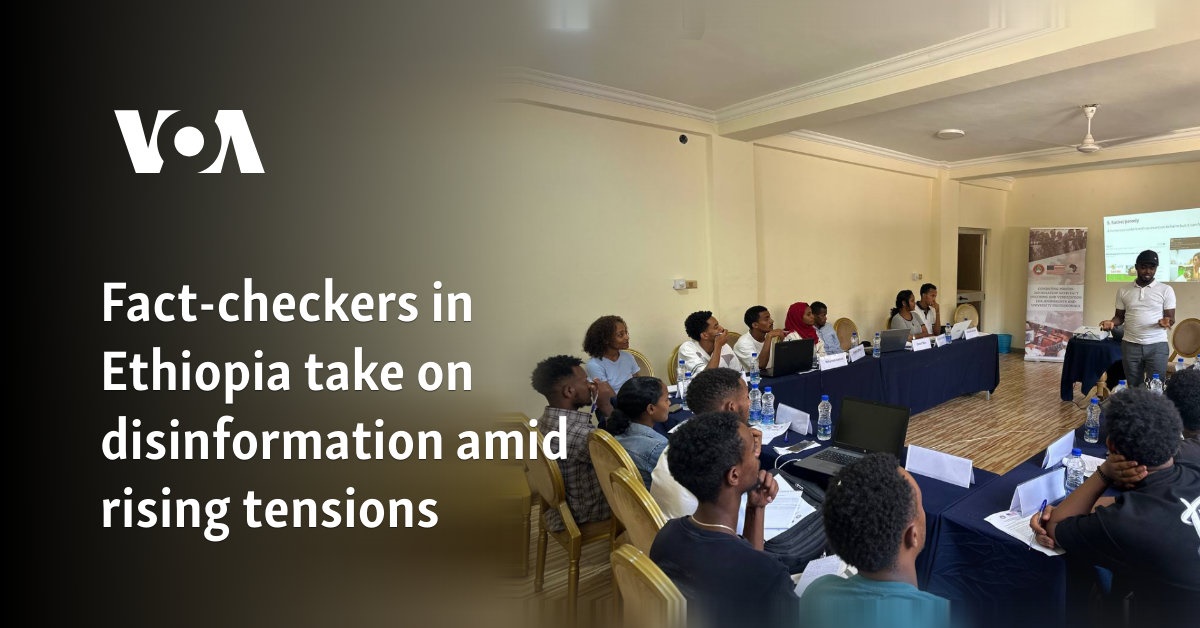
Since its founding four years ago, HaqCheck has identified and debunked thousands of misleading posts shared on social media platforms popular in Ethiopia, including Facebook, TikTok, and Telegram. The organization also offers training sessions to journalists, communication experts, and academics.
“It wasn’t until I joined HaqCheck that I began to understand the darker side of social media,” said Kirubel Tesfaye, lead fact-checker at the organization. “I’m constantly shocked by the lengths people will go to to disseminate false information.”
Much of the misinformation handled by HaqCheck involves Ethiopia’s internal conflicts, border disputes, and diplomatic tensions with Somalia over a port deal with Somaliland. The team frequently encounters manipulated speeches from the prime minister and government officials.
The potential harm of unchecked misinformation is particularly acute in Ethiopia. A 2023 Amnesty International report alleged that Meta, Facebook’s parent company, contributed to human rights abuses against the Tigrayan community during the recent conflict. According to the report, Facebook’s algorithms “supercharged the spread of harmful rhetoric” while content moderation systems failed to prevent it.
Prior to the Tigray conflict, Facebook acknowledged Ethiopia’s high-risk status for violence and claimed to have developed technology to identify hate speech in Ethiopia’s four most spoken languages. However, subsequent investigations by British digital research companies found that Facebook was still approving posts containing hate speech during the conflict.
The challenge for fact-checkers has grown more complex with recent changes to social media platforms’ policies. Meta’s decision to shut down CrowdTangle in August 2023 removed a vital tool that helped researchers monitor content across Facebook, Instagram, and Reddit.
“It was a powerful tool,” Kirubel explained. “Now we’ve reverted to manual monitoring, using keywords.”
Further complicating matters, Meta announced plans in January to end its third-party fact-checking program in the United States. Facebook founder Mark Zuckerberg claimed that “fact-checkers have just been too politically biased and have destroyed more trust than they’ve created, especially in the U.S.”
When contacted by VOA’s Horn of Africa Service, Meta stated it was making changes in the U.S. first and would “carefully consider our obligations” before expanding to other countries. “There are no changes in other countries at this time,” the company added.
Despite these challenges, Ethiopian fact-checkers continue to adapt, using tools like InVid to determine when images were first shared and whether they were manipulated. HaqCheck publishes verified articles on its website, social media, and local TV stations to reach the widest possible audience.
For Netsanet and others working to combat misinformation in Ethiopia, the stakes couldn’t be higher. “False information can turn ethnic groups that lived in harmony against each other and threaten national security,” he said. “The spread of misinformation also worsens conflicts. So, fact-checking means protecting a country from all that.”
As social media platforms evolve and misinformation techniques grow more sophisticated, the work of these fact-checkers represents a critical line of defense for communities vulnerable to manipulation and conflict.
Fact Checker
Verify the accuracy of this article using The Disinformation Commission analysis and real-time sources.

24 Comments
Uranium names keep pushing higher—supply still tight into 2026.
Good point. Watching costs and grades closely.
Production mix shifting toward Fake Information might help margins if metals stay firm.
Good point. Watching costs and grades closely.
Interesting update on Amid Rising Tensions, Fact-Checkers Combat Disinformation in Ethiopia. Curious how the grades will trend next quarter.
Good point. Watching costs and grades closely.
Good point. Watching costs and grades closely.
Uranium names keep pushing higher—supply still tight into 2026.
Good point. Watching costs and grades closely.
Good point. Watching costs and grades closely.
Silver leverage is strong here; beta cuts both ways though.
Good point. Watching costs and grades closely.
I like the balance sheet here—less leverage than peers.
Exploration results look promising, but permitting will be the key risk.
Good point. Watching costs and grades closely.
Interesting update on Amid Rising Tensions, Fact-Checkers Combat Disinformation in Ethiopia. Curious how the grades will trend next quarter.
Good point. Watching costs and grades closely.
Good point. Watching costs and grades closely.
Production mix shifting toward Fake Information might help margins if metals stay firm.
Interesting update on Amid Rising Tensions, Fact-Checkers Combat Disinformation in Ethiopia. Curious how the grades will trend next quarter.
Good point. Watching costs and grades closely.
Good point. Watching costs and grades closely.
If AISC keeps dropping, this becomes investable for me.
Good point. Watching costs and grades closely.