


Listen to the article
The Growing Threat of Fake News and AI’s Role in Combating Misinformation
In today’s fast-paced digital environment, fake news has emerged as a significant global challenge, with Malaysia facing particularly high rates of misinformation circulation. False information spreading through social networks is causing increasingly negative consequences in people’s daily lives, affecting everything from social harmony to public health.
Academically, fake news encompasses two distinct concepts: “disinformation,” which refers to deliberately fabricated falsehoods designed to deceive, and “misinformation,” which describes inaccurate information shared without malicious intent.
The scale of the problem in Malaysia is substantial. According to the Malaysian Communications and Multimedia Commission (MCMC), authorities requested the removal of 19,546 fake news items in 2024 alone, with 17,245 successfully taken down. By January 2025, an additional 1,575 items were flagged with 1,233 removed. Since 2020, MCMC has worked with various platforms and agencies to remove a total of 25,114 fake news items.
Research from the Global Risk Journalism Hub places Malaysia third in South Asia for fake news circulation at 77%, trailing only behind Thailand (82%) and the Philippines (88%). This high ranking underscores the severity of the issue within the Malaysian context.
People create and spread fake news for numerous reasons, commonly categorized as the “Ps”: poor journalism, parody, provocation, passion, partisanship, profit, political influence, power, and propaganda. These motivations range from seeking attention to deliberately attempting to influence politics or public opinion.
The consequences of fake news are far-reaching and severe. In multicultural societies like Malaysia, false information containing racial, religious, or political elements can damage social harmony and unity, potentially leading to arguments, conflict, and even violence. During health crises such as the COVID-19 pandemic, misinformation about the virus, treatments, or vaccines created confusion that threatened public health initiatives.
For individuals and organizations, fake news can irreparably damage reputation and credibility. False allegations of misconduct or scandals can destroy trust, leading to financial, legal, and moral losses that persist even after the information is debunked.
Cybercriminals increasingly leverage fake news as a tool for fraud, identity theft, and data breaches. False stories about investment opportunities or security threats trick victims into revealing personal information or transferring money to scammers.
On a broader scale, fake news can strain international relations when it includes false allegations about territorial invasions, foreign interventions, or violations of international agreements. This can damage diplomatic trust and cooperation between nations, potentially triggering retaliation or sanctions.
The economy also suffers from fake news. False reports about economic downturns, major company failures, or sudden policy changes create market uncertainty, potentially causing stock price drops, capital withdrawals, or canceled investments. These effects can slow economic growth, increase unemployment, and raise the cost of living.
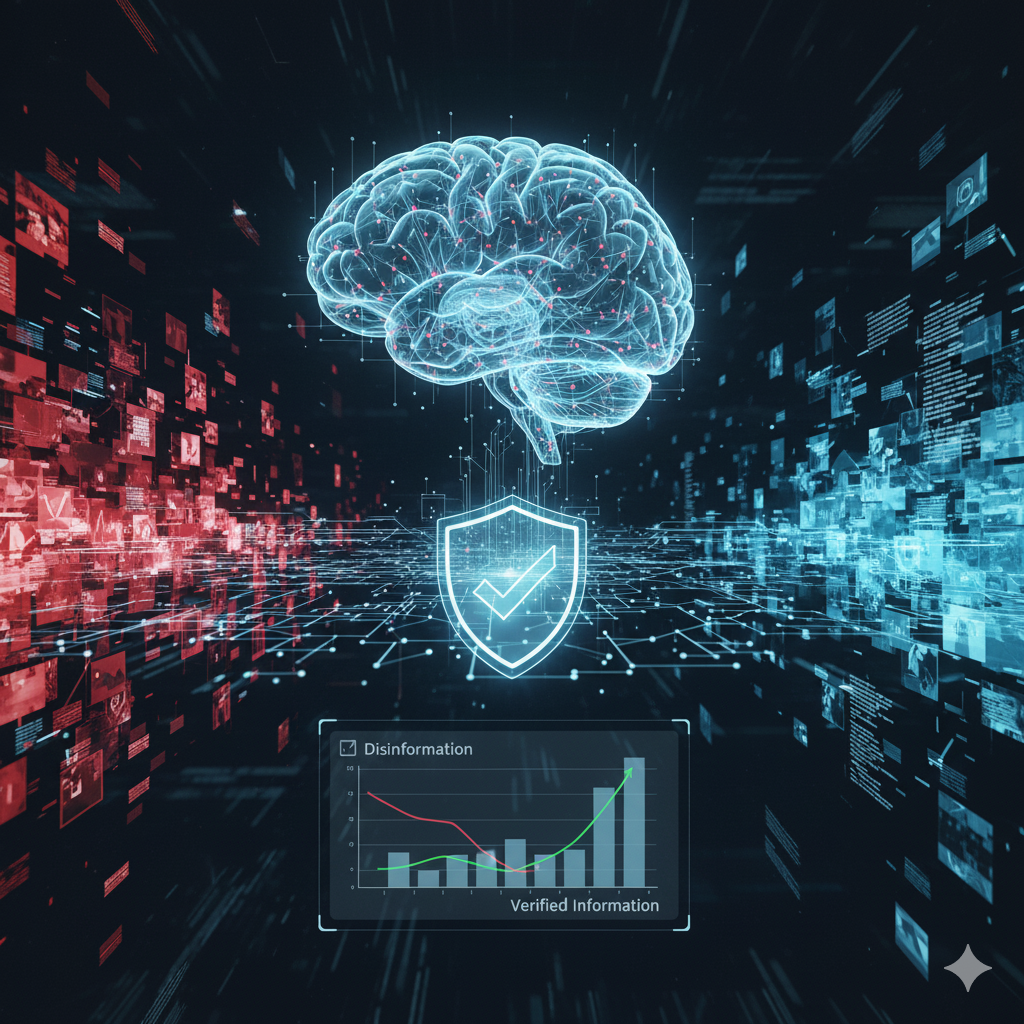
Artificial intelligence has emerged as a promising tool in the fight against fake news. AI detectors using advanced algorithms and machine learning can help identify misleading content before it spreads widely. These systems perform several key functions in combating misinformation.
AI enables automatic fact-checking by analyzing large volumes of news simultaneously, detecting inconsistencies or suspicious claims that humans might miss. The technology can identify misinformation patterns in writing style, format, and metadata, flagging sensationalist headlines, fabricated quotes, or non-existent sources.
Real-time monitoring capabilities allow AI to track news feeds and social media, quickly identifying suspicious content before it gains traction. For multimedia content, AI-powered verification tools can detect manipulated images, deepfake videos, or content taken out of context.
User behavior analysis helps platforms identify accounts that frequently spread misinformation by tracking their connections to unreliable sources. Additionally, AI can provide personalized recommendations based on users’ browsing habits, steering them toward more trustworthy content.
As fake news continues to pose serious challenges to society, the development of AI detection systems represents an important step in preserving information integrity in the digital age. However, addressing this complex issue will require ongoing collaboration between governments, media organizations, digital platforms, NGOs, and the public.
Fact Checker
Verify the accuracy of this article using The Disinformation Commission analysis and real-time sources.

9 Comments
Interesting to see how AI is being used to combat the spread of fake news. Effective monitoring and removal of misinformation is critical in the digital age. I wonder what other AI-powered solutions are being developed to address this challenge.
The scale of fake news removal in Malaysia is staggering. It’s clear this is a widespread issue that requires a multi-pronged approach. I’m curious to learn more about the specific AI techniques and algorithms being used to identify and remove misinformation.
Combating fake news is a complex challenge, but AI could be a valuable asset if implemented responsibly. I wonder how the Malaysian authorities are ensuring the accuracy and fairness of their AI-powered content moderation systems.
Removing over 25,000 fake news items is a significant achievement. I’d be interested to hear more about the collaboration between the Malaysian government, platforms, and other agencies in this effort. Coordinated action is crucial in the fight against misinformation.
Fake news can have far-reaching impacts on public discourse and decision-making. I’m glad to see Malaysia taking this issue seriously and leveraging AI as part of their strategy. It will be interesting to see how this approach evolves over time.
Fake news is a serious problem that can have real consequences. I’m glad to see the Malaysian government taking steps to remove harmful disinformation from online platforms. AI could be a powerful tool in this fight, but its use must be carefully balanced with privacy and transparency concerns.
The use of AI to combat fake news is a promising development, but it’s important to ensure the technology is transparent and accountable. I hope the Malaysian authorities are closely monitoring the performance of their systems and making adjustments as needed.
Misinformation can be incredibly damaging, so I’m glad to see the Malaysian government taking action. The use of AI in this context is intriguing, but I hope they are also investing in media literacy and public awareness campaigns to empower people to spot and avoid fake news.
Given the serious consequences of fake news, it’s good to see Malaysia taking a proactive approach. I’m curious to learn more about the specific AI techniques being used and how they are evaluated for accuracy and bias.