


Listen to the article
AirAsia Warns Travelers About Surge in Customer Service Scams
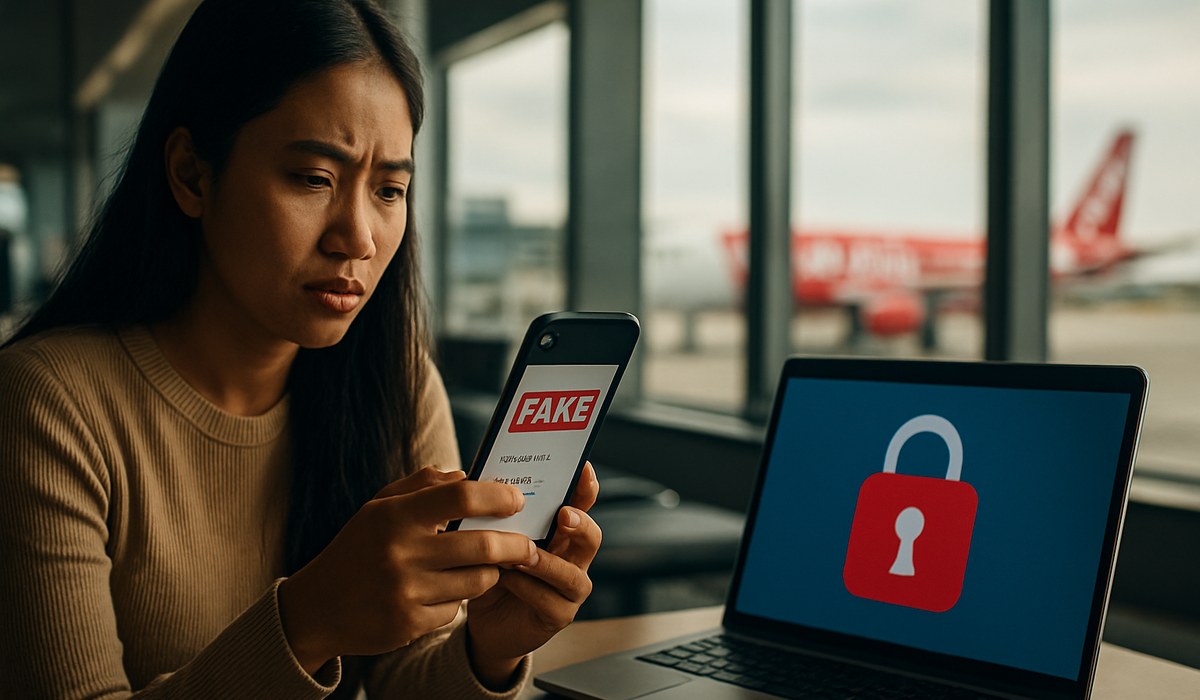
AirAsia has issued an urgent alert to passengers regarding an increasing number of fraudulent customer service accounts operating across major social media platforms. The low-cost carrier, which serves millions of passengers annually across Southeast Asia, warns that cybercriminals are actively exploiting travelers’ trust by impersonating official airline representatives.
The scam operations target unsuspecting passengers seeking booking assistance, flight support, or refunds through what appear to be legitimate AirAsia social media accounts. Security experts have documented hundreds of cases where travelers have lost between $50 and $500 per incident after engaging with these fake accounts.
“These sophisticated impersonation schemes are designed specifically to harvest personal data, payment information, and travel credentials,” said a spokesperson from AirAsia’s security team. “The fraudsters have become increasingly convincing in their approaches.”
The airline operates major hubs in Kuala Lumpur International Airport, Bangkok’s Suvarnabhumi Airport, and Manila’s Ninoy Aquino International Airport, making it a prime target for scammers seeking to capitalize on its large customer base across multiple countries.
Typical scams begin when fake accounts respond to genuine customer inquiries with fraudulent support links. These redirect travelers to counterfeit websites designed to steal login credentials and financial information. The fraudulent accounts meticulously copy AirAsia’s branding, using official logos, brand colors, and authentic-sounding account names to appear legitimate.
When passengers message these fake profiles seeking help with bookings or cancellations, scammers often request payment through untraceable methods like cryptocurrency or wire transfers – a red flag that legitimate airlines never employ.
Security analysts note that these scams have evolved beyond simple payment fraud. Victims face multiple consequences extending beyond immediate financial loss. When scammers obtain booking references and personal identification details, they can access legitimate AirAsia accounts and modify flight bookings without authorization.
“We’ve seen cases where travelers arrive at airports only to discover their reservations were changed to different dates or seats entirely,” explained a cybersecurity expert who specializes in travel industry fraud. “The secondary risk of identity theft is even more concerning, as criminal networks can use captured passport numbers and personal information for months after the initial scam.”
AirAsia emphasizes that its legitimate customer service operates exclusively through verified channels. Official support is available only via the authenticated AirAsia mobile app, the company website (airasia.com), and verified social media accounts that display proper authentication checkmarks.
Travelers can identify legitimate AirAsia accounts by looking for blue verification badges next to usernames on platforms like Facebook, Instagram, and Twitter. Official representatives never request passwords, booking references, or complete payment information through direct messages or chat functions.
The airline’s actual customer service representatives always direct customers to secure login pages on the verified mobile app or official website, and never ask travelers to download third-party applications or provide credentials via email links.
Phone support remains available through verified hotline numbers listed exclusively on the AirAsia website. These numbers vary by country and region, with Southeast Asian travelers accessing dedicated regional support centers staffed by multilingual representatives.
Travel security experts recommend implementing proactive security habits when researching airlines and communicating with customer service. This includes bookmarking the official AirAsia website, enabling two-factor authentication on accounts, and never clicking booking links shared through emails, text messages, or social media.
“Before sharing any personal information with customer service representatives, verify their legitimacy independently,” advises the International Air Transport Association on its traveler protection guidelines. “Call the airline’s verified hotline number found on their official website to confirm that an agent handling your request is legitimate.”
For travelers who suspect they’ve already fallen victim to such scams, immediate action is critical. Experts recommend contacting your bank to report fraudulent charges, filing a police report in your jurisdiction, and immediately changing passwords while enabling additional security features on your accounts.
The growing prevalence of these scams highlights critical gaps between traveler digital literacy and increasingly sophisticated fraud tactics. As airlines cannot prevent every scam attempt, responsibility ultimately falls on individual passengers to implement protective measures and approach unsolicited customer service contacts with appropriate skepticism.
Fact Checker
Verify the accuracy of this article using The Disinformation Commission analysis and real-time sources.

10 Comments
Interesting to see AirAsia taking a proactive approach to warn passengers about these scams. Fraud can be very sophisticated these days, so it’s good they’re educating travelers on how to identify legitimate support channels.
Absolutely. It’s a growing issue that airlines need to stay on top of to protect their customers.
This is a timely warning from AirAsia. With the rise of social media, it’s become easier for criminals to impersonate businesses and target unsuspecting customers. Passengers should exercise caution when seeking support online.
Absolutely. Verifying the authenticity of any account before providing personal or financial information is crucial to avoid falling victim to these scams.
This is an important alert from AirAsia. With the increasing prevalence of social media scams, it’s critical for passengers to be able to identify legitimate customer support channels to avoid falling victim to these sophisticated impersonation schemes.
Agreed. Maintaining vigilance and verifying the source of any customer support interactions is key to staying safe in today’s digital landscape.
This is an important warning. Impersonation scams can be quite convincing, so it’s crucial for passengers to verify the authenticity of any customer support they interact with on social media before providing sensitive information.
Agreed. Maintaining vigilance and double-checking the source is key to avoiding falling victim to these types of frauds.
It’s good to see AirAsia being proactive about this. Scammers are getting more sophisticated, so educating passengers on how to spot fake accounts is a wise move by the airline.
Kudos to AirAsia for being upfront about this issue. Fraudulent customer support accounts are a growing problem, and airlines have a responsibility to educate their passengers on how to protect themselves.