


Listen to the article
In a significant escalation of consumer protection efforts, AirAsia is intensifying warnings about fraudulent customer service accounts proliferating across social media platforms. The budget carrier is urging passengers to exclusively use its verified digital channels and official support systems when booking flights, managing reservations or seeking assistance with travel disruptions.
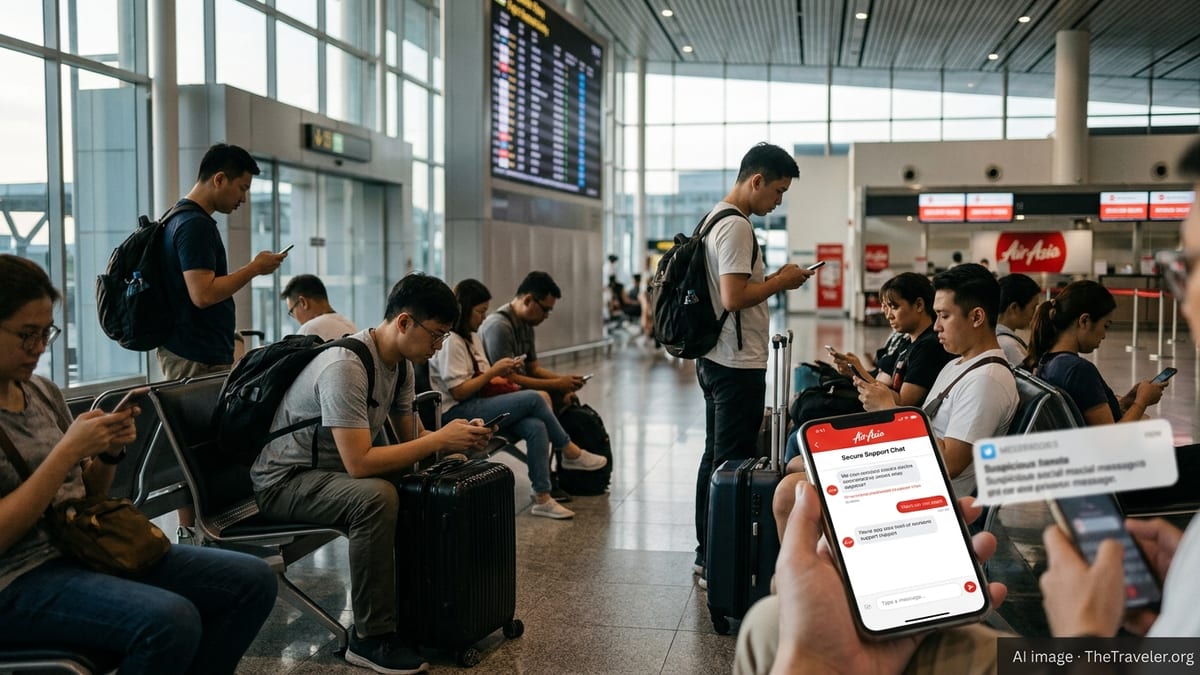
The airline’s heightened alert comes amid a rising tide of sophisticated impersonation scams targeting budget-conscious travelers throughout Southeast Asia. Criminals posing as AirAsia representatives have established a growing presence in social media comment sections, typically appearing beneath promotional posts or operating lookalike pages that mimic the airline’s branding.
These fraudulent accounts follow a consistent pattern: they quickly respond to customers expressing frustration over delays, cancellations or payment issues, then steer them toward private conversations. Once isolated, victims are frequently pressured to share sensitive personal information, payment details, one-time passcodes, or to transfer funds to personal bank accounts under various pretexts such as “service fees” or “ticket processing charges.”
Regional news reports indicate that AirAsia has repeatedly emphasized that transactions are valid only when completed through official channels. The company has issued multiple advisories highlighting that unusually steep discounts promoted via unverified sources should be treated as potential fraud indicators, especially when they require direct payments outside standard processing systems.
Industry analysts note that these scams represent part of a broader global trend of airline impersonation schemes. The Federal Trade Commission in the United States has documented similar tactics targeting passengers of various carriers, suggesting the problem extends well beyond any single airline or market.
On platforms including Facebook, Instagram and X (formerly Twitter), fraudsters typically replicate AirAsia’s visual identity and repurpose official marketing materials to create convincing facades. Some run targeted advertising aimed at users who have recently searched for flights, while others simply reply to legitimate customer inquiries on verified airline pages, hoping to redirect conversations to private channels where deception can proceed unmonitored.
Once communication moves to private messaging, scammers often escalate their demands, claiming that bookings can only be confirmed after payment of fabricated fees via bank transfer, mobile wallet or gift cards. In other cases, victims are directed to sophisticated counterfeit websites that closely mimic AirAsia’s digital environment but exist solely to harvest login credentials, passport numbers and payment information.
Security experts emphasize that the effectiveness of these scams often relies on their timing and personalized approach. With many travelers already experiencing stress over time-sensitive travel changes, a seemingly helpful message from a “customer care” profile can provide false reassurance, lowering normal vigilance and making victims more willing to share sensitive information.
In response to the proliferation of these deceptive practices, AirAsia has reinforced its digital-first customer support model centered on its official mobile app, website and integrated virtual assistant. The airline’s public guidance emphasizes that all service requests should originate from within verified AirAsia platforms rather than through unsolicited messages or third-party intermediaries.
According to published materials, AirAsia’s app and web portal are designed to handle most common customer needs—including booking modifications, seat selection, add-on services, and basic disruption management—without requiring customers to disclose sensitive data through chat interfaces. The payment process is integrated within the airline’s secure system, with all charges displayed transparently at checkout rather than requested through personal accounts.
The airline’s social media guidelines explicitly state that representatives will never request financial details, one-time passwords, or attempt to complete transactions through private messages. Instead, official social channels serve primarily as information resources that redirect customers to secure platforms when transactions or detailed account support is needed.
For travelers requiring human assistance with complex issues, AirAsia recommends contacting the airline through official channels provided within its platforms or visiting airport service counters. This approach forms part of a comprehensive strategy to minimize the exposure of personal data in informal settings where it might be intercepted or misused.
Consumer protection organizations advise travelers to approach any unsolicited offer of booking assistance, refunds, or compensation with healthy skepticism, particularly messages arriving through personal accounts lacking clear verification. Before engaging, customers should verify profile details, including name spelling, follower counts, and verification markers, comparing any claims against information published on the airline’s official channels.
As peak travel seasons approach across AirAsia’s key markets, industry observers emphasize that maintaining vigilance when booking and managing flights can be the critical difference between a smooth, budget-friendly journey and a costly encounter with fraud that extends far beyond a single disrupted trip.
Fact Checker
Verify the accuracy of this article using The Disinformation Commission analysis and real-time sources.

8 Comments
Fraudulent social media accounts posing as customer service are a growing problem that airlines and other businesses need to stay on top of. AirAsia’s proactive approach to warn customers is commendable. Transparency and caution are key to combating these scams.
It’s distressing to hear about these types of scams targeting budget travelers. AirAsia is right to emphasize the importance of using only their verified digital channels. Staying vigilant is crucial to avoid falling victim to these deceptions.
This is a timely warning from AirAsia. Impersonation scams can be very sophisticated, so it’s important for customers to be cautious and stick to official support channels. Kudos to the airline for proactively addressing this issue.
Fraudulent social media accounts are becoming an increasingly common problem. I’m glad AirAsia is taking this seriously and urging customers to use their verified channels. Staying alert is key to avoiding scams.
Scammers really know how to take advantage of people’s frustrations. Staying vigilant and sticking to official support channels is crucial to avoid falling victim to these kinds of deceptions.
Absolutely. It’s a shame that criminals exploit people’s vulnerabilities like this. Kudos to AirAsia for trying to get ahead of the problem.
This is a concerning issue. Impersonation scams can be very damaging for customers and businesses alike. It’s good that AirAsia is taking proactive steps to warn people and encourage them to use only official channels.
This is a timely and important alert from AirAsia. Impersonation scams can be very costly for customers, so I’m glad the airline is taking steps to educate people on the importance of using only official channels. Staying vigilant is crucial.