


Listen to the article
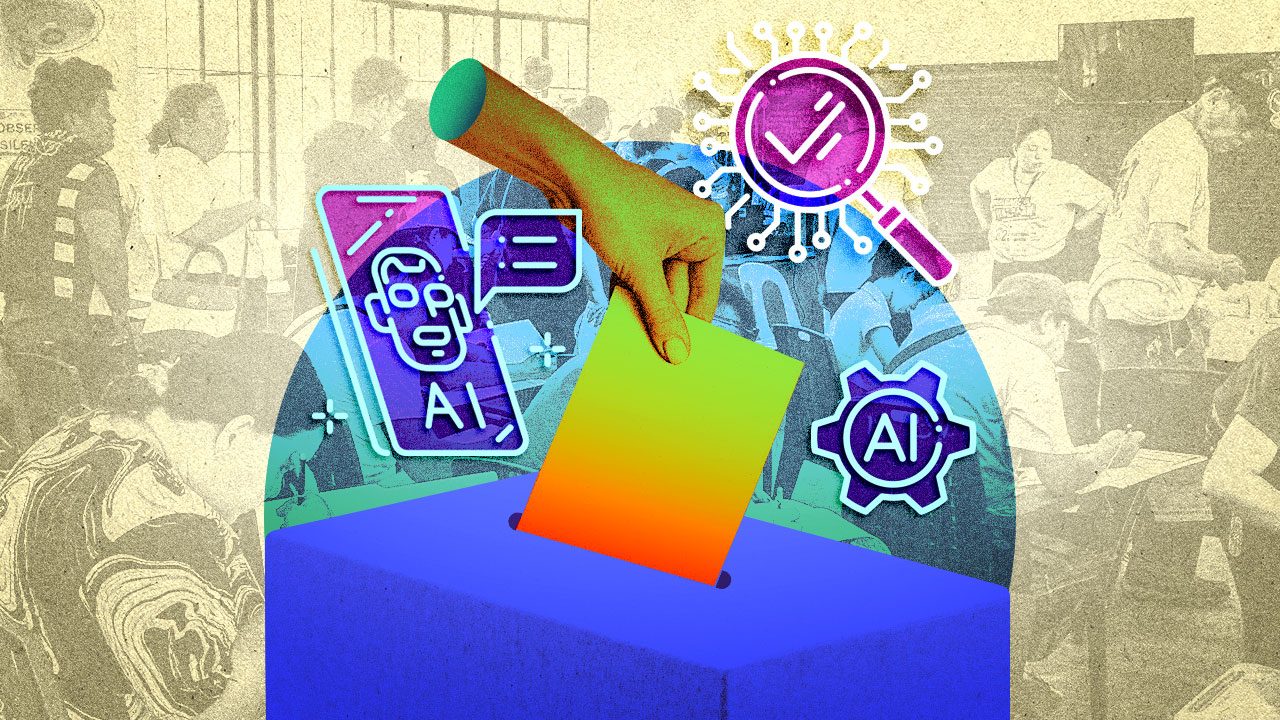
In a digital age where political campaigns increasingly leverage technology, artificial intelligence and social media are reshaping election landscapes across Asia, according to experts from five countries who recently gathered for a virtual roundtable discussion.
The forum, organized by the Asian Media Information and Communication Centre (Amic) and Chulalongkorn University’s Faculty of Communication Arts in partnership with UNESCO and the Asian Network for Free Elections (Anfrel), examined how these tools are being deployed in electoral processes throughout the region.
With the United Nations designating 2024 as a “super year for elections” with 72 countries heading to the polls—including 20 in Asia—the timing of this analysis proves particularly relevant. Additional elections held in 2025 and more scheduled for 2026 have kept these issues at the forefront of regional political discourse.
Dr. Wijayanto of Indonesia’s Universitas Diponegoro highlighted how candidates are using AI to craft entirely new public personas. He cited a prominent Indonesian candidate who leveraged AI to rebrand himself as a “gemoy” or cute grandpa, demonstrating how technology can transform image without necessarily adding substance to campaigns.
“Candidates and political parties rely on entertainment,” Wijayanto noted, describing how some politicians have used AI “to dance themselves to victory.” His observations point to a troubling trend where style increasingly supersedes substance, while fake social media accounts and cyber troops simultaneously spread hate speech.
In Japan, Dean Muneo Kaigo of the University of Tsukuba observed that candidates routinely hire public relations companies and social media influencers to establish “genuine connections” with voters. While acknowledging that digital technologies can support free elections, Kaigo warned about their role in spreading misinformation and creating filter bubbles that reinforce polarization.
University of the Philippines journalism professor Dr. Danilo A. Arao offered a more critical perspective, arguing that digital tools primarily benefit “the rich and powerful” who use them to “maximize their foothold on power.” He characterized social media as “riddled with disinformation, lies, and conspiracy theories” that can be weaponized through practices like red-tagging of opponents.
Anfrel’s John Reiner Antiquerra reported disturbing trends including the creation of false narratives through pseudo web pages of political parties. He pointed to particularly concerning examples from Sri Lanka, where AI-generated homophobic campaign messages targeted minority communities.
In Thailand, Chulalongkorn University professor emeritus Dr. Pirongrong Ramasoota described the political environment as marked by “turbulence,” noting that “social media algorithms, AI analytics, and digital fandoms” have become decisive factors in electoral outcomes. She also highlighted the emergence of “Do-It-Yourself political campaigning” facilitated by accessible digital tools.
Dr. S M Shameem Reza of Bangladesh’s University of Dhaka raised concerns about “information asymmetry,” warning that AI could widen the gap between those with access to accurate information and those without.
The regulatory landscape across the region varies significantly. Japan has implemented strict regulations with light enforcement through its Ministry of Internal Affairs and Communications, with the Public Offices Election Law currently under revision. The Japan Platform Distribution Act aims to address defamation and harmful content online, while Social Media Regulation requires platforms to act quickly against illegal content.
The Philippines has established more explicit guidelines through Commission on Election Resolution 11064, which addresses digital campaigning and prohibits misinformation. Indonesia had no specific AI regulations during its June 2025 election but plans to implement new guidelines before the 2029 electoral cycle. Thailand and Bangladesh have limited regulations specifically addressing AI in elections.
The question of who should regulate these technologies remains contentious. Ramasoota cautioned that “more regulations may mean more government involvement,” suggesting instead that “good regulations come from public participation” rather than top-down approaches. Professor Arao advocated for self-regulation as the preferred mechanism, warning that government regulation risks controlling media “to fit official narratives.”
Participants proposed several solutions, including voluntary labeling of AI materials, prohibiting deepfakes, strengthening independent fact-checking, and enhancing media literacy. Dr. Reza specifically recommended leveraging AI in fact-checking efforts and encouraging more active participation from media organizations and civil society groups.
As the region continues to navigate these complex issues, the experts emphasized that free and fair elections depend on combating disinformation, misinformation, and hate speech—making it imperative that truth remains a paramount value in democratic processes.
Fact Checker
Verify the accuracy of this article using The Disinformation Commission analysis and real-time sources.

23 Comments
The use of AI to craft new public personas for candidates is fascinating but also worrying. It highlights the need for stricter regulations and oversight to ensure transparency and prevent the spread of disinformation. Voters deserve to have access to accurate, unbiased information about candidates.
This is a concerning trend that merits close attention. The ability of candidates to leverage AI to rebrand themselves is troubling and could undermine voters’ ability to make informed choices. Rigorous fact-checking and media literacy efforts will be essential to combat the spread of misinformation.
This article sheds important light on the complex interplay between technology, politics, and the democratic process in Asia. As the UN designates 2024 as a ‘super year for elections’, it will be critical for policymakers and tech companies to collaborate on solutions that protect election integrity.
Well said. Global cooperation and a multistakeholder approach will be key to addressing these challenges. Upholding democratic values in the digital age requires vigilance and a commitment to ethical innovation.
Fascinating how AI and social media are reshaping elections in Asia. I’m curious to learn more about how candidates are using these tools to craft new public personas and influence voters. It raises important questions about authenticity and transparency in the political process.
You raise a good point. These technological advances raise concerns about manipulation and the spread of misinformation. Transparency and ethical use of AI in elections will be crucial going forward.
The use of AI to transform a candidate’s public image is quite concerning. Voters should be able to assess candidates based on their actual qualifications and policy positions, not digitally-altered personas. This is an issue that requires urgent attention.
Absolutely. The integrity of elections must be protected, and that means ensuring voters have access to accurate, unbiased information about candidates. Regulatory frameworks may be needed to address the misuse of AI in this context.
The article raises important questions about the role of technology in modern elections. While AI and social media can be powerful campaign tools, they also carry risks of manipulation and deception. Maintaining transparency and authenticity in the electoral process should be a top priority.
This is a concerning trend – the use of AI to create artificial public personas for political candidates. Voters deserve to make informed choices based on the true character and policies of those seeking office, not digitally-altered images. Safeguarding the integrity of elections is crucial.
I agree. Policymakers and election officials need to act quickly to address this issue and implement appropriate regulations to prevent the misuse of technology in the electoral process.
With so many elections coming up in Asia, the potential impact of AI and social media on the electoral landscape is concerning. Voters must be able to make informed choices based on the true character and policies of candidates, not fabricated images.
I agree, the stakes are high. Policymakers need to urgently address this issue and implement robust safeguards to preserve the integrity of the democratic process.
The use of AI and social media to reshape electoral landscapes is a complex and multifaceted issue. While these technologies offer benefits, their potential for abuse in the political sphere is deeply concerning. Safeguarding the integrity of elections must be a top priority for policymakers and tech companies alike.
I agree wholeheartedly. Upholding democratic principles in the digital age will require a concerted, collaborative effort from all stakeholders. Maintaining public trust in the electoral process is crucial for the health of our societies.
Fascinating to see how AI is being used to reshape political campaigns and public personas in Asia. This certainly raises concerns about the integrity of the electoral process and the ability of voters to make informed decisions.
You’re right, the use of AI to create artificial public personas is quite concerning. It’s crucial that voters have access to accurate, transparent information about candidates and their backgrounds.
It’s concerning to see how AI and social media can be weaponized to distort the electoral landscape. While technology offers many benefits, we must be vigilant about the potential for abuse and work to safeguard the integrity of the democratic process.
I agree completely. Robust election monitoring and media literacy efforts will be essential to counter the risks posed by these emerging technologies. Voters need to be empowered to think critically about what they see online.
While technology can be a powerful tool in campaigns, the article highlights how it can also be misused to deceive voters. Candidates should win based on their true merits, not artificial personas created by AI. Oversight and transparency are critical.
The use of AI to rebrand political candidates is unsettling. Voters deserve to see the real person, not an artificial persona crafted by technology. This raises serious questions about transparency and authenticity in modern elections.
The article highlights an important issue – the growing influence of technology on elections. While AI and social media can be powerful tools, they also carry risks of manipulation and misinformation. Maintaining the integrity of the democratic process should be a top priority.
I agree. Policymakers and election officials need to stay vigilant and ensure appropriate safeguards are in place to protect the electoral process from technological interference or abuse.