


Listen to the article
Japanese local governments overwhelmingly support regulating false disaster information on social media, according to a new survey by the Mainichi Shimbun. The poll revealed that approximately 40% of Japan’s prefectural governments and major cities believe legal regulations are necessary to combat misinformation during crises, while no respondents deemed such measures unnecessary.
The survey, conducted in February and March 2024, gathered responses from all 67 local governments, including 47 prefectures and 20 ordinance-designated cities. Among them, 29 governments explicitly stated that legal regulation is “necessary,” with most citing concerns about hampering disaster response efforts and victim support.
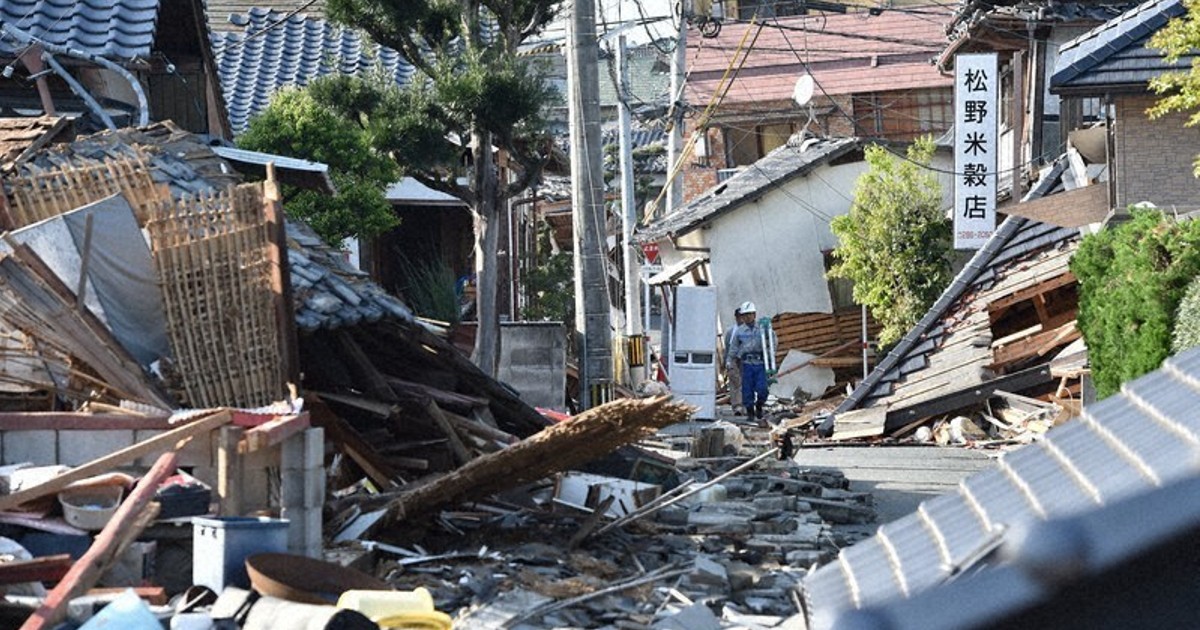
This push for regulation comes as Japan approaches the 10th anniversary of the 2016 Kumamoto earthquakes, which highlighted the dangers of viral misinformation. During that disaster, false claims about “lions being let loose” circulated widely on social media, complete with manipulated images, causing significant disruption as authorities were flooded with inquiries.
More recently, following the January 2024 Noto Peninsula earthquake, police resources were misdirected responding to fabricated calls for help posted online, potentially diverting attention from genuine emergencies.
The Chiba Municipal Government specifically highlighted concerns about social media monetization models, stating in their response, “There is a risk that mechanisms in which revenue is generated according to the number of views will encourage the spread of posts that contain information of uncertain veracity or that stoke anxiety.”
Many local governments supporting regulation suggested specific measures, including requiring social media platforms to suspend revenue sharing based on view counts, implementing account suspensions, deleting false posts, and mandating clear labeling of AI-generated content.
However, Saga Prefecture, while supporting regulation, cautioned against overreach: “During disasters, social media and other tools can sometimes serve as valuable sources of information. It is necessary to ensure that regulations do not discourage people from issuing genuine calls for help.”
The remaining 38 governments did not take a definitive stance on legal regulation. Nevertheless, many acknowledged the need for some form of countermeasure. Fukushima Prefecture noted that preventing false information is “indispensable because of the possibility that it could hinder lifesaving efforts.”
Several respondents expressed concerns about potential infringement on freedom of expression. The city of Niigata observed that “Social media is a tool that allows individuals to freely send out opinions and information, and it is inevitable that information of uncertain veracity obtained by senders will circulate.”
Professor Naoya Sekiya, a disaster information studies expert at the University of Tokyo specializing in social psychology during emergencies, offered a nuanced perspective. He suggested that while “malicious fake information” should be addressed through existing penal codes, much disaster-related misinformation stems from well-intentioned actions.
“Misinformation and false information have long abounded, and even if we were to stop monetizing content based on view counts, it is unlikely to be effective,” Sekiya explained. He emphasized the psychological aspects of information sharing during crises: “When people send out information, they tend to think ‘I am right,’ but a sense of justice can also head in the wrong direction. It is important to change the awareness of each individual who sends out information.”
The survey results reflect growing concern among Japanese authorities about the evolving challenge of misinformation during disasters, particularly as advanced artificial intelligence technologies make distinguishing between true and false information increasingly difficult.
Fact Checker
Verify the accuracy of this article using The Disinformation Commission analysis and real-time sources.

19 Comments
This survey highlights the importance of having reliable, truthful information during emergencies. Regulating the spread of misinformation seems like a prudent step to support disaster response and victim assistance efforts.
I agree, the consequences of misinformation can be severe, especially when it comes to crises. Finding the right balance between free speech and public safety will be crucial as local governments explore potential regulatory solutions.
Misinformation can have severe consequences, especially when it comes to disasters and emergencies. While freedom of speech is important, public safety should be the top priority. This survey suggests Japan is taking a thoughtful approach to finding the right balance.
Disaster response and victim support efforts can be severely undermined by the spread of false information. I appreciate the Japanese local governments recognizing this issue and exploring legal options to combat it. It’s a complex challenge, but a necessary one to address.
This survey highlights an important dilemma – how to balance the need for free speech with the dangers of misinformation during disasters. It’s a delicate balance, but public safety should be the top priority.
I agree, finding the right regulatory approach will be critical. Overly restrictive measures could backfire, but doing nothing leaves the public vulnerable. It will be interesting to see how Japan navigates this issue.
As someone who has experienced the impacts of natural disasters, I know how critical it is to have access to accurate, reliable information. Regulating misinformation during crises seems like a prudent step to protect public safety and emergency response capabilities.
The 2016 Kumamoto earthquake case is a sobering example of how misinformation can cause real harm during emergencies. I’m encouraged to see Japanese local governments taking this issue seriously and exploring potential regulatory solutions.
Absolutely, the spread of false claims and manipulated images can have serious consequences. Carefully crafted regulations could help ensure critical information reaches the public and supports disaster response efforts.
The 2016 Kumamoto earthquake case is a clear example of how misinformation can sow confusion and divert critical resources. It’s concerning to see similar issues arise after the 2024 Noto Peninsula quake.
Absolutely, false claims and manipulated images can have serious real-world consequences during emergencies. Regulating this kind of misinformation is a complex challenge, but one that local governments seem increasingly willing to tackle.
This survey highlights the growing awareness among local governments in Japan about the dangers of disaster-related misinformation. Striking the right balance between free speech and public safety will be an important challenge, but one that needs to be addressed.
The dangers of viral misinformation during crises are well-documented. I’m glad to see local governments in Japan taking proactive steps to address this growing challenge. Effective regulations could save lives and protect emergency response efforts.
Misinformation during disasters is a growing problem that deserves attention. I’m glad to see local governments in Japan taking steps to address this challenge and explore legal options to combat the spread of false claims.
Effective regulation of disaster-related misinformation is a complex issue, but one that is necessary to protect public safety and ensure accurate information reaches those who need it most. It will be interesting to see how Japan approaches this challenge.
This is an interesting survey highlighting the growing concerns about misinformation during disasters. Regulating false claims seems prudent to ensure accurate information reaches the public and supports emergency response efforts.
I agree, misinformation can be extremely harmful and disruptive during crises. Carefully crafted legal frameworks may be needed to strike the right balance between free speech and public safety.
As someone who has witnessed the impact of natural disasters, I appreciate the Japanese local governments taking this issue seriously. Misinformation can be incredibly disruptive and undermine critical emergency response efforts. Carefully crafted regulations could help address this growing challenge.
As someone who lives in a disaster-prone area, I appreciate the local governments taking this issue seriously. Accurate, timely information is crucial for public safety and crisis response. Carefully crafted regulations could help address this growing problem.