


Listen to the article
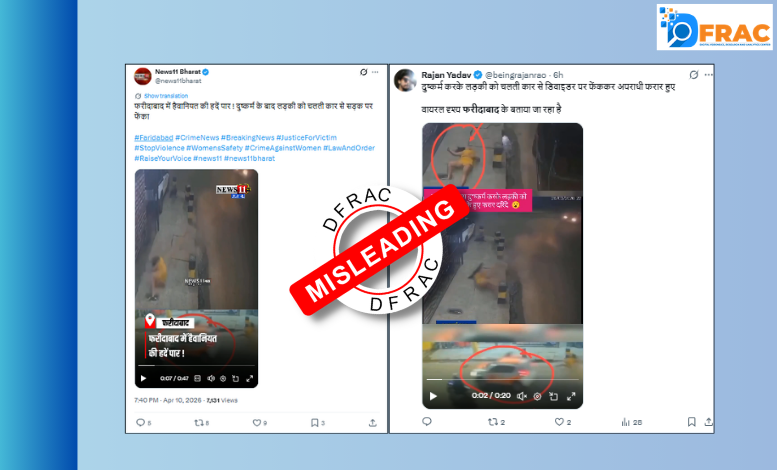
A disturbing video showing a woman falling from a moving car and being dragged along the road has gone viral on social media platforms, accompanied by false claims that the incident occurred in Faridabad, Haryana. The misleading posts allege that the woman was sexually assaulted before being thrown from the vehicle by her attackers.
The viral posts, which have garnered significant attention online, typically include captions suggesting “the limits of cruelty have been crossed in Faridabad” and that the woman was disposed of on the road after an assault. The graphic footage has spread rapidly across multiple platforms, with numerous users sharing it alongside these unverified claims.
However, a thorough investigation reveals the video is not from India at all, but originates from Brazil. The incident captured in the footage occurred on March 29 in Macapá, a city in northern Brazil, according to multiple Brazilian news sources including Diário do Amapá.
Brazilian media reports indicate the situation stemmed from a domestic dispute rather than a sexual assault. According to local news outlets, the incident involved a husband and wife who were traveling with two other family members—the woman’s brother and sister-in-law. All occupants of the vehicle reportedly confirmed that following an argument between the couple, the woman threatened to jump from the moving car, to which the husband responded that she could do so.
Digital verification confirms the video first appeared on Brazilian social media accounts and news sites on March 29 and 30, with numerous local sources correctly identifying the location as Macapá. The footage quickly spread across Brazilian platforms before being repurposed with false contexts in other countries.
The Faridabad Police control room, when contacted about the alleged incident, categorically denied any such occurrence in their jurisdiction, further confirming the misleading nature of the viral claims.
This incident highlights a concerning pattern of misinformation where graphic content from one region is falsely attributed to another location to generate fear or outrage. Such misinformation can lead to unnecessary panic among local communities and potentially damage the reputation of the falsely implicated region.
Social media platforms have been struggling to contain the rapid spread of such misinformation, particularly when it involves sensitive content like violence against women. Despite policies against sharing graphic content, videos like these often circulate widely before content moderation systems can respond effectively.
Law enforcement agencies frequently face challenges in addressing such misinformation, as they must divert resources to respond to public concerns about incidents that never occurred in their jurisdiction. The Faridabad Police, in this case, had to address public queries about an incident that took place thousands of miles away in another country.
This case serves as a reminder of the importance of verifying information before sharing potentially distressing content on social media. Context manipulation—where real incidents from one location are falsely presented as having occurred elsewhere—remains one of the most common forms of misinformation online.
Digital literacy experts advise users to check multiple credible sources before sharing sensitive content and to be particularly cautious when posts contain graphic imagery alongside claims of local crimes that haven’t been reported by mainstream news organizations.
Fact Checker
Verify the accuracy of this article using The Disinformation Commission analysis and real-time sources.

6 Comments
I’m glad the authorities were able to investigate and determine the true origin of this video. It’s a sobering reminder of the importance of responsible reporting and fact-checking.
Tragic incident, but good to see the facts clarified. It’s important to verify claims before spreading misinformation, especially around sensitive issues like this.
Thank you for the detailed fact-check. It’s concerning how quickly misinformation can spread online, especially around disturbing events. Verifying the source and details is crucial.
Absolutely, we need to be vigilant about separating fact from fiction, especially on social media. Spreading unverified claims can have serious consequences.
This highlights the need for greater media literacy and critical thinking when consuming online content. We must be cautious about accepting claims at face value, especially around sensitive topics.
Sad to see such a tragic incident, but I’m glad the facts were clarified. It’s a good lesson on the dangers of spreading unverified information, even with good intentions.