


Listen to the article
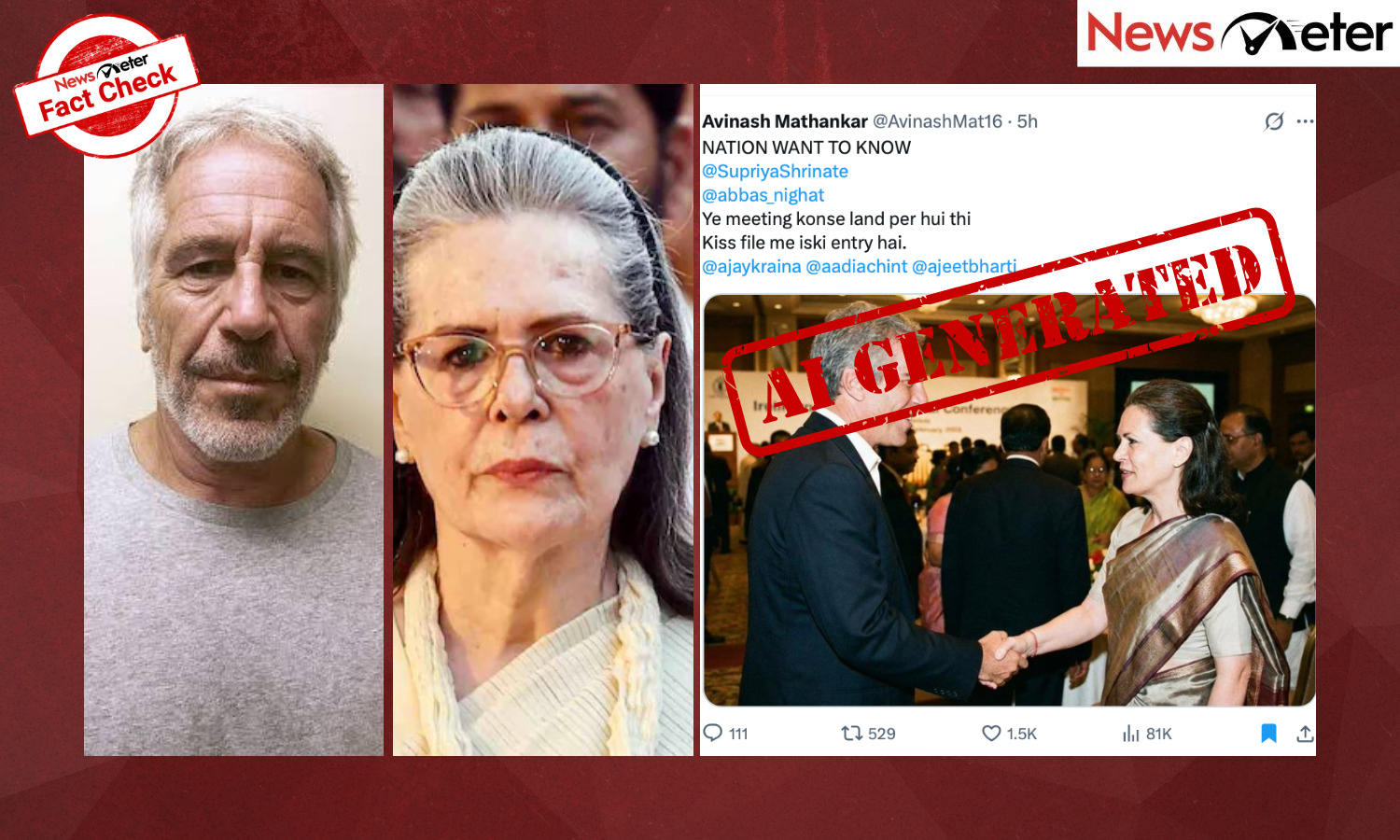
In a recent wave of misinformation surrounding the Jeffrey Epstein case, a fabricated image purportedly showing Congress leader Sonia Gandhi meeting with the late convicted sex offender has been circulating widely on social media platforms.
The image, which shows what appears to be Gandhi shaking hands with Epstein, gained significant traction after the U.S. Department of Justice released a substantial collection of documents related to Epstein in late December 2025. These documents mentioned several prominent global figures, including some from India, which may have provided context for this misleading content.
The photograph was shared extensively on X (formerly Twitter), with one user posting it alongside a provocative caption questioning the location and documentation of the alleged meeting. The post, written in Hindi and later translated, demanded: “NATION WANT TO KNOW On which land did this meeting take place and in which file is its entry made?”
However, a thorough investigation by fact-checking organization NewsMeter has conclusively determined that the image is fake. The organization found no evidence that Sonia Gandhi, a prominent figure in Indian politics and former president of the Indian National Congress party, ever met Jeffrey Epstein.
The Epstein document release, which has drawn international attention, does contain references to communications involving Indian business magnate Anil Ambani and politician Hardeep Singh Puri. These references appear to be in the form of emails mentioned in the released materials. However, no document in the collection makes any mention of Sonia Gandhi having any connection to Epstein or his associates.
Major news outlets covering the Epstein files have similarly not reported any such meeting or relationship. Neither U.S. nor Indian official sources have confirmed any interaction between Gandhi and Epstein, further indicating the fabricated nature of the image.
Technical analysis of the viral photograph reveals multiple telltale signs of artificial intelligence manipulation. Experts point to several inconsistencies that are common in AI-generated imagery, including unnatural lighting effects, shadow inconsistencies, and irregularities in the background elements—particularly the banner visible behind the subjects.
To verify these observations, NewsMeter employed advanced technology tools specifically designed to detect AI-generated content. Using Hive Moderation, an AI detection service, the analysis returned a 99.9 percent probability that the image was artificially created rather than an authentic photograph. This conclusion was further supported by Google’s SynthID tool, which also flagged the image with a high-confidence AI detection score.
The circulation of this fabricated image comes at a time when AI-generated content is becoming increasingly sophisticated and difficult for average viewers to identify. Social media platforms continue to grapple with the rapid spread of such misleading visuals, which can quickly reach millions of users before fact-checking processes can intervene.
This incident highlights the growing challenge of distinguishing between real and artificially created content in the digital information ecosystem. As AI technology advances, the potential for misuse in political contexts raises significant concerns about information integrity during news events of global significance.
The case serves as a reminder for users to approach viral imagery with caution, especially when it purports to show unexpected or previously unreported meetings between high-profile figures involved in controversial matters.
Fact Checker
Verify the accuracy of this article using The Disinformation Commission analysis and real-time sources.

6 Comments
I appreciate the thorough investigation by the fact-checking organization. It’s crucial that we have reliable sources that can quickly identify and debunk these types of AI-generated fakes. Maintaining trust in the accuracy of information is essential, especially on sensitive political matters.
This kind of fabricated content is concerning, but it’s good to see that it was swiftly debunked. It’s a reminder that we need to be vigilant about the information we consume and share, especially when it involves high-profile individuals or sensitive topics.
I’m glad the fact-checking organization was able to conclusively determine that this image was an AI-generated fake. It’s a good reminder to always be skeptical of sensational claims and to verify information before sharing it, especially on social media.
Absolutely. Fact-checking is essential in today’s digital landscape, where misinformation can spread rapidly. It’s important to rely on reputable sources and organizations to separate truth from fiction.
Interesting that this alleged image of Sonia Gandhi and Epstein turned out to be fabricated. It’s important to be cautious about unverified claims, especially when they involve high-profile public figures. Fact-checking is crucial to prevent the spread of misinformation.
It’s disappointing to see the spread of this kind of misinformation, but I’m glad the truth was ultimately revealed. Fact-checking and media literacy are key to combating the rise of fabricated content online. We must all be more discerning consumers of information.