


Listen to the article
Misleading Video Claims of Tel Aviv Missile Attack Debunked
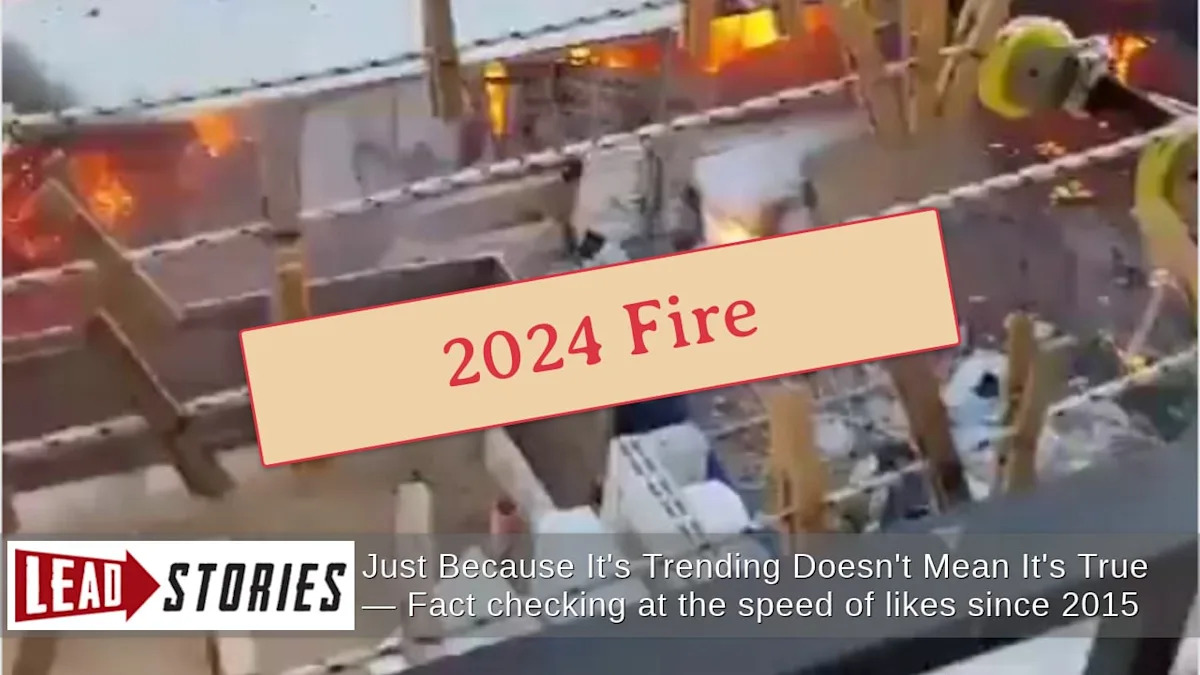
A video purportedly showing Tel Aviv “burning down” following an Iranian missile attack has been identified as misleading content circulating on social media. The footage, which depicts a building fire viewed from a balcony in the Israeli city, was actually recorded months earlier and repurposed to create a false narrative about recent military exchanges.
The misleading claim gained traction when the footage was shared on February 28, 2026, by the X (formerly Twitter) account @jacksonhinklle with the alarming caption: “🚨🇮🇱🇮🇷 BREAKING: TEL AVIV is burning down at the moment.” Another account posted the same video claiming it showed a “Large fire at a building in Tel Aviv, possibly munitions storage.”
Fact-checking reveals the video first appeared on social media on October 26, 2024—four months before the claimed missile attack. At that time, it was shared by the account @warintel4u with a more accurate description: “#BREAKING Massive fire in a building in Tel Aviv, 7 fire teams are working to extinguish the fire. The cause of fire is unknown.”
The Jerusalem Post corroborated the original incident in a brief article published on the same day in October 2024. Their report described the event as a fire in a residential building on Corkidi Street in Tel Aviv, noting that firefighting teams were working to extinguish the blaze and search for trapped individuals. Local residents were instructed to remain indoors as a precautionary measure.
Critically, there was no mention in any of the original reporting of a missile strike or military munitions being involved in the incident. The repurposing of this footage appears to be an attempt to exaggerate tensions following Israel’s military actions against Iran on February 28, 2026.
This case highlights a common tactic in modern information warfare, where authentic footage of one event is recycled and presented as evidence of a more recent or more dramatic incident. Such misrepresentation can fuel misinformation during times of heightened international tension, potentially inflaming public anxiety and complicating diplomatic efforts.
The practice of repurposing old footage during conflicts has become increasingly common in the digital age. Media consumers are advised to verify the authenticity and context of dramatic footage, particularly during active military conflicts when emotions run high and the appetite for breaking information is at its peak.
Social media platforms continue to grapple with how to address such misleading content. While some platforms have implemented fact-checking measures and warning labels, the speed at which such content can spread often outpaces verification efforts.
This incident serves as a reminder of the importance of media literacy and critical assessment of visual content, especially during geopolitical crises when accurate information is crucial for public understanding of complex and rapidly evolving situations.
The Israeli-Iranian tensions have been a persistent feature of Middle Eastern geopolitics, with occasional flare-ups leading to military exchanges. However, distinguishing between actual escalations and misrepresented events remains essential for accurate public discourse and responsible reporting on this sensitive issue.
Fact Checker
Verify the accuracy of this article using The Disinformation Commission analysis and real-time sources.

8 Comments
This is a good reminder of how easily information can be manipulated or taken out of context online. Glad the original context of the video was uncovered through diligent fact-checking.
Yes, the debunking helps maintain accurate reporting and prevent the spread of misinformation. It’s crucial for the public to have access to reliable information, especially on sensitive security issues.
Interesting fact-check on the misleading video about the Tel Aviv fire. It’s important to verify the source and context of such videos before spreading potential misinformation.
Agree, this highlights the need to be cautious about unverified claims, especially related to military or security incidents. Fact-checking is crucial to avoid amplifying false narratives.
The fact-checking on this video is a valuable service. Verifying the source and timeline of footage is essential to avoid fueling false narratives, especially around military conflicts.
This fact-check highlights the need for scrutiny when it comes to online video content, especially around sensitive geopolitical events. It’s crucial to verify sources and timelines to avoid amplifying false narratives.
Appreciate the detailed breakdown of how this video was misleadingly repurposed. Maintaining transparency and accuracy in reporting, even on social media, is so important.
Absolutely, this is a good example of responsible fact-checking to counter the spread of misinformation. Kudos to the investigators for uncovering the true context.