


Listen to the article
Vatican Archives Closure Claim Linked to Epstein Files Debunked as False
Reports claiming Pope Francis ordered the sealing of the Vatican Secret Archives in March 2026 due to connections with Jeffrey Epstein have been conclusively debunked. The viral social media post contained multiple factual errors that reveal it as completely fabricated.
The claim first appeared on March 3, 2026, from X user @maximumpain333, who posted an alarming message stating: “THE VATICAN JUST SEALED ITS ARCHIVES. ASK YOURSELF WHY.” The post included detailed but entirely fictional information claiming Pope Francis had ordered “the immediate closure of the Vatican Secret Archives to all researchers, scholars, and diplomats” at 6:12 AM Rome time, with “no explanation, no timeline, no precedent in 400 years.”
The post’s fundamental claim collapses under basic fact-checking. Pope Francis died on April 21, 2025, at age 88, according to official Vatican records. By March 2026, Pope Leo had been leading the Catholic Church for nearly a year, having been elected by the conclave on May 8, 2025.
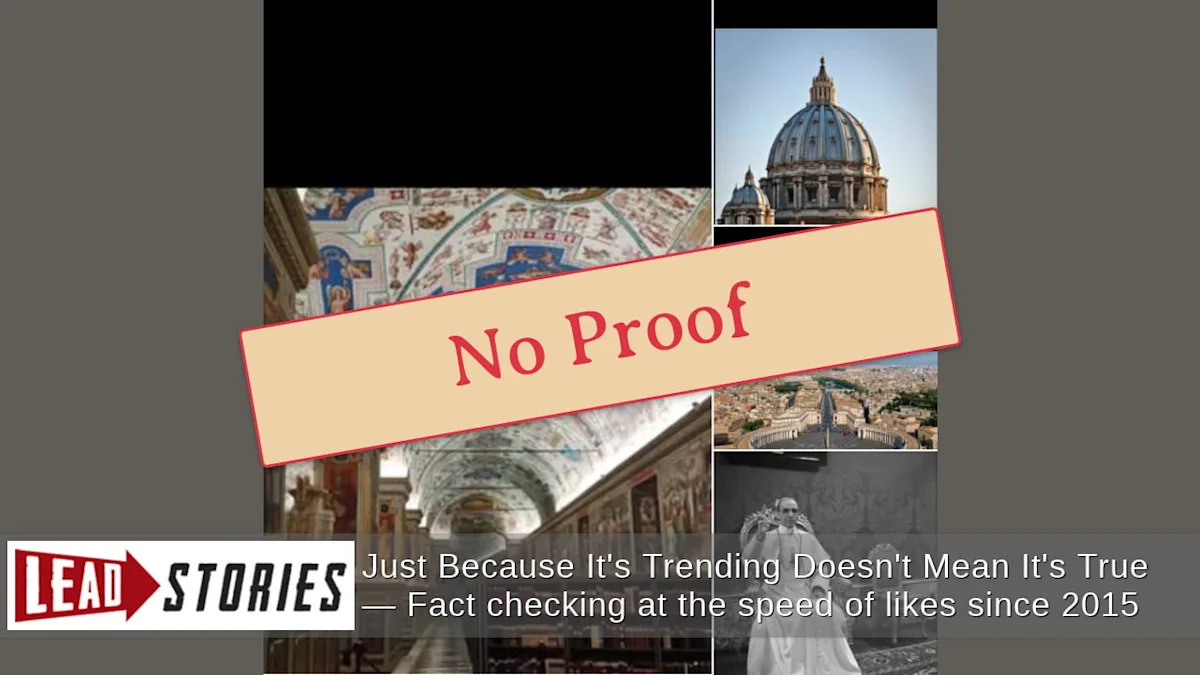
Additionally, the Vatican “Secret Archives” were renamed to “The Vatican Apostolic Archive” in 2019, a name change the post fails to acknowledge. The image used in the post doesn’t even depict Pope Francis, but rather Pope Pius XII, who served as pontiff during World War II.
Had such a monumental decision to seal the Vatican archives occurred, it would have generated substantial international news coverage. Extensive searches across major news platforms reveal no legitimate reporting of any such closure, further confirming the post’s fabricated nature.
The most inflammatory claim in the post suggests a direct connection between the Vatican and Jeffrey Epstein: “One name appears on both the Epstein flight logs AND the Vatican’s internal communications: Cardinal Angelo Becciu.” While Becciu was indeed convicted of financial crimes by the Vatican in 2023, searches through the U.S. Department of Justice Epstein files show no mention of Becciu’s name, decisively disproving this assertion.
The post attempts to create an air of historical precedent by stating, “The last time the Vatican sealed its archives was 1633 — when they buried the truth about Galileo. Today, they’re burying something far worse.” This dramatic claim serves only to heighten the sense of conspiracy without factual basis.
This misinformation appears designed to capitalize on public interest in both Vatican affairs and the ongoing revelations from Epstein-related documents. By combining these high-profile subjects with sensationalistic claims about cover-ups, the post likely aimed to generate engagement through outrage and curiosity.
The Vatican has not yet responded to requests for comment on these false allegations, though formal responses to such obviously fabricated claims are rare. The Catholic Church has previously emphasized its commitment to transparency regarding its archives, which contain centuries of important historical documents.
This incident highlights the ongoing challenge of combating misinformation on social media platforms, where dramatic claims can spread rapidly before fact-checking can occur. Users are advised to verify extraordinary claims through established news sources rather than relying on unverified social media accounts, particularly when posts contain specific dates, times, and dramatic accusations that seem designed to provoke emotional responses.
As investigation of Epstein’s connections continues through legitimate channels, this fabricated story serves as a reminder of how easily misinformation can exploit public interest in high-profile cases.
Fact Checker
Verify the accuracy of this article using The Disinformation Commission analysis and real-time sources.
