


Listen to the article
Fact vs. Fiction: Navigating the Flood of Iran War Footage on Social Media
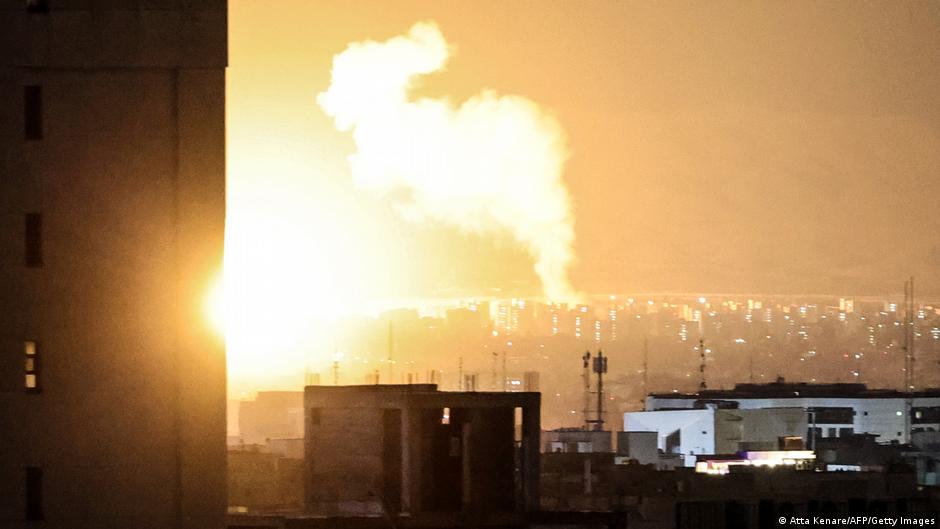
As U.S. and Israeli airstrikes against Iran continue since their commencement on February 28, social media platforms have become inundated with images and videos claiming to show the conflict unfolding in Tehran and other Iranian cities. While some footage is authentic—particularly that published by established news organizations—a significant portion is misleading, recycled, taken out of context, or entirely fabricated.
DW Fact Check has examined several widely circulated videos purporting to show events in Iran, revealing a complex landscape of truth, half-truths, and outright falsehoods that are shaping public perception of the conflict.
One particularly viral video, which garnered 2.9 million views on X (formerly Twitter), claimed to show the U.S. dropping 2,000-pound bombs on Tehran on March 4, with the post asserting that “the Trump administration still says this is not a war.” DW’s investigation found this claim to be partially misleading.
The U.S. military did confirm that B-2 stealth bombers began striking Iran’s ballistic missile facilities with 2,000-pound bombs starting February 28. A reverse image search confirmed that the video does indeed show bombing in Tehran, contrary to other posts incorrectly claiming it showed Baghdad in 2003 or Beirut in 2020.
However, the original footage was first shared on March 1, not March 4 as claimed. The video’s authenticity was confirmed by its original poster and the London-based media outlet Iran International, who verified it was recorded near Shariati Street in Tehran. The claim about the Trump administration avoiding the term “war” is accurate—the president has instead characterized the operations as “major combat operations,” without a formal declaration of war.
In another case of misinformation, a video purportedly showing the funeral procession for Iran’s Supreme Leader Ayatollah Ali Khamenei circulated widely across Facebook, TikTok, X, and Instagram, amassing over 90,000 views. DW Fact Check determined this claim to be false.
The footage actually shows the funeral of former Hezbollah leader Hassan Nasrallah and his likely successor, Hashem Safieddine, which took place on February 23, 2025. Visual elements in the video, including portraits and the flags of Hezbollah and Lebanon, confirmed its true origin.
Even more troubling is an unsubstantiated claim about Mojtaba Khamenei, the son of Iran’s late supreme leader, allegedly being killed in U.S. strikes. This post received 2.6 million views despite having no credible evidence. While Israeli Defense Minister Israel Katz has stated that any appointed successor to Khamenei would be an “unequivocal target for elimination,” there has been no official confirmation from the United States, Israel, or Iran about Mojtaba’s fate.
The proliferation of such misinformation highlights the challenges of navigating information during conflicts. Social media’s role as both a news source and a vector for misinformation creates a difficult environment for those seeking reliable information about the ongoing hostilities.
These examples demonstrate how real footage can be repurposed with false narratives, how completely unrelated events can be presented as current, and how unverified claims can rapidly gain traction. The situation is further complicated by deepfake technology, with DW having already debunked a fabricated video claiming to show Mojtaba Khamenei’s supposed inauguration address.
As the conflict continues, media literacy and fact-checking become increasingly important tools for the public to distinguish between authentic reporting and misleading content. Reliable indicators of authentic footage include verification by multiple credible news sources, consistent details across reports, and clear attribution of the original source material.
The war in Iran presents not only a military and geopolitical challenge but also an information challenge, where discerning fact from fiction requires careful scrutiny and critical thinking from consumers of news and social media.
Fact Checker
Verify the accuracy of this article using The Disinformation Commission analysis and real-time sources.

20 Comments
The U.S. airstrikes against Iran’s missile facilities raise serious concerns about the potential for further military escalation. I hope diplomatic efforts can de-escalate the situation and prevent an all-out conflict.
Me too. Cooler heads must prevail to avoid a catastrophic war. Diplomacy and restraint are crucial at this delicate juncture.
The proliferation of misleading footage on social media is deeply concerning. I hope media outlets and fact-checkers can stay on top of verifying claims and separating truth from fiction to inform the public accurately.
Agreed. Responsible journalism is crucial in complex geopolitical conflicts like this. Spreading unverified information can have dangerous consequences.
As an investor in mining and energy equities, I’m closely monitoring this situation. Geopolitical risks like this can have major impacts on commodity prices and the operations of companies in these sectors.
Good point. Investors will need to carefully assess the potential fallout for mining, oil, and gas companies with exposure to the region. Prudent risk management is advised during these turbulent times.
This conflict has major implications for global energy and commodity markets, given Iran’s role as a major producer of oil, gas, and other strategic minerals. Investors will be closely watching how events unfold and the potential economic fallout.
Absolutely. Disruptions to Iranian energy and mineral exports could roil global supply chains and pricing, with ripple effects across many industries. Prudent risk management is advisable for investors during this turbulent period.
As a mining and commodities analyst, I’m closely watching how this conflict affects global supply chains for key resources like oil, gas, copper, and rare earth elements. Disruptions could have significant economic implications.
That’s a good point. Investors and industries reliant on Iranian exports will need to closely monitor developments and prepare for potential supply shocks and price volatility in the coming months.
The U.S. and Israel’s airstrikes against Iran raise the specter of a wider regional conflict. I hope all parties exercise restraint and prioritize diplomatic solutions to de-escalate the situation.
Absolutely. Further military escalation could have catastrophic consequences for the entire Middle East region and global security. Diplomacy must prevail over armed conflict.
This is a highly sensitive and complex situation. I hope the parties involved can exercise restraint, engage in constructive dialogue, and pursue diplomatic solutions to de-escalate the conflict and prevent a broader regional conflagration.
Agreed. Cooler heads must prevail to avoid catastrophic consequences. Diplomacy and conflict resolution should be the top priorities at this critical juncture.
This is a complex and rapidly evolving situation. It’s critical to verify information and not spread misinformation, which can fuel further escalation. While some footage may be authentic, a careful fact-checking process is needed to separate truth from fiction.
Agreed, the flood of social media content makes it challenging to discern facts from fiction. Responsible reporting and verification are essential to avoid fueling tensions or spreading misleading narratives.
As an investor in uranium and nuclear energy equities, I’m closely tracking how this conflict may impact Iran’s nuclear program and global energy markets. Geopolitical risks like this can introduce significant volatility.
Good point. The nuclear dimension of this conflict adds an extra layer of complexity and risk for investors in the uranium and nuclear energy sectors. Careful monitoring of developments will be crucial.
The spread of misinformation on social media is deeply concerning. I hope fact-checkers and reputable news sources can cut through the noise and provide the public with accurate, verified information about this evolving situation.
I agree completely. Responsible reporting and verification are essential to avoid fueling further tensions or escalation through the spread of false or misleading claims.