


Listen to the article
Misattributed Videos: No Evidence of U.S. or Israeli Strike on Iranian Missile Facility
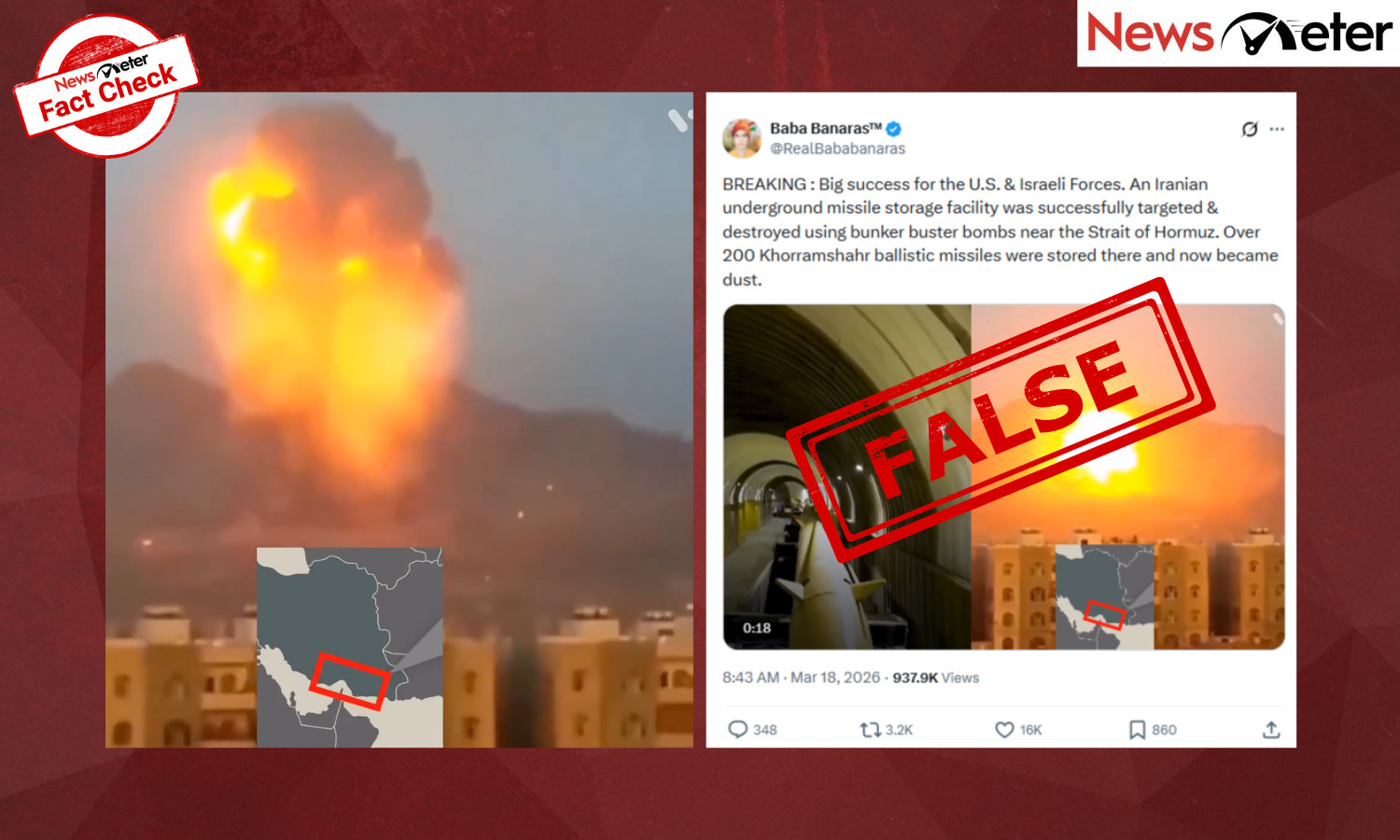
A viral claim suggesting that U.S. and Israeli forces destroyed an Iranian underground missile storage facility has been debunked after investigation of the video evidence presented alongside these allegations.
The misleading posts combine two separate videos: one showing a massive explosion and another displaying an Iranian underground missile storage facility. Analysis reveals these videos are unrelated to any recent military action against Iran.
The explosion footage, which has been circulating widely on social media, actually depicts an incident from May 11, 2015, when Arab coalition airstrikes hit an arms depot near Sanaa, Yemen. According to reports dated May 12, 2015, the strike killed at least 69 people and injured approximately 250 others. Local residents reported that explosions at the military base on Mount Noqum, located on Sanaa’s outskirts, continued into the following day after the initial airstrike.
The second video, showing an underground facility filled with missiles, has been misrepresented in the viral posts. Reverse image searches reveal this footage actually shows an Iranian “missile city” – a term used to describe the country’s network of underground missile storage facilities.
This particular video was released by Iranian authorities themselves as a demonstration of the country’s military capabilities and deterrence strategy. It was published by FirstPost on YouTube on March 26, 2025, with a description stating that Iran’s military had released footage of what they described as an underground missile city stocked with weapons.
The Times of Israel also reported on the video on March 26, 2025, noting that Iranian state media had aired footage showing a long tunnel filled with various ballistic and cruise missiles. The arsenal reportedly included systems such as the Kheibar Shekan, Sejjil, and Emad missiles.
Iran has developed these underground facilities over decades as a strategic response to potential airstrikes. The country began investing heavily in subterranean military infrastructure following the Iran-Iraq War (1980-1988) and has accelerated such developments amid tensions with Israel and the United States in recent years. These facilities are designed to protect Iran’s missile arsenal from preemptive strikes and ensure second-strike capability in the event of conflict.
The misleading posts circulating online have deceptively combined these two unrelated videos to create a false narrative claiming that U.S. and Israeli forces recently destroyed one of these underground missile facilities. However, no credible reports from military sources, international monitoring organizations, or major news outlets have confirmed any such strike.
Tensions in the Middle East remain high, with Iran’s missile program being a significant concern for regional powers and the international community. Iran has consistently maintained that its missile program is for defensive purposes, while Israel and the United States have expressed concerns about the threat these weapons could pose.
The spread of this misinformation comes amid a backdrop of ongoing geopolitical tensions in the region, where accurate information is crucial for understanding the complex dynamics at play. False claims about military strikes have the potential to inflame tensions and contribute to misunderstandings about the current situation.
After thorough investigation of the video evidence and cross-referencing with reliable sources, it is clear that the viral claim suggesting a U.S. or Israeli strike on an Iranian missile facility is false and based on misattributed video footage from unrelated events.
Fact Checker
Verify the accuracy of this article using The Disinformation Commission analysis and real-time sources.

12 Comments
Good to see the disinformation commission thoroughly investigating this viral video and setting the record straight. Separating fact from fiction is vital, especially when it comes to potential military confrontations.
Agree, clear and objective fact-checking is essential to counter the spread of misleading claims, particularly around sensitive international issues.
It’s concerning to see this kind of misleading viral content around potential military actions. I’m glad the disinformation commission thoroughly investigated the claims and set the record straight. Fact-checking is essential to maintain public trust.
Yes, in today’s information landscape, it’s critical to approach viral claims, especially those related to security issues, with a skeptical eye and verify the facts before sharing.
Interesting to see the debunking of this viral claim about a US strike on an Iranian missile facility. It’s important to verify the accuracy of videos and claims before spreading them, especially when it comes to sensitive military matters.
Yes, fact-checking is crucial to avoid the spread of misinformation, especially on topics related to geopolitics and national security.
Appreciate the disinformation commission’s detailed investigation into the origins and context of this viral video. Separating truth from fiction is crucial, especially when it comes to sensitive geopolitical and military matters.
Agreed, responsible reporting and fact-checking are vital to prevent the spread of misinformation, which can have serious consequences in the realm of national security.
The debunking of this viral claim is a good reminder to be cautious about unverified information, especially related to military operations. Thorough fact-checking is essential to maintain public trust and avoid the spread of false narratives.
Yes, in today’s digital age, it’s all too easy for misleading content to gain traction. Rigorous verification is the best defense against the dissemination of misinformation, particularly on sensitive issues.
This highlights the importance of verifying the source and context of viral videos, rather than just accepting them at face value. Fact-checking is crucial to avoid amplifying false narratives, especially on topics related to military operations.
Absolutely, it’s worrying how quickly misinformation can spread online. Rigorous verification is the best way to combat the spread of false claims, particularly when they involve national security matters.