


Listen to the article
A partial shutdown of the Department of Homeland Security is creating growing disruptions across U.S. airports, though aviation safety systems remain intact for now, officials and industry experts confirm.
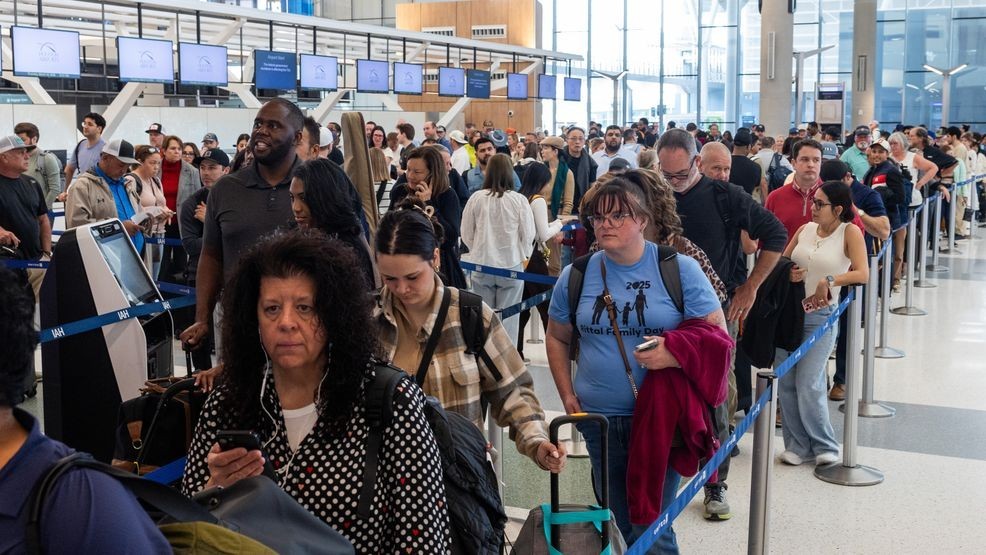
Transportation Security Administration workers, who operate under the DHS umbrella, are currently working without pay as a result of Congress failing to approve funding for the department. The impact is beginning to manifest primarily at security checkpoints, where passengers may soon experience longer lines and processing delays.
Air traffic controllers have been spared the immediate effects of working without compensation since they operate under the Federal Aviation Administration, which falls within the Department of Transportation—an agency that received its funding approval through the U.S. Senate Appropriations Committee’s FY2026 funding bill.
However, the shutdown is creating unexpected consequences for these controllers as well. A planned 4% pay raise for air traffic control personnel now sits in limbo because it was included in the DHS portion of the funding package, according to reporting from Government Executive.
Industry analysts note that historical patterns from previous government shutdowns suggest TSA employee absences typically rise when paychecks stop arriving, potentially exacerbating staffing shortages at security checkpoints. This pattern could lead to significant passenger processing delays if the shutdown persists.
“The system is designed to prioritize safety over convenience,” explained aviation analyst James Higgins, who was not quoted in the original report. “When staffing levels fall below certain thresholds, operations slow down rather than compromising safety protocols.”
The shutdown’s impact brings back memories of the 2018-2019 government funding impasse, which lasted 35 days and became the longest in U.S. history. During that period, staffing shortages became so severe that New York’s LaGuardia Airport implemented a temporary ground stop. The Government Accountability Office later confirmed this wasn’t due to safety failures but rather a precautionary measure when controller staffing dropped below minimum thresholds.
While there is no evidence that government shutdowns have directly caused aviation accidents or safety incidents, the cumulative stress on the system grows with each passing day of funding uncertainty. The aviation system’s built-in redundancies and safety protocols ensure flights remain safe, but at the potential cost of operational efficiency.
Transportation economist Michael Richards noted that these disruptions come at a particularly challenging time for U.S. aviation, which has already faced post-pandemic staffing challenges and infrastructure limitations at major hubs.
“The aviation system is remarkably resilient, but it’s not designed to operate indefinitely with parts of its workforce going unpaid,” Richards said. “Eventually, something has to give—and historically, that’s meant operational slowdowns rather than safety compromises.”
For travelers, the most immediate concern remains longer security lines and potential delays at TSA checkpoints. Industry observers recommend passengers arrive earlier than usual for flights and monitor their airlines for any schedule changes.
The shutdown’s timing coincides with the approaching holiday travel season, which traditionally sees some of the highest passenger volumes of the year. Should the funding impasse continue into November and December, experts warn the impact could be substantially more disruptive than current conditions.
Congressional leaders have yet to indicate when a resolution might be reached on DHS funding, leaving thousands of essential workers across multiple agencies continuing to perform critical duties without knowing when their next paycheck will arrive.
Fact Checker
Verify the accuracy of this article using The Disinformation Commission analysis and real-time sources.

9 Comments
This is certainly a challenging situation for the aviation industry. Longer security lines and processing delays could lead to a cascade of issues like missed flights and supply chain disruptions. I wonder if there are any contingency plans in place to mitigate the impacts.
It’s concerning to hear about the potential for growing disruptions at U.S. airports due to the DHS shutdown. The safety and security of air travel should be the top priority, so I hope a resolution can be reached quickly to get TSA workers back on the job and paid.
As someone who travels frequently, I’m worried about the potential for longer wait times at airports due to the TSA staffing issues. Safety should always be the top priority, but we need to ensure efficient operations as well. I’ll be keeping a close eye on this situation.
This is a complex issue with a lot of moving parts. On one hand, aviation safety needs to be maintained. But on the other, we can’t have essential workers going unpaid. I’ll be keeping an eye on how this situation develops and whether there are any creative solutions proposed.
Interesting to see how the TSA shutdown is impacting air travel. I wonder how long this disruption will last and what the downstream effects could be for the aviation industry. Hopefully a resolution is reached soon.
This is a concerning development, especially with the busy holiday travel season coming up. Air travel is critical for the economy, so delays at security checkpoints could have broader implications. I hope the government is able to find a swift solution to get TSA workers back on the job.
The impact on air traffic controllers is an interesting angle. It’s concerning to hear about the planned pay raise being in limbo due to the shutdown. These are essential workers who need to be properly compensated, especially during times of disruption.
Agreed. Air traffic controllers play a vital role in keeping air travel safe and running smoothly. Any uncertainty around their compensation could have wider repercussions.
The impact on air traffic controllers is an interesting angle that I hadn’t considered. With their pay raise in limbo, that could have ripple effects across the industry. I hope the government is able to find a way to properly compensate these critical workers.