


Listen to the article
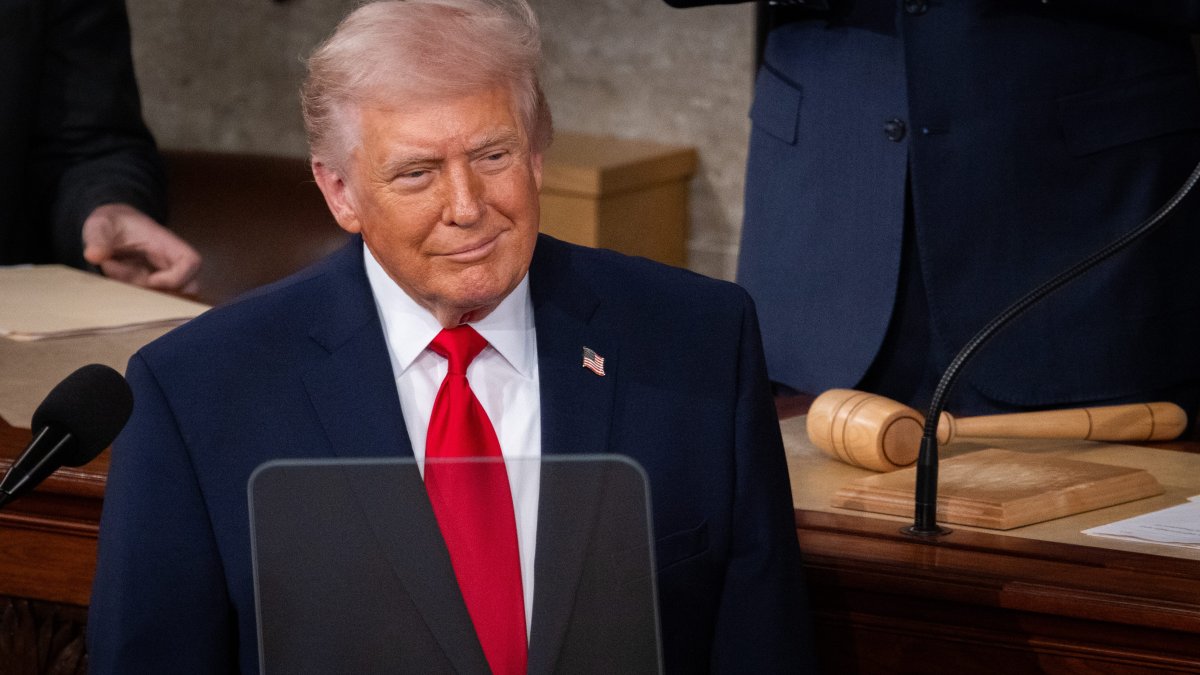
In his second State of the Union address since returning to office, President Donald Trump delivered the longest such speech in history, making numerous claims about economic growth, crime reduction, and foreign policy achievements that require careful scrutiny.
Fact-checkers from NBC News and the Associated Press identified several statements that were exaggerated, misleading, or factually incorrect throughout the president’s address to Congress.
Addressing the economy, Trump claimed he had inherited “a stagnant economy” twelve months ago. However, economic data shows the U.S. economy was not stagnant when he took office in 2025. The gross domestic product rose 2.8% in 2024, President Biden’s final year, outpacing the 2.2% growth achieved in Trump’s first year back in office.
Trump also asserted that “incomes are rising fast,” but inflation-adjusted after-tax incomes increased by just 0.9% in 2025, down from 2.2% during Biden’s last year. This represents the smallest annual gain since 2022, a slowdown linked to companies reducing their hiring pace.
On inflation, the president claimed his administration had driven it to the lowest level in more than five years. While he cited a 1.7% figure for the last three months of 2025, economists note inflation is typically measured annually, not quarterly. Annual inflation when Trump took office was 2.9%, not a record high as implied. Recent record inflation peaked at 8.9% in 2022, still below the historical highs of around 14% experienced in the 1980s.
Trump’s claim about securing $18 trillion in global investments appears significantly inflated. The White House’s own website lists a much lower figure of $9.6 trillion, which reportedly includes commitments made during the Biden administration. A January study cast doubt on whether more than $5 trillion in investment commitments from major trading partners would ever materialize.
Regarding employment, while Trump correctly stated that more Americans are working than at any time in history, this statistic naturally increases with population growth. The more relevant measure—the proportion of Americans with jobs—has fallen significantly over the past 25 years, from a peak of 64.7% in April 2000 to 59.8% in January. The unemployment rate currently stands at 4.3%, higher than the 4% when Biden left office in January 2025.
Job creation in 2025 was notably slower than in previous years. The Bureau of Labor Statistics reported 584,000 new jobs last year, substantially lower than the 2 million-plus in both 2023 and 2024, and far below the 4.5 million created in 2022 as the economy recovered from the pandemic.
Trump’s claim of ending eight wars in ten months lacks solid evidence. In several cases he cited—including conflicts between Thailand and Cambodia, and Rwanda and the Democratic Republic of Congo—fighting resumed after initial peace declarations. In other instances, such as between Serbia and Kosovo, there was no active war to end, only ongoing tensions.
On tariffs, Trump’s assertion that import taxes are “saving our country” is contradicted by budget realities. Before the Supreme Court struck down some of his tariffs, the Congressional Budget Office estimated they would raise about $300 billion annually—insufficient to offset his $4.7 trillion tax cuts or make a meaningful impact on the $1.78 trillion annual deficit. Tariff revenues reached $195 billion in the last fiscal year but represented less than 4% of federal revenue.
Trump made particularly misleading claims about prescription drug prices, stating he had reduced them from “the highest price in the entire world to the lowest.” Experts have called this claim “total fiction,” noting that a reduction of more than 100% would mean pharmaceutical companies paying people to take medications. While Trump has negotiated voluntary deals with some drugmakers, many of his initiatives have limited impact for those with insurance.
On crime, Trump accurately noted a significant decline in murder rates based on analysis by the nonpartisan Council on Criminal Justice. However, this trend began well before his return to office. His claim that Washington, D.C. has “almost no crime anymore” exaggerates improvements in the capital, which still recorded nine homicides and hundreds of other serious crimes in early 2026, despite reductions across most categories.
The president’s statements on immigration, taxes, and voting also contained significant distortions of his policies and their effects, reflecting a pattern of embellishment throughout the address.
Fact Checker
Verify the accuracy of this article using The Disinformation Commission analysis and real-time sources.

8 Comments
While I appreciate the president highlighting positive economic indicators, it’s important to consider the full context and nuance. Fact-checking helps provide a more complete understanding of the situation.
This analysis highlights the importance of verifying claims, even from senior officials. Maintaining a skeptical yet open-minded approach seems prudent when evaluating complex policy issues.
Absolutely, critical thinking and independent research are key to forming a well-rounded perspective on these matters.
It’s important to scrutinize political claims and look at the facts, not just rhetoric. Economic data tells a more nuanced story than the president’s statements suggest.
Agreed, fact-checking is crucial to understand the full picture, especially on complex economic issues.
I’m curious to learn more about the specific data points and trends around GDP growth, incomes, and inflation under the current and previous administrations. This seems like a complex topic worth digging into.
Yes, the economic data and policy impacts can be tricky to parse. I’d encourage looking at reports from nonpartisan sources to get a balanced view.
The discrepancies between the president’s statements and the economic data are concerning. I hope further reporting can shed light on the underlying factors and trends at play.