


Listen to the article
In his State of the Union address Tuesday, President Donald Trump presented a selective and often distorted view of the nation’s progress under his leadership, claiming a “turnaround for the ages” while making numerous assertions that don’t stand up to factual scrutiny.
Trump, who has spent the past year contrasting his accomplishments with those of his predecessor Joe Biden, relied heavily on misleading statistics and exaggerated claims across topics ranging from the economy and immigration to foreign policy and crime.
On the economy, Trump characterized the situation he inherited as “a nation in crisis, with a stagnant economy” – a description that doesn’t align with economic data. The U.S. economy grew by 2.8% in 2024 under Biden, outpacing the 2.2% growth achieved during Trump’s first year back in office.
The president also claimed incomes are “rising fast” in a “roaring economy,” but inflation-adjusted after-tax incomes rose just 0.9% in 2025, down from 2.2% during Biden’s final year. This represents the smallest annual gain since 2022, reflecting a slowdown in hiring and wage growth.
One of Trump’s most inflated claims involved foreign investment, where he stated he “secured commitments for more than $18 trillion pouring in from all over the globe.” This figure appears dramatically exaggerated – the White House’s own website lists a lower figure of $9.6 trillion, and independent analyses question whether even the previously announced $5 trillion in commitments will materialize.
While Trump correctly noted that more Americans are working than ever before, this is primarily due to population growth. The proportion of Americans with jobs stands at 59.8%, significantly below the April 2000 peak of 64.7%. Additionally, the unemployment rate of 4.3% is actually higher than the 4% rate when Biden left office in January 2025.
Foreign policy claims also received significant embellishment. Trump’s assertion that he “ended eight wars” in his first ten months is highly questionable. In several cases, such as between Serbia and Kosovo, there were tensions rather than active conflicts. His actual influence varied widely across the conflicts he referenced.
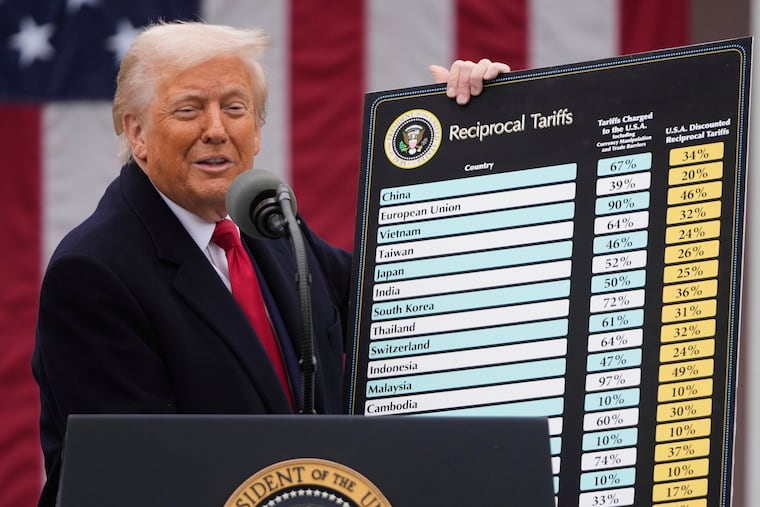
On tariffs, Trump portrayed import taxes as a financial savior for the country, but the Congressional Budget Office estimated his new tariffs would raise about $300 billion annually – not nearly enough to cover his $4.7 trillion tax cuts or meaningfully reduce the $1.78 trillion annual budget deficit. His claim that tariffs will “substantially replace the modern day system of income tax” is mathematically impossible, as tariff revenue ($195 billion) accounts for less than 4% of federal revenue.
The president’s healthcare claims were particularly problematic. He stated he took prescription drugs “from the highest price in the entire world to the lowest” with “price differences of 300, 400, 500, 600% and more.” Health policy experts have called this “total fiction,” noting that price reductions exceeding 100% would mean patients are being paid to take medications.
Crime statistics were similarly misrepresented. While violent crime has indeed declined, with a 21% decrease in homicide rates from 2024 to 2025 according to the Council on Criminal Justice, this continues a trend that began around 2022 during Biden’s presidency, when violent crime dropped to near pre-pandemic levels.
Trump’s immigration rhetoric contradicted his policy actions. Despite claiming “we will always allow people to come in legally,” his administration has restricted legal immigration pathways, suspending the refugee program and imposing travel restrictions on nearly 40 countries, many in Africa.
The address also included misleading statements about tax cuts, voter fraud, and even basic American history – incorrectly suggesting the American Revolution, which began in 1775 and ended in 1783, is ongoing.
Fact Checker
Verify the accuracy of this article using The Disinformation Commission analysis and real-time sources.

13 Comments
Interesting fact check analysis of Trump’s State of the Union claims. It’s important to scrutinize political rhetoric and hold leaders accountable to the facts, even if it paints a different picture than what was presented.
The economy and job growth seem to be key points of contention. While Trump touted a ‘roaring economy’, the data shows a more nuanced picture with slower wage and hiring growth. Good to see a balanced assessment.
Hmm, claims about foreign investment seem to be exaggerated. It’s concerning when politicians cherry-pick data to bolster their narrative. Fact-checking is crucial for keeping the public accurately informed.
Interesting to see the nuanced picture painted by the data, which seems to contrast sharply with Trump’s rosy portrayal of the economy. Careful analysis is key to understanding the true state of affairs.
This highlights the importance of scrutinizing political rhetoric and not simply accepting claims at face value. A thorough, data-driven analysis is needed to separate fact from fiction, especially on complex economic issues.
Agreed. It’s important to cut through the partisan spin and look at the underlying data objectively.
Misleading statistics and exaggerated claims in political speeches are concerning. This analysis serves as a valuable reality check and reminder to be skeptical of grandiose rhetoric, no matter the political affiliation.
Absolutely. Fact-based scrutiny is essential for a healthy democracy.
The contrast between Trump’s portrayal of the economy and the actual data is quite stark. It underscores the need for rigorous fact-checking to hold leaders accountable and provide the public with accurate information.
This fact check serves as an important reminder that we should not simply accept political narratives at face value. Rigorous scrutiny and a willingness to challenge selective or misleading claims is vital for maintaining an informed public discourse.
This piece highlights the disconnect between political narratives and empirical data. It’s a good example of the importance of robust, non-partisan fact-checking to cut through the spin and inform the public.
The findings here reinforce the need for critical thinking and fact-based assessment when it comes to evaluating political claims. Relying on rhetoric alone can lead to a distorted understanding of complex issues.
Agreed. Healthy skepticism and data-driven analysis are essential for an informed citizenry.