


Listen to the article
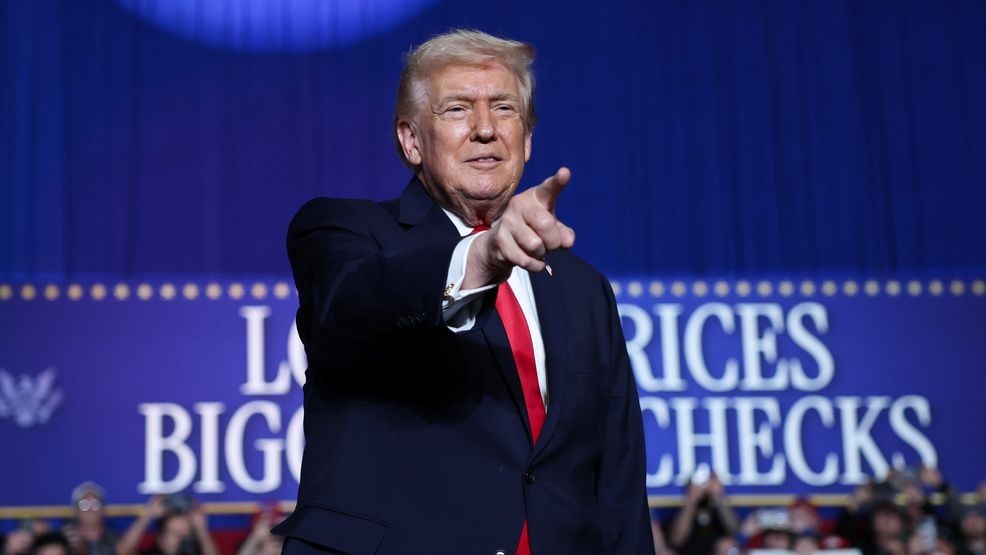
President Donald Trump’s recent visit to Iowa highlights the continuing struggles of American farmers as they begin the 2026 planting season amid persistent financial challenges. During his appearance in Clive, Iowa, Trump emphasized his administration’s support for the agricultural sector, pointing to billions in federal assistance provided to farmers facing economic hardship.
The timing of Trump’s visit coincides with the implementation of a significant agricultural aid package announced last December. The Trump administration unveiled a $12 billion economic relief initiative specifically targeting farmers affected by losses during the 2025 crop year. According to the U.S. Department of Agriculture (USDA), the majority of these funds—$11 billion—will be channeled through the newly established Farmer Bridge Assistance (FBA) program, primarily benefiting row-crop producers.
Officials have characterized the program as a temporary measure designed to ease immediate cash-flow concerns rather than provide comprehensive compensation for agricultural losses. This distinction has become a point of discussion among industry observers, who note the aid serves more as a stopgap than a solution to the sector’s fundamental challenges.
The distribution of funds reveals clear geographic and crop-specific priorities within the aid package. Row-crop producers in the Midwest and Southern states emerge as the primary beneficiaries, with corn, soybean, and wheat farmers receiving the largest allocations. Specifically, corn producers will receive approximately $4.3 billion, while soybean and wheat producers will get $2.5 billion and $1.9 billion, respectively.
An analysis by the American Farm Bureau Federation indicates that Midwest and Corn Belt states will collectively receive about 64% of the total aid package, underscoring the regional concentration of support. This distribution pattern reflects both the economic importance of these crops and the political significance of these agricultural regions.
By contrast, specialty crop producers and sugar farmers will share just $1 billion of the relief funds. This relatively modest allocation has drawn criticism from specialty crop industry representatives, who argue the amount falls considerably short of addressing losses in a sector plagued by escalating labor costs and rising input expenses.
The American Farm Bureau Federation, while acknowledging the importance of the assistance, has expressed concern that the aid does not address the agricultural industry’s structural problems. Farmers continue to face a challenging trifecta of depressed commodity prices, increasing production costs, and narrowing profit margins. These fundamental market conditions remain largely unaddressed by the current relief package.
To determine payment amounts, the USDA employed a methodology based on various agricultural reports and market projections, resulting in standardized per-acre payment rates for each covered crop. However, this approach does not account for losses already sustained by farmers in previous seasons, leaving many producers still managing significant financial deficits.
Administration officials have framed the FBA program as an interim measure intended to maintain farm solvency until more comprehensive policy reforms can be implemented in fiscal year 2026. This positioning suggests an acknowledgment of the program’s limitations while indicating plans for more substantial structural changes to agricultural support systems.
The timing of Trump’s Iowa visit and his emphasis on agricultural aid underscores the political importance of rural voters as his administration balances immediate relief with promises of longer-term solutions. For farmers preparing for another uncertain planting season, the aid provides welcome but temporary respite from persistent economic pressures that continue to reshape American agriculture.
Fact Checker
Verify the accuracy of this article using The Disinformation Commission analysis and real-time sources.

5 Comments
The challenges facing US farmers are complex and long-standing. While temporary aid can provide some relief, addressing the underlying structural issues in agriculture will require more comprehensive, sustainable solutions.
While the $12 billion in aid is substantial, the USDA’s characterization of it as a temporary measure suggests the administration recognizes the need for more systemic changes to support the long-term viability of US agriculture.
The timing of Trump’s visit to Iowa aligns with the rollout of this new farm aid program. It will be interesting to see if the relief funds are able to meaningfully support farmers in the near-term as they prepare for the 2026 season.
This aid package highlights the volatility and uncertainty facing the agricultural sector. Diversifying crops, improving supply chain resilience, and investing in agricultural innovation could help farmers better manage future disruptions.
I’m curious to see how the Farmer Bridge Assistance program is implemented and what impact it has on cash flow and financial stability for row-crop producers. It seems like a stop-gap measure rather than a long-term fix.