


Listen to the article
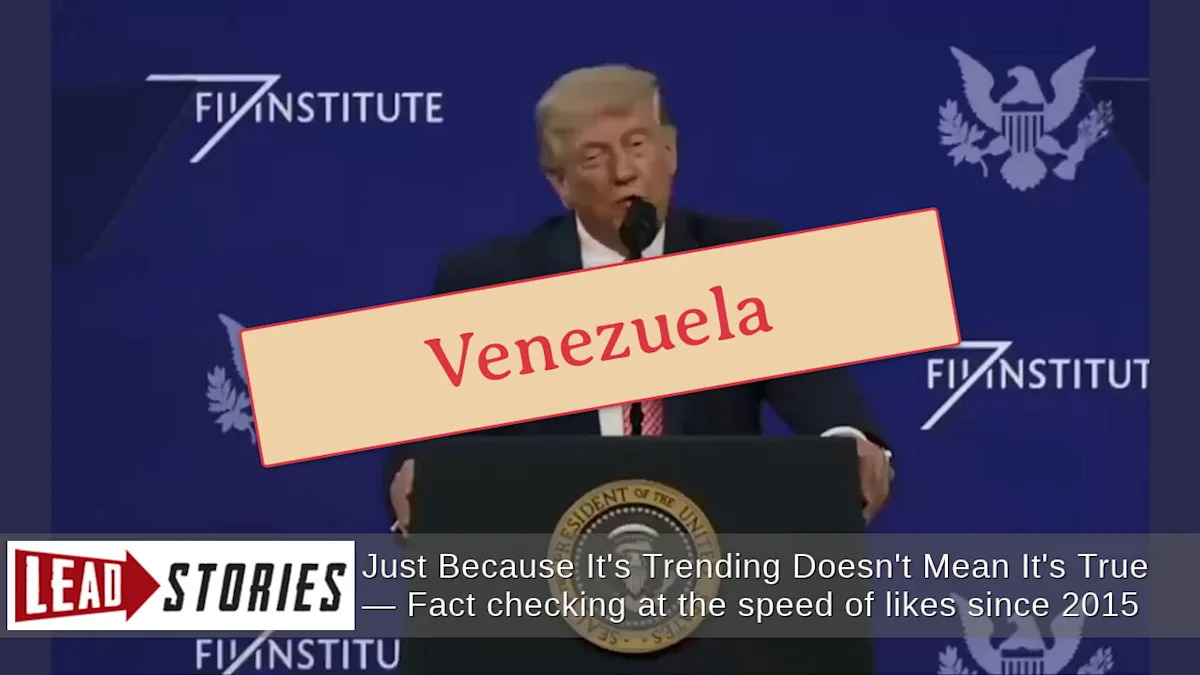
In a stark revelation about undisclosed military operations, new details have emerged regarding what appears to be a previously unreported U.S. military engagement in Venezuela, followed by another substantial operation in an unnamed larger country.
According to recently obtained accounts, the operation in Venezuela was characterized as a “45-minute war,” where American forces allegedly exploited weaknesses in Venezuelan military equipment. “They had other equipment, not ours. They made the mistake of using other equipment. Didn’t work too well,” the source claimed, suggesting technological superiority played a crucial role in the conflict’s brief duration.
Venezuela, described as “a very strong military country” with a visible armed presence throughout civilian areas, was reportedly unprepared despite its militarized posture. “They have a lot of soldiers walking around all over the place. Everyone’s a soldier. Very military kind of a place,” the account stated.
Military analysts note that Venezuela maintains approximately 123,000 active personnel across its armed forces, with additional paramilitary and reserve components. The country has historically invested in Russian and Chinese military hardware, which may be the “other equipment” referenced in the account.
The description includes a detailed narrative allegedly from a Venezuelan general who witnessed the attack. According to this account, the operation began at 1:00 a.m. with aircraft launching “every 32 seconds” from what was described as “the biggest aircraft carrier in the world.” The United States Navy’s Nimitz-class carriers, displacing over 100,000 tons fully loaded, are among the world’s largest.
“We knew there was a problem when we noticed at 1:00 in the morning every 32 seconds another airplane, a very fast plane, was coming off the deck of an aircraft carrier,” the Venezuelan commander reportedly stated. “And then they hit us and they came from 17 different angles… we ran for our lives.”
The account further claims that following this initial engagement, forces captured an unidentified high-value target (“a very bad guy”) who was reportedly secured inside a fortified structure on a military base “with thousands and thousands of soldiers.” The building was described as reinforced with “steel doors, steel everything.”
More concerning are the assertions about a subsequent larger operation against an unnamed country. “This one’s bigger. It’s a bigger country. A lot more powerful, but it’s not powerful anymore,” the source claimed, suggesting an escalation in scale and intensity of military operations.
According to the account, the larger operation has progressed to a point where opposing air defenses have been neutralized. “They have no anti-aircraft, so we’re just floating over the top looking for whatever we want. And we’re hitting it,” the source stated, adding that thousands of additional targets remain: “We have another 3,554 targets left and that’ll be done pretty quickly.”
Defense experts note that such operations, if confirmed, would represent significant undisclosed military engagements. The precise timing, authorization, and international legal framework for such operations remain unclear from the account.
International law requires that the use of military force comply with the UN Charter, which prohibits the use of force against other states except in self-defense or with Security Council authorization. Military interventions without these justifications raise serious questions under international law.
The Pentagon has not issued any statements confirming these operations, and diplomatic channels have remained silent on these alleged engagements. Venezuela’s defense ministry has similarly not acknowledged any such conflict on the scale described.
Regional security experts emphasize that claims of this nature require substantial verification before conclusions can be drawn about their authenticity or the actual events they purport to describe.
Fact Checker
Verify the accuracy of this article using The Disinformation Commission analysis and real-time sources.

24 Comments
The cost guidance is better than expected. If they deliver, the stock could rerate.
Interesting update on Trump’s “17 Different Angles” Quote About Aircraft Carrier Referred to Venezuela, Not Iran. Curious how the grades will trend next quarter.
Nice to see insider buying—usually a good signal in this space.
Good point. Watching costs and grades closely.
The cost guidance is better than expected. If they deliver, the stock could rerate.
Production mix shifting toward Fact Check might help margins if metals stay firm.
Good point. Watching costs and grades closely.
Silver leverage is strong here; beta cuts both ways though.
If AISC keeps dropping, this becomes investable for me.
Silver leverage is strong here; beta cuts both ways though.
Good point. Watching costs and grades closely.
Production mix shifting toward Fact Check might help margins if metals stay firm.
I like the balance sheet here—less leverage than peers.
Good point. Watching costs and grades closely.
The cost guidance is better than expected. If they deliver, the stock could rerate.
Good point. Watching costs and grades closely.
Good point. Watching costs and grades closely.
Production mix shifting toward Fact Check might help margins if metals stay firm.
Good point. Watching costs and grades closely.
Nice to see insider buying—usually a good signal in this space.
Good point. Watching costs and grades closely.
Good point. Watching costs and grades closely.
Interesting update on Trump’s “17 Different Angles” Quote About Aircraft Carrier Referred to Venezuela, Not Iran. Curious how the grades will trend next quarter.
Good point. Watching costs and grades closely.