


Listen to the article
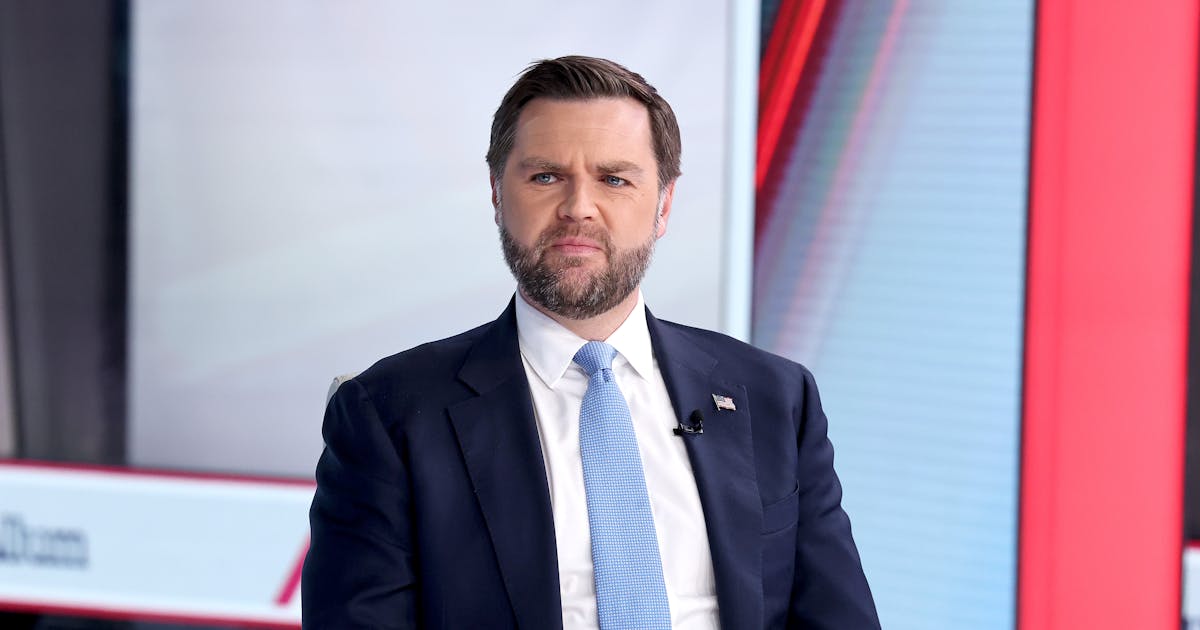
During a recent on-air interview, Senator JD Vance faced an unexpected challenge when a TV host directly contradicted his claims about former President Donald Trump’s popularity, creating an awkward moment that quickly gained attention across political media circles.
The Ohio senator, who serves as Trump’s running mate in the 2024 presidential campaign, appeared on CNN’s “State of the Union” program Sunday morning when the exchange occurred. Vance had been discussing what he characterized as Trump’s strong support among voters when host Dana Bash interjected with polling data that contradicted his assertion.
“The former president is actually more popular today than he was when he was president,” Vance claimed during the segment. “He’s been vindicated on a lot of the issues.”
Bash immediately pushed back, citing current polling statistics: “He’s actually not more popular. His unfavorable rating is 55 percent.”
The real-time fact-check appeared to briefly fluster Vance, who pivoted to discussing specific policy areas where he believes Trump’s positions have gained traction with voters. Political analysts noted this represents a pattern of the Trump campaign facing challenges when presenting claims about the former president’s popularity that don’t align with current polling averages.
National polls have consistently shown Trump’s favorability ratings underwater, with most major surveys indicating more Americans view him unfavorably than favorably. The RealClearPolitics average of polls shows Trump’s unfavorable rating hovering around 53 percent, while his favorable rating sits at approximately 43 percent.
The exchange highlights the increasingly contentious relationship between the Trump-Vance campaign and media outlets, particularly as fact-checking becomes more immediate during live interviews. Trump’s team has frequently criticized mainstream media for what they perceive as unfair coverage, while journalists and networks have defended their approach as necessary accountability.
Political communication experts suggest these moments carry particular significance as campaigns attempt to craft narratives about candidate popularity heading into the final weeks before the November election. Voters often take cues about a candidate’s viability and momentum from perceived public support.
“When campaign surrogates make claims about popularity that can be immediately refuted with data, it creates credibility issues,” explained Dr. Jennifer Mercieca, professor of political communication at Texas A&M University. “These exchanges are particularly potent because viewers witness the contradiction in real-time rather than reading about it later.”
The incident occurred during a broader interview where Vance defended Trump’s positions on several key issues, including immigration, economic policy, and international relations. The Trump-Vance campaign has been focusing heavily on economic messaging in recent weeks, arguing that Americans experienced greater prosperity during Trump’s administration.
For Vance, who emerged as a somewhat surprising vice-presidential pick earlier this year, the interview represented another test of his ability to effectively advocate for Trump on national media platforms. The former venture capitalist and author of “Hillbilly Elegy” has been dispatched to numerous media appearances as the campaign works to reach undecided voters in key swing states.
Political strategists note that such exchanges carry particular weight in tight electoral contests where voter perception of momentum can impact turnout. Recent polls show extremely tight races in several battleground states that will likely determine the election outcome.
Media analysts suggest this type of direct fact-checking during live interviews has become more common in recent years as networks respond to criticism about providing platforms for unsubstantiated claims. CNN and other major networks have implemented more aggressive real-time corrections when guests make statements contradicted by available data.
The Trump campaign did not immediately respond to requests for comment about the exchange, though Vance later posted on social media defending his broader points about Trump’s policy positions without directly addressing the polling discrepancy highlighted during the interview.
As November approaches, political observers expect increasingly contentious media appearances as campaigns fight to control narratives about candidate popularity, policy positions, and electoral momentum in what continues to be one of the most closely watched presidential races in recent history.
Fact Checker
Verify the accuracy of this article using The Disinformation Commission analysis and real-time sources.

12 Comments
It will be interesting to see how the Trump campaign responds to this fact-check. Handling criticism and contradictory data gracefully is a key test of any candidate’s fitness for office.
It’s not surprising that the Trump campaign would face scrutiny over claims about his popularity. Transparent, evidence-based discussions are essential for voters to make informed decisions.
This debate over Trump’s approval ratings highlights the need for careful analysis of polling data. Both sides should strive to present a balanced, nuanced view on voter sentiment.
Agreed. Voters deserve a clear-eyed assessment, not partisan spin. Fact-checking can help cut through the noise and rhetoric.
This incident underscores the importance of relying on credible, up-to-date polling data rather than anecdotal evidence or partisan rhetoric when assessing a candidate’s popularity.
This incident highlights the need for all political campaigns to ground their messaging in solid data, not just partisan talking points. Voters deserve a clear-eyed assessment of a candidate’s support.
The exchange demonstrates the value of having TV hosts push back on questionable claims, rather than letting them go unchallenged. Healthy political discourse depends on rigorous fact-checking.
Exactly. Real-time fact-checking holds politicians accountable and helps the public get an accurate picture. It’s a crucial part of the democratic process.
The host’s willingness to challenge Vance’s claim in real-time is commendable. Unchallenged assertions can quickly become accepted as fact, so vigilant fact-checking is crucial.
Absolutely. Probing questions and pushback from the media help ensure candidates are held accountable and the public gets accurate information.
Interesting exchange between Vance and the host. It’s always good to fact-check claims, even from political allies. Voters will want to see a clear, honest case made for any candidate’s popularity.
While political disagreements are inevitable, this exchange shows the value of civil, fact-based debates. Voters deserve politicians who can engage constructively, not just score partisan points.