


Listen to the article
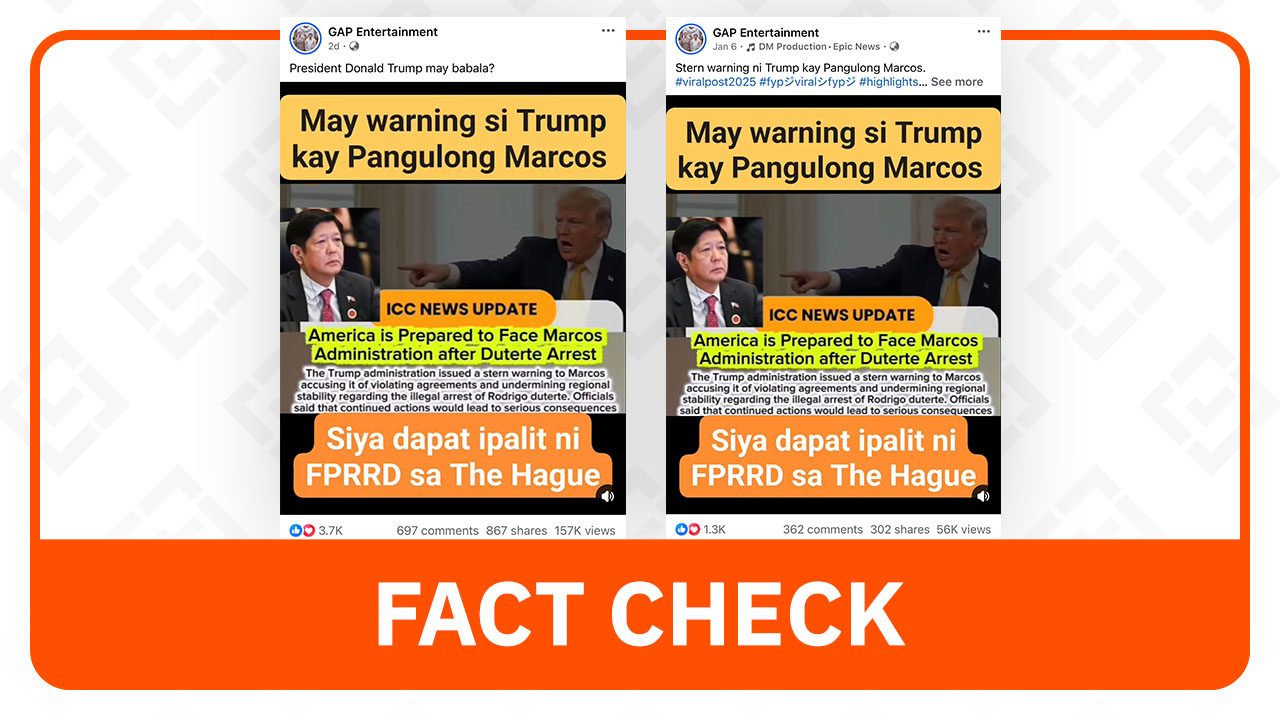
In an era of global politics increasingly influenced by social media narratives, false claims regarding diplomatic relations between the Philippines and the United States have gained significant traction online. Recent viral posts suggesting that former U.S. President Donald Trump issued a “stern warning” to Philippine President Ferdinand Marcos Jr. over the arrest of former president Rodrigo Duterte have been thoroughly debunked by fact-checkers.
The fabricated claim, which circulated on Facebook in January, alleged that the “Trump administration” had accused Marcos of “violating agreements and undermining regional stability” following Duterte’s arrest. These posts received tens of thousands of views and thousands of interactions, demonstrating the potential reach of misinformation on social platforms.
Investigations revealed no credible evidence supporting these claims. No official statements from the White House or the International Criminal Court (ICC) exist regarding any diplomatic tension between Trump and Marcos over Duterte’s legal situation.
Contrary to the narrative portrayed in these false posts, diplomatic relations between Trump and Marcos have been notably cordial. During Marcos’ visit to the White House in July 2025, Trump publicly praised the Philippine leader, describing him as “respectable” and a “great leader” – language that directly contradicts the supposed confrontational stance suggested in the misinformation.
The false claims appear designed to exploit political divisions in the Philippines, particularly between supporters of the current Marcos administration and those loyal to former President Duterte. The Facebook page responsible for spreading this misinformation, “GAP Entertainment,” has a history of publishing anti-Marcos content to its more than 162,000 followers.
The fabricated narrative also misrepresents the geopolitical reality of Philippine-American relations. Under Duterte’s presidency, the Philippines had pivoted toward China, with Duterte himself frequently questioning the traditional U.S.-Philippine alliance. In contrast, the Marcos administration has strengthened defense ties with the United States, marking a significant shift in foreign policy direction.
Duterte’s arrest in March 2025 on multiple counts of crimes against humanity related to his controversial war on drugs has become a focal point for political tension and misinformation. The former president has been detained at the ICC since his arrest, having lost an appeal for interim release. His confirmation of charges hearing has faced delays after his legal team claimed he was unfit to stand trial, though a panel of medical experts has determined he can proceed with appropriate accommodations.
Fact-checkers have previously identified numerous instances of misinformation regarding Trump’s supposed support for Duterte and other false claims surrounding the former Philippine president’s ICC case.
The spread of such fabricated diplomatic conflicts highlights the challenges facing news consumers in distinguishing authentic reporting from manipulative content. It underscores the importance of critical media literacy and consulting multiple reliable sources before accepting claims about international relations, particularly those with potential to inflame existing political tensions.
As the ICC proceedings against Duterte continue, the international diplomatic community continues to monitor the situation, but not with the fictional drama portrayed in viral social media posts.
Fact Checker
Verify the accuracy of this article using The Disinformation Commission analysis and real-time sources.

12 Comments
It’s troubling to see how false claims about diplomatic relations can gain so much attention online. However, I’m encouraged by the diligent work of fact-checkers in debunking this particular story. Maintaining journalistic integrity and a commitment to truth is crucial in the fight against misinformation.
Interesting that this story about alleged diplomatic tension between Trump and Marcos over Duterte’s arrest turned out to be completely fabricated. It’s a good reminder to always fact-check viral claims, especially those involving high-level political figures.
Absolutely, misinformation can spread so quickly on social media these days. Glad the fact-checkers were able to thoroughly debunk this particular claim.
While it’s concerning to see how quickly false claims can gain traction, I’m encouraged by the work of fact-checkers in debunking this particular story. Maintaining journalistic integrity and rigor is crucial in an era of rampant misinformation.
It’s disheartening to see how easily misinformation can spread online, even about something as serious as diplomatic relations. This highlights the need for greater media literacy and a focus on verifying sources, rather than just sharing eye-catching headlines.
Absolutely. Fact-checking should be a reflex, not an afterthought, when it comes to evaluating news and information, especially on social media.
This article is a good reminder of the importance of critical thinking and fact-checking when it comes to political news, especially claims involving high-profile figures. Fabricated stories can have real consequences, so it’s essential to verify sources and claims before sharing or believing them.
Agreed. The speed at which misinformation can spread online is alarming, but fact-checkers play a vital role in combating it. Maintaining a healthy skepticism and verifying information is key.
It’s concerning to see how these false narratives about diplomatic tensions can gain so much visibility online. Fact-checking and verifying sources is key to combating the spread of misinformation, which can have real-world consequences.
Agreed, the potential reach of misinformation on social media platforms is alarming. Rigorous fact-checking is essential to counter these kinds of fabricated claims.
This article provides a good example of how important it is to be skeptical of sensational claims, especially when they involve high-profile political figures. I’m glad the fact-checkers were able to thoroughly debunk this particular story.
This just goes to show how important it is for the media and public to scrutinize claims, especially when they involve complex geopolitical relationships. Fabricated stories can quickly gain traction and mislead people, so maintaining journalistic integrity is crucial.