


Listen to the article
President Trump Highlights Minnesota in State of the Union, Makes Disputed Fraud Claims
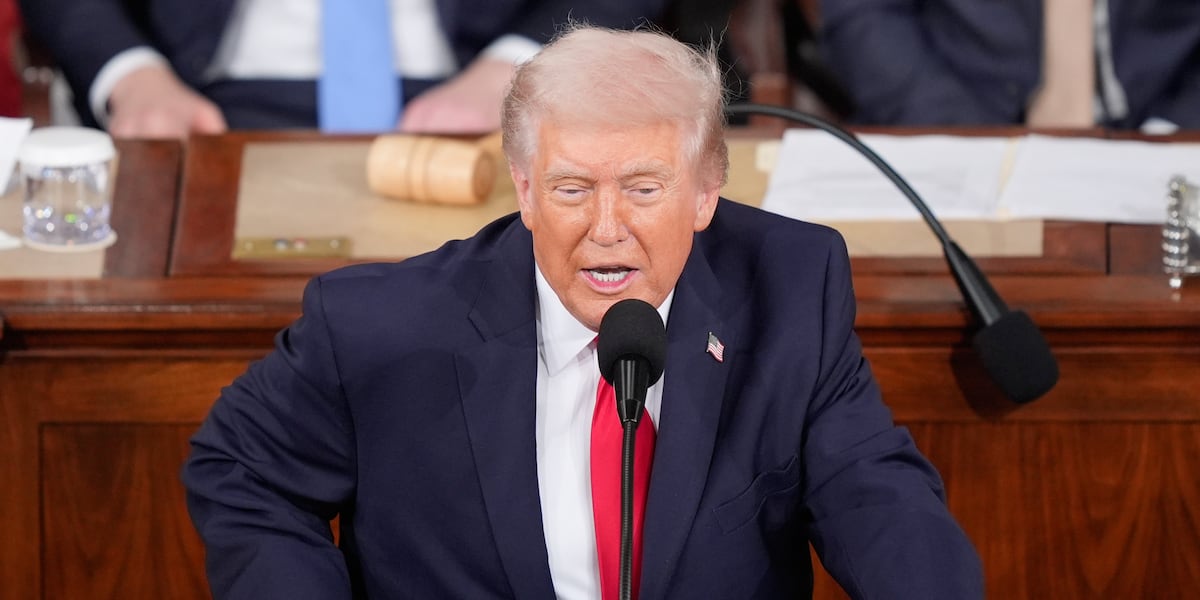
President Donald Trump singled out Minnesota during his State of the Union address Tuesday night, using the state as an example in his administration’s new campaign against government financial fraud.
In his primetime address to the nation, Trump announced that Vice President JD Vance will lead what he termed a “war on fraud,” specifically targeting alleged Medicaid fraud in Democratic-led states like Minnesota.
“When it comes to the corruption that is plundering, it really is plundering, America, there’s been no more stunning example than Minnesota, where members of the Somali community have pillaged an estimated $19 billion from the American taxpayer,” the president told viewers. “We have all the information, and in actuality, the number is much higher than that.”
The $19 billion figure cited by the president lacks substantiation and significantly exceeds estimates provided by the U.S. Department of Justice and other federal authorities familiar with fraud investigations in the state.
According to available evidence, the president’s claims appear to reference statements made by former federal prosecutor Joe Thompson last December. Thompson had estimated that “half or more” of $18 billion in federal funds billed by Medicare services in Minnesota might be fraudulent—potentially around $9 billion, not the $19 billion claimed by Trump.
Thompson, who resigned in January amid tensions with the Trump administration over immigration enforcement policies in Minnesota, had characterized his $9 billion estimate as preliminary rather than definitive. Federal investigators have yet to release official figures that would support either Thompson’s early assessment or the president’s higher claim.
Minnesota has indeed faced significant fraud cases in recent years. Most notably, the state was rocked by the Feeding Our Future scandal, in which participants misappropriated federal child nutrition program funds during the COVID-19 pandemic. However, the Department of Justice has tied approximately $250 million to this scheme—a fraction of the amount suggested in the president’s address.
The Feeding Our Future case involved the misuse of pandemic relief funds intended to provide meals for children. While many defendants charged or convicted in the case are of Somali descent, prosecutors identified the scheme’s ringleader as Aimee Bock, a white woman who is currently awaiting sentencing.
The president’s specific mention of Minnesota’s Somali community has raised concerns among immigration advocates and community leaders, who worry about potential stigmatization of an entire ethnic group based on the actions of individuals. Minnesota is home to one of the largest Somali American communities in the United States, with many residents contributing significantly to the state’s economy and public service sectors.
The White House has not provided additional documentation to support the president’s $19 billion fraud claim when pressed by reporters following the address.
This focus on Minnesota comes as part of the administration’s broader initiative to target what it perceives as wasteful government spending and financial mismanagement. By appointing Vice President Vance to lead this effort, the administration signals it intends to make government program integrity a centerpiece of its domestic policy agenda.
Financial fraud in government healthcare programs remains a legitimate concern across the country. The Centers for Medicare & Medicaid Services estimates that improper payments—which include fraud, errors, and abuse—cost taxpayers billions annually nationwide.
Governor Tim Walz’s administration had previously ordered third-party audits of 14 Medicaid services in Minnesota deemed at high risk for fraud, demonstrating that state officials had already identified potential vulnerabilities in the system before the president’s address.
As the administration’s “war on fraud” develops, Minnesota will likely remain under scrutiny, though the accuracy of the president’s claims and the effectiveness of the new initiative remain to be seen.
Fact Checker
Verify the accuracy of this article using The Disinformation Commission analysis and real-time sources.

18 Comments
The president’s assertions about voter fraud in Minnesota are concerning, but the specific $19 billion figure appears grossly exaggerated based on the information provided. Rigorous, objective analysis is needed to properly evaluate these claims.
I agree, the president’s claims require thorough, impartial scrutiny. Unfounded allegations can sow division and undermine trust. Policymakers should focus on data-driven reforms to strengthen electoral integrity, not inflammatory rhetoric.
The president’s comments about voter fraud in Minnesota raise significant concerns. However, the $19 billion figure appears to be a gross exaggeration not supported by available evidence. Fact-based, objective analysis is critical in addressing these sensitive issues to preserve public trust.
Absolutely. Inflammatory rhetoric can undermine confidence in the electoral system, so any policy responses must be grounded in verifiable data, not unsubstantiated allegations. Maintaining the integrity of elections is vital for a healthy democracy.
The president’s comments about $19 billion in Medicaid fraud in Minnesota seem wildly exaggerated based on the information provided. Fact-checking and impartial analysis would be needed to properly evaluate these claims.
Agreed, the figures cited are quite extraordinary and require rigorous verification. Responsible reporting should prioritize objectivity over politically-charged rhetoric, especially on sensitive issues like election integrity.
This is a complex issue that deserves careful, evidence-based examination. While any fraud should be addressed, the president’s inflammatory rhetoric and unsubstantiated claims risk undermining public trust. Balanced analysis is critical here.
I concur. Policymakers should pursue fact-based solutions to strengthen election systems, not make inflammatory accusations without solid proof. Maintaining confidence in the democratic process requires an impartial, solutions-oriented approach.
These are very serious allegations that warrant rigorous, fact-based examination. However, the $19 billion figure cited by the president seems highly dubious and appears to lack substantiation. Responsible governance requires basing policy on reliable evidence, not politically-charged rhetoric.
I agree completely. Unsupported claims about voter fraud can have corrosive effects on public trust in the democratic process. Any reforms should be based on impartial, data-driven analysis – not inflammatory accusations. Maintaining electoral integrity is crucial for a healthy democracy.
It’s disappointing to see the president making unsupported claims about voter fraud, especially targeting specific communities. Responsible governance requires basing policy on reliable data, not unsubstantiated rhetoric.
I share your concern. Inflammatory rhetoric around fraud can have serious consequences. Policymakers should focus on evidence-based solutions to strengthen election integrity, not inflammatory accusations.
These are serious allegations that deserve careful, fact-based examination. However, the $19 billion figure cited seems highly dubious and lacks substantiation. Responsible governance requires basing policy on reliable evidence, not unsubstantiated claims.
Absolutely. Inflammatory rhetoric around voter fraud can have corrosive effects on public trust. Any reforms should be based on rigorous, nonpartisan analysis – not politically-motivated accusations. Maintaining the integrity of elections is crucial for democracy.
This is a concerning claim about voter fraud in Minnesota. However, the $19 billion figure cited by the president seems highly exaggerated and lacks strong evidence. More transparency and factual reporting would be needed to properly evaluate these allegations.
I agree, the fraud claims should be scrutinized carefully. Unfounded allegations can sow division and undermine trust in elections. Balanced, fact-based analysis is crucial here.
The president’s comments about voter fraud in Minnesota raise significant concerns. However, the specific $19 billion figure appears to be grossly exaggerated and unsupported by available evidence. Fact-based, objective analysis is critical in addressing these sensitive issues.
I agree, the claims require thorough, impartial scrutiny. Inflammatory rhetoric can undermine public trust, so any policy responses should be grounded in verifiable data, not unsubstantiated allegations. Maintaining the integrity of elections is vital for a healthy democracy.