


Listen to the article
Trump’s Drug Price Claims Face Scrutiny Amid Limited Evidence of Broad Reductions
President Donald Trump has repeatedly claimed that Americans are now paying “the lowest price anywhere in the world for drugs” thanks to his administration’s negotiations with pharmaceutical companies. However, health policy experts and economists say the evidence doesn’t support such sweeping assertions.
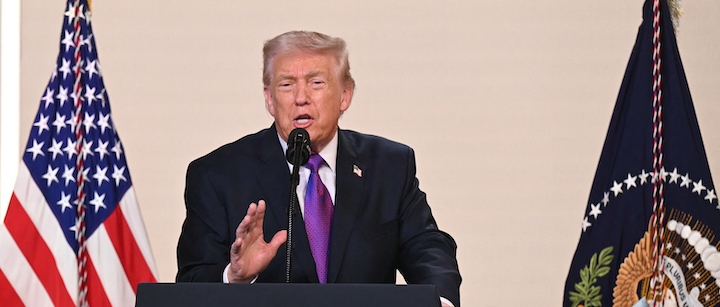
“We now are paying the lowest price anywhere in the world for drugs,” Trump declared during a January speech in Iowa. “Every other president tried for it. They didn’t try very hard. They didn’t get anything. I got it done.”
The centerpiece of Trump’s drug pricing initiative is TrumpRx, a federal website launched in February that offers discounted cash prices for 43 brand-name medications from five manufacturers. The site advertises discounts ranging from 50% to 93% off list prices.
While the initiative has produced some tangible savings for certain consumers, particularly those purchasing insulin, fertility drugs, or weight loss medications without insurance coverage, experts caution that the impact is far more limited than Trump’s rhetoric suggests.
“With rare exception, these negotiations don’t appear to have translated into actual savings for people at the pharmacy counter or for public or commercial payers yet,” said Rena Conti, a health economist at Boston University.
The administration’s approach, known as most favored nation (MFN) pricing, aims to base U.S. drug prices on those paid in other countries. So far, this has resulted in voluntary agreements with 16 pharmaceutical companies, though many details remain undisclosed. Under these arrangements, manufacturers offer discounts on select drugs to cash-paying customers in exchange for exemptions from tariffs and potential future mandatory pricing regulations.
There’s no evidence of widespread price reductions across the pharmaceutical market. According to research firm 46brookyln, the median list price increase for brand-name drugs in 2026 remains at 4%, unchanged from 2025.
When pressed on whether Americans are currently paying the lowest prices globally, a White House spokesperson told reporters that would happen in the future: “We are going to be paying the same if not lower than other wealthy nations, either via TrumpRx or once the MFN deals are codified upon passage of Great Healthcare Plan.”
The Great Healthcare Plan, a set of health policy proposals released in January, calls for legislation to codify MFN deals. However, the specifics of implementation remain unclear.
Limited Impact for Most Americans
For the majority of Americans with health insurance, experts say TrumpRx offers limited benefits. Most insured patients already pay negotiated prices lower than the cash prices offered through the program.
“Manufacturers have agreed to discount prices on some drugs that are not well covered by insurance or already have generic competition, and that’s not nothing, but it’s not necessarily going to help a lot of people right now,” explained Juliette Cubanski, deputy director of the Program on Medicare Policy at KFF, a nonpartisan health policy organization.
People with insurance typically benefit from copays, deductibles, and out-of-pocket maximums that cash payments through TrumpRx don’t count toward. The TrumpRx website itself acknowledges this reality, advising visitors: “If you have insurance, check your co-pay first—it may be even lower.”
Even for uninsured consumers, TrumpRx doesn’t always offer the best deal. According to an analysis by STAT, generic versions of at least 18 of the 43 brand-name drugs promoted on TrumpRx are available at lower prices through other discount programs like GoodRx or Mark Cuban’s Cost Plus Drugs. TrumpRx does not alert users to these potentially cheaper generic alternatives.
The program does provide notable savings for certain medications. Insulin is offered at $25 per 10 milliliters, fertility drug Gonal-F at $168 for the lowest strength (down from a list price of about $966), and weight loss medication Zepbound at $299 per month for the lowest dose (reduced from $1,087).
However, Cubanski noted that manufacturers of weight loss drugs had been “steadily offering increasing discounts” even before the Trump administration’s negotiations, partly due to competitive pressures in the market.
International Price Comparisons Difficult to Verify
Trump’s claim that his administration has secured the “lowest prices” internationally is particularly difficult to verify. The White House says it’s using prices from other G7 nations as benchmarks but hasn’t provided specific details.
“There’s not a lot of transparency in drug pricing internationally,” Cubanski explained. While listed prices can be found, the actual net prices after confidential rebates and discounts remain largely unknown.
Conti added that such claims are essentially “impossible to check,” especially since many brand-name drugs promoted on TrumpRx have generic equivalents that may not be sold under the brand name in other countries.
Minimal Impact on Medicare and Medicaid
The administration has also announced that drug companies agreed to sell certain medications to Medicaid programs at MFN prices. However, experts question whether these prices would actually be lower than what Medicaid already pays.
“States pay among the lowest prices through the Medicaid program for prescription drugs of all payers in the U.S.,” said Cubanski. “So whether the so-called most favored nation price is lower than what states are currently paying isn’t really something that we’re able to rigorously quantify.”
For Medicare, CMS has proposed pilot programs testing MFN pricing for some beneficiaries, with estimated savings of approximately $26 billion over six to seven years. While significant, this represents a small fraction of Medicare’s roughly $200 billion annual drug spending.
“That’s not nothing, but it doesn’t really move the needle all that much,” Cubanski said.
Healthcare economist Joseph Antos of the American Enterprise Institute expressed skepticism about the feasibility of implementing MFN pricing broadly: “CMS doesn’t have the authority to force Germany to tell them everything about their pricing, and they also don’t have the ability to get Pfizer to open its books.”
As the administration continues to promote its drug pricing initiatives, the gap between rhetoric and reality remains significant. While some consumers may benefit from specific discounts, the evidence so far doesn’t support claims of revolutionary change in America’s prescription drug pricing landscape.
Fact Checker
Verify the accuracy of this article using The Disinformation Commission analysis and real-time sources.

11 Comments
The divergence between Trump’s rhetoric and the experts’ assessment is noteworthy. Achieving meaningful, sustainable reductions in US drug costs appears to be an ongoing challenge, despite the administration’s initiatives. Continued scrutiny seems warranted.
It’s tricky to evaluate the real-world impact of initiatives like TrumpRx. While some consumers may benefit from discounted prices, the broader effects on drug affordability and access seem more complex. Experts’ cautious assessment is understandable.
You make a fair point. Headline-grabbing claims about ‘lowest prices’ don’t always match the on-the-ground realities. Fact-checking and nuanced analysis are important to get the full picture on these drug pricing policies.
This article highlights the importance of scrutinizing political rhetoric around important policy issues like drug pricing. While the administration has touted certain savings, the experts’ more cautious assessment seems warranted given the limited scope of the impacts so far.
It’s good to see fact-checkers and policy experts taking a close look at the president’s drug pricing claims. While some targeted savings may have materialized, the broader impact seems far more limited than Trump’s sweeping declarations suggest.
Agreed. The details and context around drug pricing initiatives are crucial. Simplistic narratives about ‘lowest prices’ don’t capture the full complexity of this issue. Rigorous, evidence-based analysis is needed.
Interesting to see the nuanced perspective from health policy experts on Trump’s drug pricing claims. Discounts for select medications are notable, but the broader impact appears far more limited than the president’s sweeping rhetoric would suggest. Fact-checking is crucial.
Absolutely. Parsing the details and context around policy initiatives is key to understanding their real-world effects. Simplistic claims about ‘lowest prices’ don’t tell the full story when it comes to complex issues like drug affordability.
Interesting to see the scrutiny over Trump’s drug pricing claims. It seems the evidence doesn’t fully back up his sweeping assertions of ‘lowest prices anywhere’. Discounts for some meds are good, but the impact appears more limited than the rhetoric suggests.
Agreed, the details are important here. Selective drug discounts don’t necessarily equate to broad, systemic reductions in US drug prices compared to other countries. Careful analysis of the actual data is needed.
This article underscores the importance of critical analysis when it comes to political claims about policy impacts. While the administration’s drug pricing initiatives have produced some tangible savings, the experts’ more cautious assessment of the broader effects seems warranted.