


Listen to the article
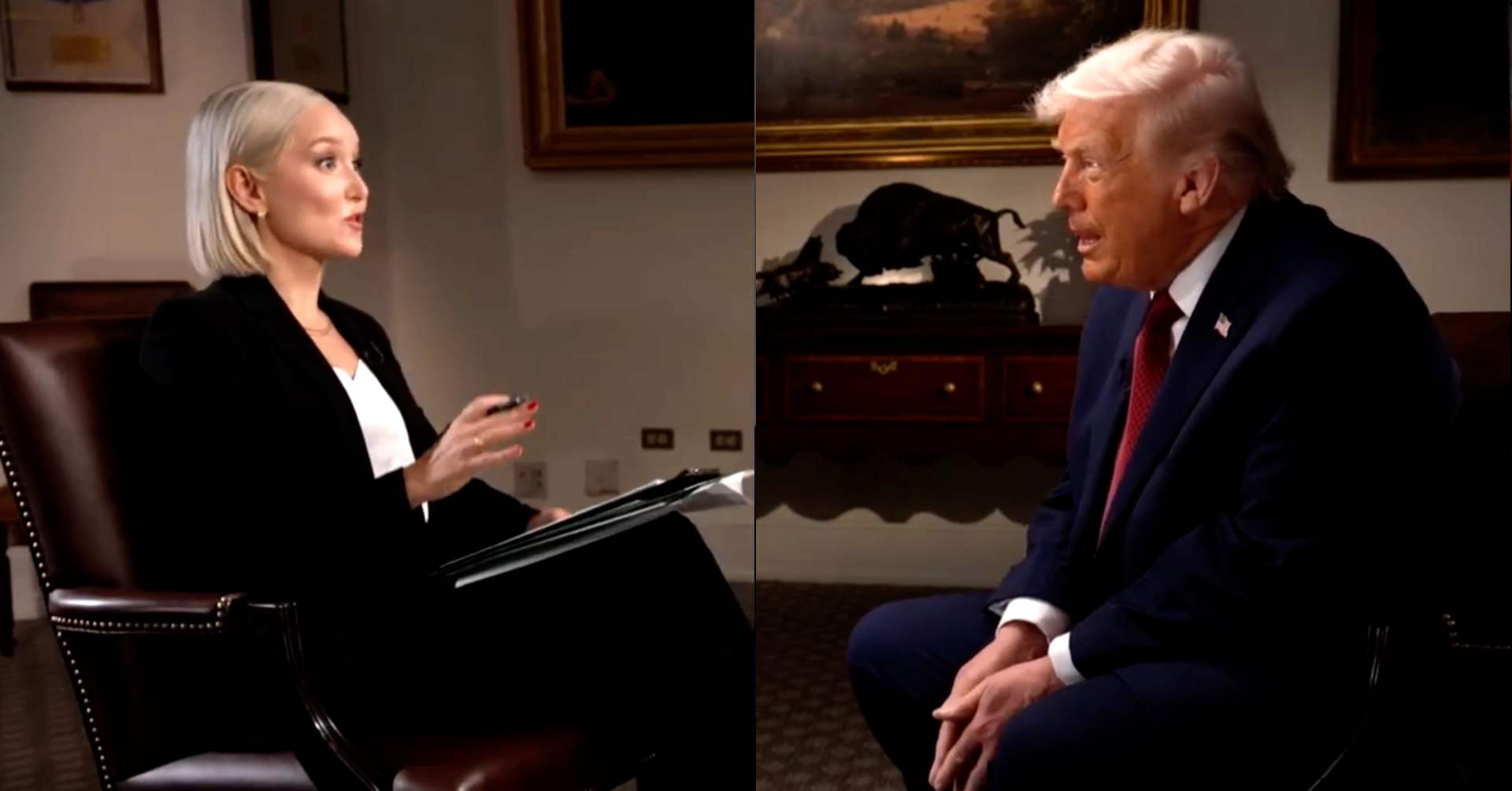
In a revealing interview focused primarily on foreign policy, President Donald Trump exchanged pointed words with Politico White House Bureau Chief Dasha Burns over U.S. intentions toward Venezuela, while making unsubstantiated claims about the publication’s financing.
The interview, published Monday morning, took an unexpected turn when Burns pressed Trump about his administration’s plans regarding Venezuelan President Nicolás Maduro. When asked how far he would go to remove Maduro from office, Trump initially declined to elaborate, saying only that Maduro’s “days are numbered.”
As Burns attempted to determine whether Trump would rule out an American ground invasion in Venezuela, the president abruptly shifted focus, launching into criticism of Politico itself.
“Why would I talk to you, an extremely unfriendly publication, if you want to call it POLITICO, that got $8 million from Obama to keep it afloat, why would I do that?” Trump said, before adding that he was only participating in the interview because Politico had “picked me as the man for Europe.”
The accusation prompted Politico to include an unusual editor’s note directly within the interview transcript, fact-checking the president’s claim. “Trump appears to be referring to POLITICO Pro subscriptions that the Trump administration canceled earlier this year as part of the Department of Government Efficiency’s effort to trim government spending. POLITICO received no government grants or subsidies,” the note clarified.
The false narrative about Politico receiving direct funding from the United States Agency for International Development (USAID) has circulated among Trump and his allies during the early months of his second term, particularly during the implementation of his Department of Government Efficiency (DOGE) initiative.
When Burns attempted to redirect the conversation back to Venezuela policy, suggesting she was seeking transparency for the American public, Trump responded defensively. “I’ll tell you, I am the most transparent politician maybe in the world, OK?” he declared, before refusing to discuss military strategy with the publication.
The exchange highlights ongoing tensions between the Trump administration and news outlets the president perceives as unfavorable. It also underscores the administration’s approach to information control regarding sensitive foreign policy matters, particularly concerning Venezuela, where the United States has maintained significant interest due to the country’s vast oil reserves and humanitarian crisis under Maduro’s leadership.
The interview comes amid growing speculation about potential U.S. intervention in Venezuela, where economic collapse, political repression, and humanitarian concerns have drawn international attention. Maduro, who has maintained power despite international pressure and sanctions first implemented during Trump’s previous term, remains a focus of U.S. foreign policy in Latin America.
Trump’s reluctance to outline specific plans regarding Venezuela fits a pattern of strategic ambiguity the president has often employed when discussing potential military actions, leaving adversaries uncertain about U.S. intentions.
The full interview covered additional foreign policy topics, though the heated exchange regarding Venezuela and Politico’s funding stood out as particularly contentious. The episode reflects the challenging media landscape of Trump’s presidency, where factual disputes often overshadow policy discussions.
Politico’s decision to fact-check the president within the transcript itself represents an increasingly common approach by news organizations attempting to provide accurate context when publishing interviews containing demonstrably false claims by public officials.
Fact Checker
Verify the accuracy of this article using The Disinformation Commission analysis and real-time sources.

11 Comments
Interesting to see Trump’s comments on Politico’s financing. While I don’t have a strong opinion on the accuracy of his claims, it’s always good to look at news coverage objectively and fact-check key details.
Agreed, fact-checking is important, especially for high-profile political interviews. Looking forward to seeing Politico’s response to Trump’s assertions.
I’m curious to learn more about the financial details Trump referenced regarding Politico’s funding. Transparency around media ownership and financing is an important issue for the public to understand.
Trump’s comments on Venezuela raise questions about his foreign policy approach. While decisive action may be warranted, it’s crucial that any response is well-considered and aligned with international law.
This interview showcases the polarized political climate in the US. Regardless of one’s views, it’s vital that we strive for objective, fact-based reporting and resist the temptation to simply dismiss opposing perspectives.
While Trump’s criticism of Politico’s coverage may have some merit, his accusation about the outlet’s financing seems questionable. It’s important that both sides engage in good-faith discussions and avoid inflammatory rhetoric.
This interview seems to highlight the ongoing tensions between the Trump administration and the media. While political disagreements are common, it’s important that both sides engage in constructive dialogue.
The tension between Trump and Politico is not surprising, but it’s concerning to see the president make unsubstantiated claims about the media’s financing. A free and independent press is essential for democracy.
Trump’s focus on Venezuela and his unwillingness to rule out a military intervention are concerning. I hope the US pursues a diplomatic solution rather than escalating the situation.
Good point. Military action should always be a last resort. Diplomacy and economic pressure may be more effective in resolving the crisis in Venezuela.
Trump’s remarks on Venezuela suggest a potential escalation of US involvement in the region. I hope the administration carefully weighs the risks and explores all diplomatic options before considering military intervention.