


Listen to the article
AI-Generated Trump-Epstein Photo Falsely Linked to Justice Department Files
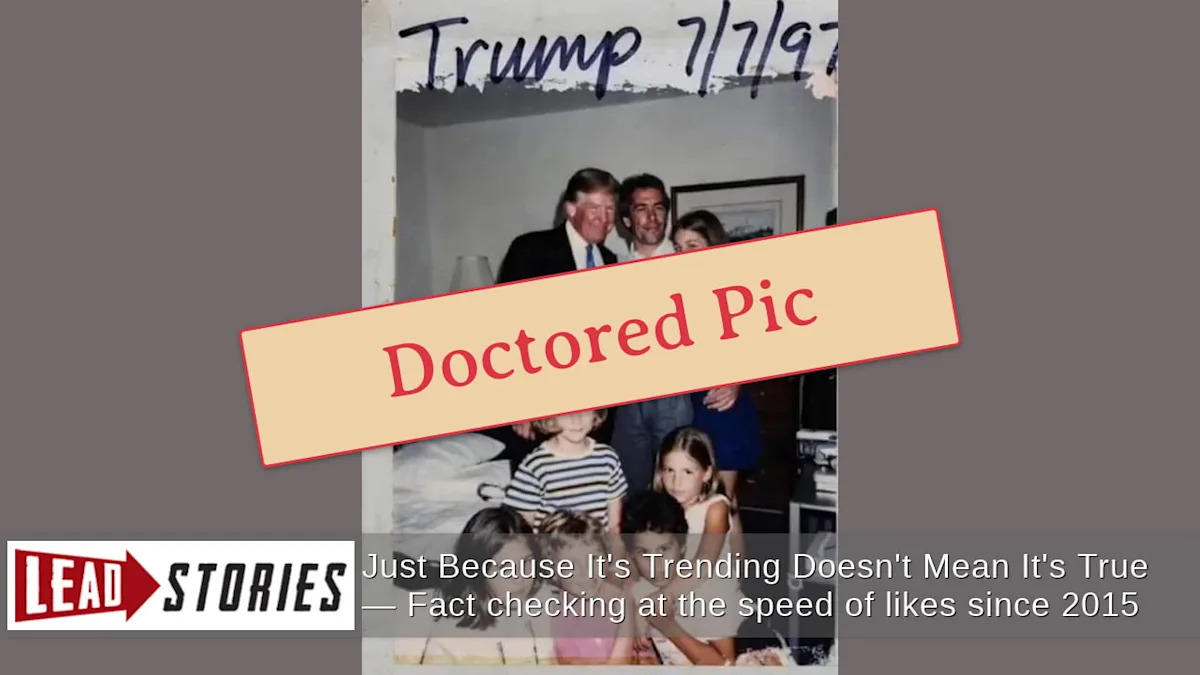
A manipulated image purportedly showing former President Donald Trump and convicted sex offender Jeffrey Epstein posing with young children has been circulating on social media, falsely labeled as part of the Department of Justice’s recently released Epstein files. Digital forensics experts have identified multiple characteristics indicating the image is an AI-generated fake rather than an authentic historical photograph.
The false claim began spreading after a February 2 post on X (formerly Twitter) from user @warrior_na92602 shared the image with the caption “This is public info now from the Epstein files. RESIGN.” Similar posts appeared on Facebook around January 30, specifically claiming the image was contained in Department of Justice documents labeled “EFTA01660679.pdf.”
A thorough examination of the actual DOJ documents, which are publicly available on the government website, confirms the image does not appear in any of the released files. Furthermore, the photograph contains several telltale signs of AI manipulation that would not be present in a genuine photograph.
Digital analysis reveals multiple anatomical inconsistencies typical of AI-generated imagery. The boy with curly black hair appears to have six fingers on one hand—five fingers plus a thumb—tucked under the arm of a girl behind him. Trump’s right hand is missing a finger entirely. A girl standing in front of Trump has a nose that seems to fade into her face without distinct nostrils, another common AI artifact.
Additional timeline inconsistencies further debunk the image’s authenticity. The manipulated photo bears a handwritten date of “7/7/1997,” yet verified photographs from Getty Images show Epstein with distinctly silver hair in January 1997, contradicting his dark-haired appearance in the fabricated image.
The fake photograph appears to have first surfaced online around January 30, 2023, coinciding with the government’s release of a new batch of Epstein-related documents. This timing suggests an opportunistic attempt to capitalize on public interest in the case by creating and distributing misleading content.
While some AI detection tools failed to flag the image as computer-generated, the anatomical anomalies present in the picture are consistent with the limitations of current AI image generation technology, which often struggles with accurately rendering human hands, facial features, and maintaining consistent details across a composite image.
The circulation of this falsified image comes amid heightened public interest in the Epstein case following the January 2023 document release. Jeffrey Epstein, who died in jail in 2019 while awaiting trial on sex trafficking charges, had connections with numerous high-profile figures, including Trump. Their relationship has been documented in several authenticated photographs from social events in the 1990s and early 2000s, but no legitimate images showing the two with underage children have emerged from the DOJ files.
This case highlights the increasing challenge of identifying AI-generated content as the technology rapidly evolves. Digital literacy experts advise social media users to verify information through official sources, particularly when inflammatory or sensational images appear during periods of heightened public interest in controversial cases.
The Department of Justice has not yet responded to requests for comment on the falsified image. The fabricated photo has also been debunked by other fact-checking organizations, including Snopes.com.
Fact Checker
Verify the accuracy of this article using The Disinformation Commission analysis and real-time sources.

14 Comments
While I understand the desire to expose wrongdoing, spreading unverified claims undermines legitimate efforts at accountability. I’m glad the experts were able to confirm this image is fake. We must prioritize facts over rumor.
This is a good reminder to always check the source and look for signs of digital manipulation before sharing content, even if it aligns with our beliefs. Fact-checking takes time but is essential to avoid spreading misinformation.
While it’s concerning to see such blatantly false content circulating, I’m reassured that the experts were able to quickly debunk this claim. We must continue to combat the spread of misinformation with rigorous fact-checking.
I’m disappointed to see this manipulated content being passed around, but I’m glad the experts were able to debunk it so quickly. We need to stay vigilant and rely on verified information, no matter how sensational the claims may be.
I’m glad the experts were able to identify this as an AI-generated fake. It’s concerning how easily misinformation can spread online, even about serious issues. We need to be vigilant and rely on credible sources.
While I appreciate the desire to hold powerful individuals accountable, spreading unverified claims does more harm than good. I’m glad the experts were able to confirm this image as an AI-generated fake. Fact-checking is crucial.
It’s disappointing to see this kind of manipulated content being passed off as real. While we should continue to scrutinize the powerful, spreading falsehoods undermines legitimate concerns. I hope more people learn to spot these fakes.
Agreed, we should focus on verified facts rather than unsubstantiated claims. Responsible reporting is key to maintaining public trust.
Wow, another fake image trying to stir up controversy. It’s important to verify information and not spread unsubstantiated claims, even if they fit a certain narrative. Fact-checking is crucial these days.
It’s frustrating to see how easily misinformation can spread, even about serious issues. I’m glad the experts were able to quickly identify this as an AI-generated fake. We should all strive to be more discerning consumers of online content.
It’s disheartening to see how easily manipulated images can spread online, even about serious issues. I’m glad the experts were able to identify this as a fake and provide a factual analysis. We must remain vigilant against misinformation.
This highlights the need for increased media literacy and critical thinking skills. We should all be more cautious about what we see online and verify information from reliable sources before believing or sharing it.
This is a good example of why we need to be extremely cautious about the content we consume and share online. Even if an image or claim seems plausible, we should always verify it against credible sources before lending it any credence.
I’m glad the digital forensics experts were able to confirm this image is fake. It’s important we stay vigilant against the proliferation of AI-generated fakes, which can be used to sow division and undermine the truth.